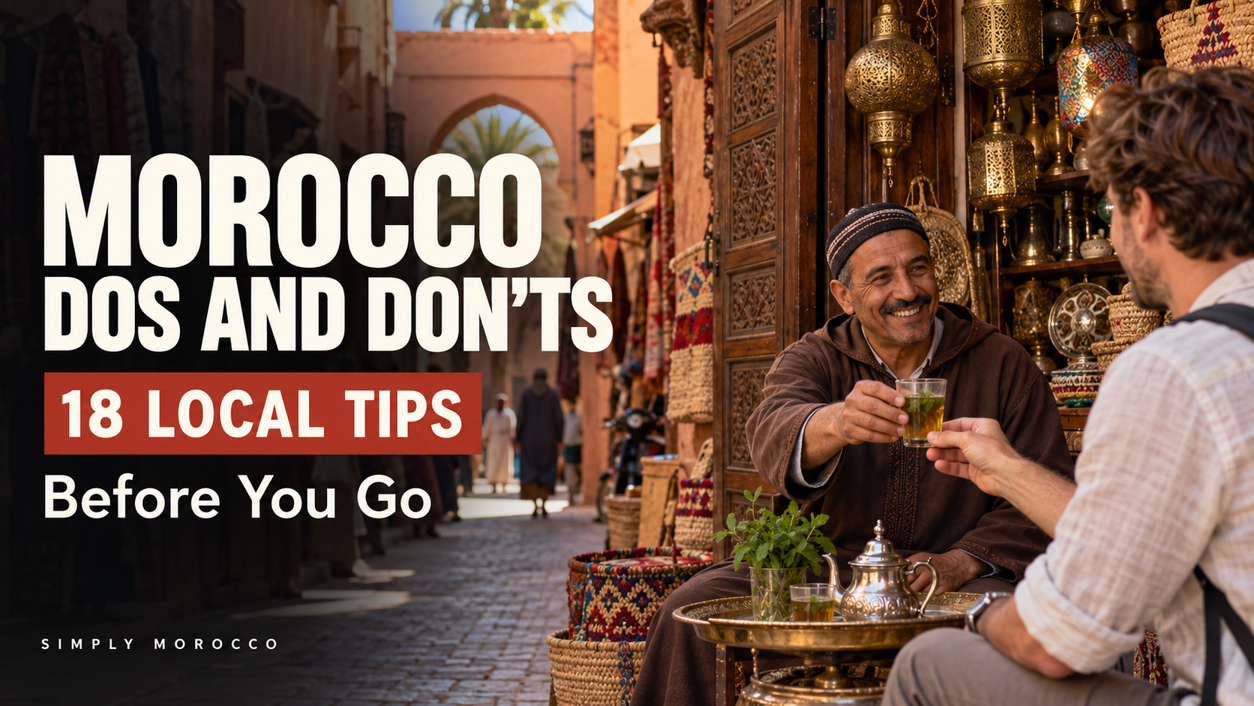
Morocco is one of the most welcoming countries you can visit, and a little cultural awareness makes your trip smoother and more rewarding. These Morocco dos and don’ts come from our local team: the habits that help most, and the common traps worth avoiding. If this is your first trip, start with our guide to visiting Morocco for the first time.
Morocco Dos and Don’ts at a Glance
| Do | Don’t |
|---|---|
| Dress modestly, covering shoulders and knees | Follow strangers offering directions |
| Ask before photographing people | Photograph performers unless you’re ready to pay |
| Bargain in the souks, with a smile | Haggle if you don’t plan to buy |
| Carry small dirham notes and coins | Change money on the street |
| Accept mint tea when offered | Walk into mosques (most are closed to non-Muslims) |
What to Wear in Morocco
Cover your shoulders and knees, men and women alike, and you will fit in almost anywhere in Morocco.
Do dress modestly. Cover shoulders and knees, especially outside the main tourist areas. This applies to men too: never go shirtless in towns or medinas. It avoids unwanted attention and shows respect.
Light, loose layers work best. A scarf is useful for sun, dust and covering up when needed. Women traveling on their own can find more tips in our guide to Morocco solo female travel.
Money, Bargaining and Shopping
Carry small cash for everyday costs, bargain in the souks, and change money only at banks, ATMs or official exchange offices.
Do carry small dirham notes and coins. You will need them for tips, taxis, and small purchases.
Do bargain in the souks, with a smile. Start well below the asking price and be ready to walk away politely.
Don’t haggle if you have no intention of buying. It wastes the seller’s time and is considered rude.
Don’t change money on the street. Use banks, ATMs, or official exchange offices.
For a full picture of what a trip costs, see our Morocco trip cost guide.
Photos and Filming
Always ask before you photograph or film a person in Morocco. Landscapes and buildings are fine.
Do ask before photographing or filming people. Unlike in the US, taking photos or videos of people in public is not allowed in Morocco without their consent. Always ask first, expect some people to say no or to ask for payment, and be especially careful with women. Landscapes and buildings are fine.
Don’t photograph snake charmers, water sellers, or costumed performers unless you are ready to pay. It is a common money trap, especially around Jemaa el Fna. Our Marrakech guide covers the square in more detail.
Respecting Religion and Local Customs
Islam and the monarchy shape daily life in Morocco, and visitors are expected to respect both.
Do accept mint tea when offered. It is a gesture of hospitality. Learn more about tea and the dishes to try in our guide to Moroccan food.
Do learn a few words. Salaam (hello) and shukran (thank you) go a long way, and French is widely understood too.
Do plan around Ramadan if you travel then. Daytime dining options shrink and opening hours change. Read our guide to traveling to Morocco during Ramadan.
Don’t walk into mosques. Most are closed to non-Muslims. The Hassan II Mosque in Casablanca is the main one open to visitors, on guided tours.
Don’t criticize the king, the monarchy, or Islam. These are legally sensitive topics, and the Western Sahara is a touchy subject too.
Don’t show strong public affection. Holding hands is usually fine, but kissing in public draws attention.
For what to expect in your first days, read our guide to culture shock in Morocco.
Staying Safe and Avoiding Hassle
The problems travelers meet most often in Morocco are fake guides, paid photos and money tricks, and each one is easy to avoid.
Do use licensed guides. Book through reputable riads or operators.
Do stick to bottled water. Eat at busy, popular places where the food turns over quickly.
Don’t follow strangers offering directions. Someone telling you a street is closed or offering to show you the way is a classic medina hassle. A firm “la shukran” (no, thank you) and a steady walk is enough.
Our guides to scams in Marrakech and scams in Fes cover the most common tricks.
Don’t buy or use drugs. Cannabis is common in some areas but still illegal, and tourists are not exempt.
Don’t drive long rural stretches at night. Livestock, poor lighting, and unmarked hazards make it risky. If you plan to drive yourself, read driving in Morocco: what to know before renting a car.
For more, read our full guide: Is Morocco safe?
Morocco Dos and Don’ts FAQ
Dress modestly: cover shoulders and knees, especially outside the main tourist areas. This applies to men too, who should never go shirtless in towns or medinas.
Only with their permission. Always ask first, and expect some people to say no or to ask for payment. Landscapes and buildings are fine.
Most mosques are closed to non-Muslims. The Hassan II Mosque in Casablanca is the main one open to visitors, on guided tours.
Yes. Bargaining is expected. Start well below the asking price, keep it friendly, and only haggle if you intend to buy.
Mint tea is a gesture of hospitality, so accepting it is a good habit. If you can’t, a polite “la shukran” (no, thank you) is fine.
Travel with Confidence
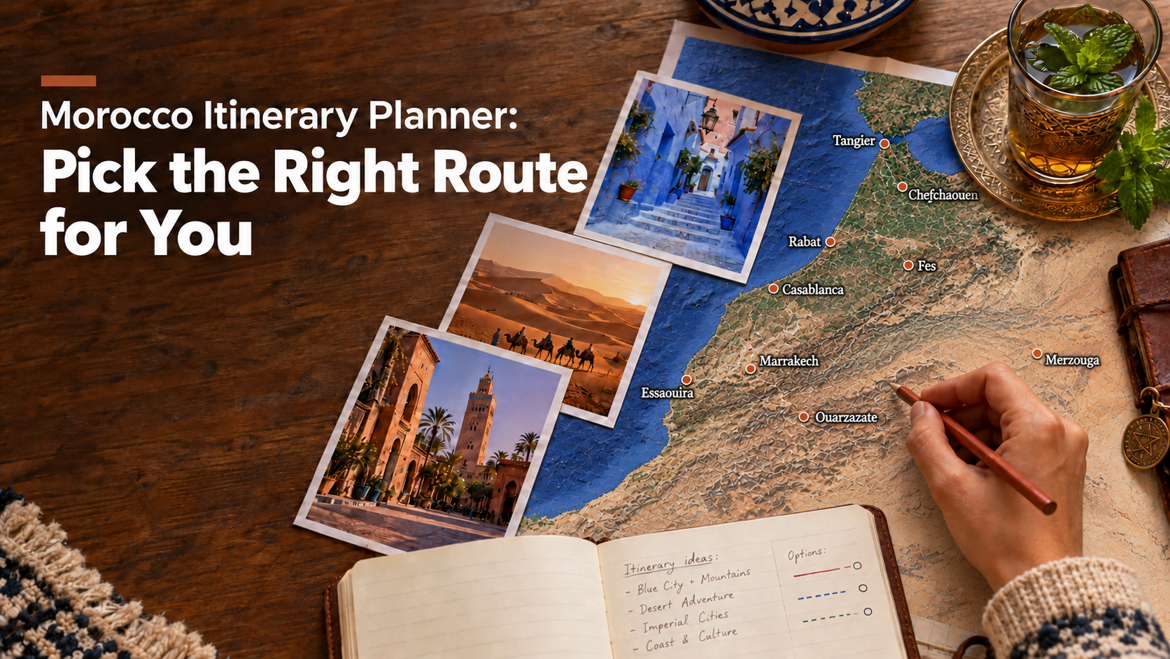
None of this is hard to follow, and Moroccans appreciate the effort. Traveling with a trusted local team removes most of the guesswork, from guides to drivers to riad bookings. Browse our private tours, compare routes by trip length in our Morocco itinerary planner, or fill in the form below and tell us your travel dates.
For more photos and travel ideas, follow us on Instagram and Facebook.