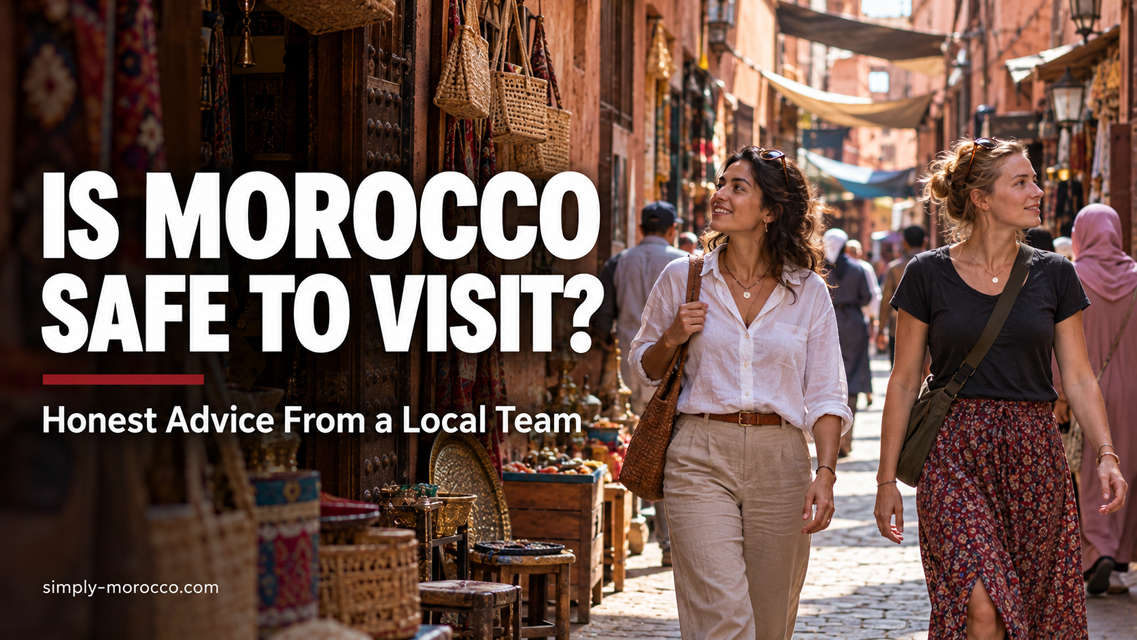
Yes, Morocco is safe to visit for most travelers, and millions of tourists travel through Marrakech, Fes, Casablanca and the Sahara every year. The problems visitors meet most often are fake guides, pushy sellers and overcharging, and a few simple habits avoid nearly all of them.
We are a local team that plans private tours across Morocco, and these are the questions our travelers ask us before every trip. If you are wondering whether Morocco is safe for your first visit, this guide covers the real risks, the common scams, advice for women, and what to do if something goes wrong.
Is Morocco Safe for Tourists?
Morocco is as safe as most popular destinations in Europe, and it asks for the same common sense. In Paris, Rome or Barcelona, pickpockets work the crowded squares and metro lines, and travelers keep an eye on their bags. Marrakech’s Jemaa el Fna, the souks of Fes and busy train stations are no different: be aware of your surroundings, keep valuables close, and you will be fine.
Police are everywhere in Moroccan cities, including tourist police in the main medinas and squares. They are used to helping visitors and will step in if you need anything, from directions to a lost bag. If something feels wrong, walk up to an officer, a hotel reception or a shopkeeper and ask for help.
Morocco Safety at a Glance
| Topic | What to know |
|---|---|
| Overall | Safe, with the same caution you would use in any big European city |
| Police | Visible everywhere in cities, including tourist police in the medinas |
| Most common problem | Pickpockets in crowds, fake guides and overcharging |
| Women travelers | Safe with precautions; expect some unwanted comments |
| Getting around | Trains and official taxis are reliable; avoid long drives at night |
| Water | Drink bottled water |
| Emergency numbers | Police 19, ambulance and fire 15 |
What Not to Do in Morocco
A few habits prevent nearly every problem travelers run into.
- Don’t keep your phone or wallet in a back pocket, especially in crowded souks, squares and stations. Use a zipped bag worn in front of you.
- Don’t flash cash, jewelry or expensive cameras in busy markets.
- Don’t follow strangers who offer to show you the way or tell you a street is closed.
- Don’t accept “free” gifts in the souks unless you plan to buy.
- Don’t walk alone in quiet, unlit streets late at night. Stay on busy, well-lit streets or take an official taxi.
- Don’t change money on the street. Use banks, ATMs or official exchange offices.
- Don’t buy or use drugs. Cannabis is common in some areas but still illegal, and tourists are not exempt.
- Don’t leave your passport in your bag. Keep it in the hotel safe and carry a copy.
Common Scams in Morocco and How to Avoid Them
Most scams in Morocco target your wallet, and each one is easy to avoid once you know it.
- Fake guides. A friendly stranger offers to show you the way, then asks for money or leads you to a relative’s shop. A firm “la shukran” (no, thank you) and a steady walk is enough.
- “That street is closed.” Someone tells you a street, mosque or square is closed and offers another route. It is almost never true.
- Unrequested henna. A woman takes your hand and starts a henna design, then asks for payment. Pull your hand back politely before she starts.
- Free gifts in the souk. A seller hands you something “free”, then expects you to buy. Do not accept items you did not ask for.
- Taxi fares. In petit taxis, ask the driver to use the meter, or agree on the fare before you get in.
- Paid photos. Snake charmers, water sellers and performers in costume expect payment if you photograph them.
For city-specific tricks, read our guides to scams in Marrakech and scams in Fes, and our Morocco dos and don’ts.
Is Morocco Safe for Women?
Yes, Morocco is safe for women who take sensible precautions, though unwanted comments and attention are common, especially in busy medinas.
- Dress modestly, covering shoulders and knees, which also draws less attention.
- Avoid walking alone in quiet, unlit streets at night.
- If someone follows or bothers you, keep walking and step into a shop, hotel or café, or ask a police officer for help.
- On public transport, sit near other women or families.
- Never agree to meet someone you just met in an unfamiliar place.
Traveling with a private driver and guide removes most of these situations. Our guide to Morocco solo female travel goes into more detail.
Getting Around Safely
Morocco’s main forms of transport are reliable, and the biggest risk on the road is driving after dark.
- Trains. ONCF trains connect Tangier, Rabat, Casablanca, Fes and Marrakech, and are a comfortable way to travel between big cities.
- Petit taxis. Small city taxis are cheap. Insist on the meter, or agree on the price first.
- Long-distance buses. CTM and Supratours run between cities. Book ahead in busy seasons.
- Driving yourself. Possible for confident drivers, but avoid rural roads at night, when livestock, poor lighting and unmarked hazards are common. Read driving in Morocco: what to know before renting a car.
- Private driver. The easiest option for the Atlas, the gorges and the Sahara, where trains do not go.
Safety in the Sahara and the Atlas Mountains
The desert and the mountains are safe when you travel with a licensed camp or guide and plan around the weather.
- Book desert camps and camel treks through a reputable operator, never with someone who approaches you in the street. See what to expect in our Sahara desert camp guide.
- Carry water, sunscreen and a hat. The sun is strong even in winter.
- In winter, mountain passes in the High Atlas can be affected by snow, so leave room in your plans.
- Do not hike remote trails alone. Go with a local guide.
Health, Water and Insurance
Drink bottled water, which is sold everywhere, and eat at busy places where food turns over quickly. Pharmacies are easy to find in every town. We recommend travel insurance that covers medical care, for every trip.
Emergency Numbers in Morocco
Save these numbers in your phone before you land.
| Service | Number |
|---|---|
| Police (in cities) | 19 |
| Ambulance and fire | 15 |
| Royal Gendarmerie (outside cities) | 177 |
| Emergency from a mobile phone | 112 |
Source: list of emergency telephone numbers. Keep your hotel’s address and phone number with you too.
If you need help, any police officer, tourist police post or hotel reception can call for assistance. Keep your passport in the hotel safe and carry a copy.
How a Private Tour Keeps You Safe
A private tour takes care of the moments where most travelers run into trouble. Your own driver meets you at the airport, your guide walks you through the medinas, and every riad and desert camp is chosen in advance. On a Simply Morocco trip, our local team is a phone call away for the whole journey. If this is your first trip, read our guide to visiting Morocco for the first time and culture shock in Morocco.
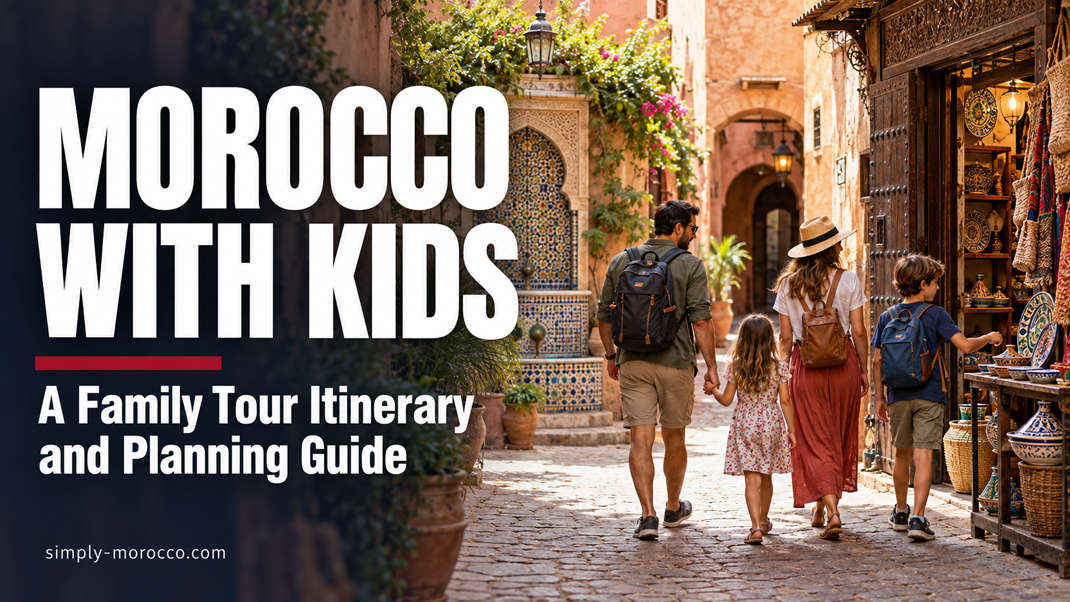
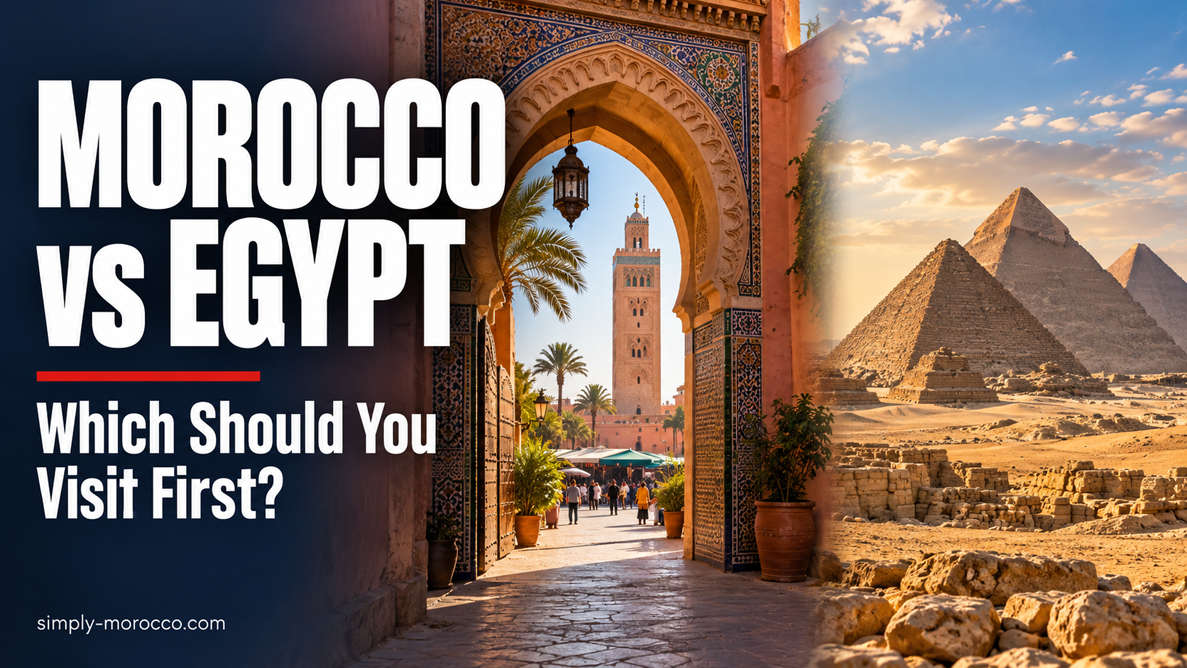
Traveling as a family? Read Morocco with kids. Comparing destinations? See Morocco vs Egypt.
Is Morocco Safe? FAQ
Yes. Morocco is as safe as most big European destinations, with police visible everywhere in the cities. Most American visitors travel without problems by watching their belongings, using official guides and taxis, and avoiding quiet streets at night.
Yes, with precautions. Dress modestly, avoid walking alone at night in quiet areas, and expect some unwanted comments in busy medinas. A private driver and guide removes most of these situations.
Fake guides, people claiming a street is closed, unrequested henna, “free” gifts in the souks, and taxis without the meter running.
We recommend bottled water, which is cheap and sold everywhere.
Dial 19 for police and 15 for an ambulance or fire. Outside cities, the Royal Gendarmerie is on 177.
Plan a Safe Trip to Morocco
The best way to stay safe in Morocco is to travel with people who know it. Browse our private tours, compare routes in our Morocco itinerary planner, or fill in the form below and tell us your travel dates.
For more photos and travel ideas, follow us on Instagram and Facebook.