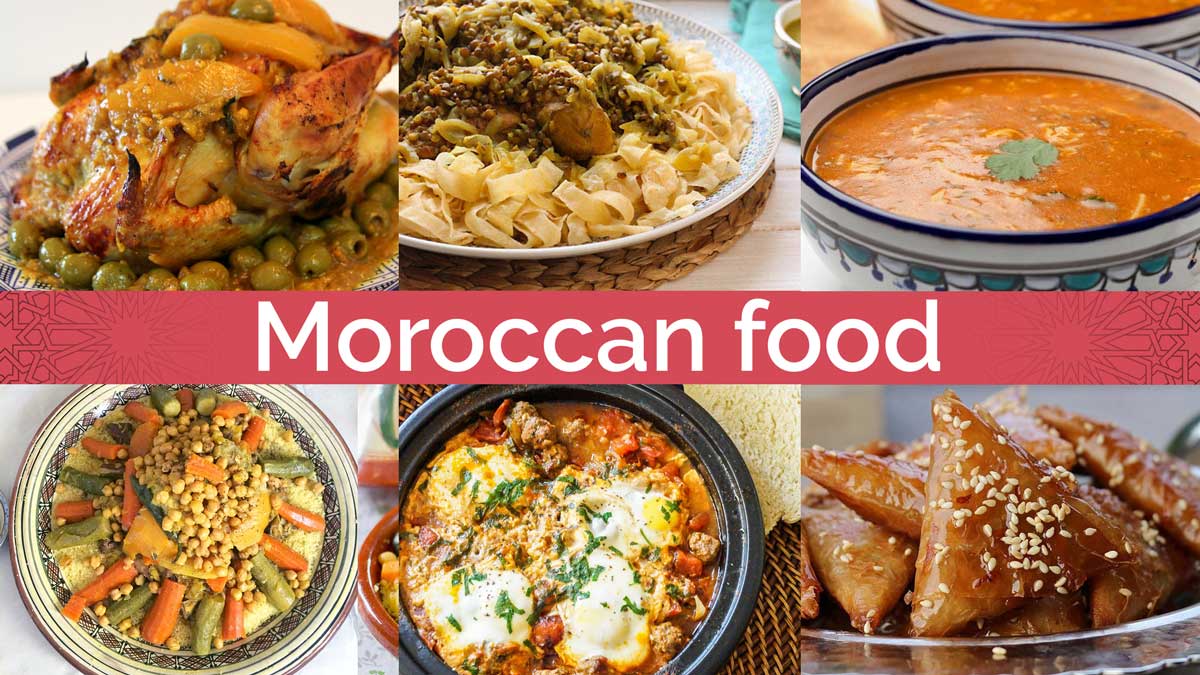
The most famous Moroccan foods are tagine, couscous, pastilla, chicken with preserved lemon and olives, lamb with prunes, rfissa, harira soup, mechoui, grilled sardines, mint tea and almond briouats. Moroccan cooking blends Amazigh, Arab, Andalusian and French influences, and it uses warm spices like cumin, saffron, ginger and cinnamon rather than heat.
Food is one of the best reasons to visit Morocco. Here are the 11 dishes to look for on your trip, what each one is, and how to bring the flavors home. Many of them are seasoned with ras el hanout, a warm blend of a dozen or more spices; The Spice Way ras el hanout is a good one to start with in your own kitchen.
Tagine

Tagine is Morocco’s best-known dish: meat or vegetables slow-cooked with spices in a clay pot with a cone-shaped lid, which gives the dish its name. There are countless versions, from chicken with preserved lemon to beef with prunes and simple vegetable tagines. It is eaten straight from the pot, scooped up with khobz, the round Moroccan bread.
To cook it at home, an enameled cast iron tagine works on any stove. For the traditional look, choose a clay tagine pot and cook it over gentle, low heat.
Couscous

Couscous, small grains of wheat semolina, is Morocco’s best-loved dish and is traditionally served for lunch on Fridays. The grains are steamed over a stew of meat and vegetables, fluffed, then served with the stew piled on top. Simple ingredients, but every family has its own version.
At home, a two-level steamer pot does the job of a traditional couscoussier: the stew cooks below while the couscous steams above.
Bastilla
Bastilla, also spelled pastilla, is a festive pie of shredded chicken cooked with ginger, saffron, cinnamon and pepper, layered in crisp, paper-thin warqa pastry and topped with almonds, sugar and cinnamon. Sweet and savory at once, it is often served at weddings and celebrations.

Chicken with Preserved Lemon and Olives
One of Morocco’s most famous dishes, chicken with preserved lemon and olives is served at family dinners and banquets alike. The chicken simmers in a sauce of onions, saffron, ginger and preserved lemons, then is finished with olives. It is tangy, fragrant and not spicy. Try it at home with our chicken tagine with preserved lemon and olives recipe.
Preserved lemons are the key ingredient. Making your own takes weeks, so a jar of Mina preserved lemons is an easy shortcut.

Lamb or Beef with Prunes
Even if prunes are not your first choice, do not skip this sweet and savory classic. The meat is cooked until tender with onions, saffron and ginger, then topped with prunes poached in syrup, a drizzle of honey, cinnamon and crisp almonds.

Rfissa
Rfissa is Moroccan comfort food: chicken and lentils stewed with fenugreek and saffron, served with their broth over shredded flatbread. It is considered a special dish and is often made for new mothers and honored guests.

Harira
Harira is a tomato-based soup with lentils and chickpeas, often made with lamb or beef and thickened with a little flour, rice or thin noodles. It is filling and warming, and it is traditionally served with dates to break the fast during Ramadan. Make it yourself with our Moroccan harira recipe, and read about traveling during Ramadan.

Mechoui
Mechoui is a whole lamb slow-roasted in a deep pit, traditionally over araar wood, for up to six hours until the meat falls off the bone. It is the centerpiece of big feasts, but you can also find it at specialist restaurants and stalls, sold by weight.

Sardines
With its long Atlantic coastline, Morocco serves some of the best sardines you will ever eat. Have them simply grilled at the port in Essaouira, or try them stuffed with chermoula, a herb and spice marinade, and fried.

Mint Tea
Moroccan mint tea is green tea brewed with fresh mint and sugar, poured from a height to create a little foam. You will be offered it almost everywhere, from riads to carpet shops, and accepting a glass is part of the welcome. Learn how to make Moroccan mint tea the traditional way.
To serve it at home, you need a stainless steel Moroccan teapot for pouring from a height and a set of Moroccan tea glasses.

Almond Briouat
Almond briouats are a sweet way to end a Moroccan meal: small, triangular pastries filled with almond paste, fried until crisp and dipped in honey. Crunchy outside and soft inside, they are perfect with a glass of mint tea.

Moroccan Food Etiquette
Moroccan meals are shared, and a few simple customs go a long way:
- Wash your hands before the meal. In many homes, water is brought to the table.
- Eat with your right hand, using bread to scoop up food.
- Eat from the part of the shared dish in front of you.
- Say yes to mint tea when it is offered; it is a sign of welcome.
- Leave room for more. Hosts will keep offering food, and it is fine to say you are full.
Where to Eat Moroccan Food
The best meals are often the simplest: a tagine in a riad courtyard, grilled fish at a port, or a bowl of harira at a market stall. In Marrakech, the food stalls of Jemaa el-Fna open every evening. In Fes, the medina is full of small kitchens and bakeries. In Essaouira, pick your fish at the port and have it grilled for lunch, and in Casablanca, head to the Marché Central for seafood. Many riads also cook dinner for their guests; see our picks of the best riads in Marrakech and the best riads in Fes.
More Moroccan Culture Guides
- Moroccan chicken tagine recipe
- Harira soup recipe
- How to make Moroccan mint tea
- A short history of Morocco
- Moroccan music
- Moroccan weddings
- The Moroccan caftan
- Amazigh and Moroccan rugs
- Morocco dos and don’ts
Want to taste it all in person? Food is part of every one of our trips. Compare routes in our Morocco itinerary planner, see how many days you need and what a private tour costs, or explore the best cities to visit in Morocco.
Cook Moroccan Food at Home
Bring the flavors home with our chicken tagine, harira and mint tea recipes. For a deeper dive, The Food of Morocco by Paula Wolfert is one of the most respected Moroccan cookbooks in English.
As an Amazon Associate, Simply Morocco earns from qualifying purchases.
Moroccan Food FAQ
Couscous is widely seen as the national dish, traditionally served on Fridays. Tagine is just as famous and is eaten every day across the country.
Moroccan food is full of spices like cumin, ginger, saffron and cinnamon, but it is rarely hot. Harissa is served on the side if you want heat.
Bread with olive oil, honey and jam, msemen pancakes, olives, eggs and mint tea or coffee.
Yes. Vegetable tagines and couscous, lentils, harira without meat, salads and breads are easy to find. Ask for no meat stock when ordering.
Mint tea, served sweet and poured from a height. Fresh orange juice from the market stalls is another favorite.
A tagine is both a dish and the clay pot it is cooked in. The cone-shaped lid traps steam, so meat and vegetables cook slowly in their own juices with spices.
Cumin, ginger, saffron, cinnamon, turmeric and paprika are the most common, along with ras el hanout, a warm blend of many spices.
If you want a professionally planned itinerary with private guides and safe transportation, Simply Morocco is ready to help you create your perfect journey.
Learn more about our private tours across Morocco, or tell us your travel dates in the form below and we will send you a day by day itinerary and a quote.