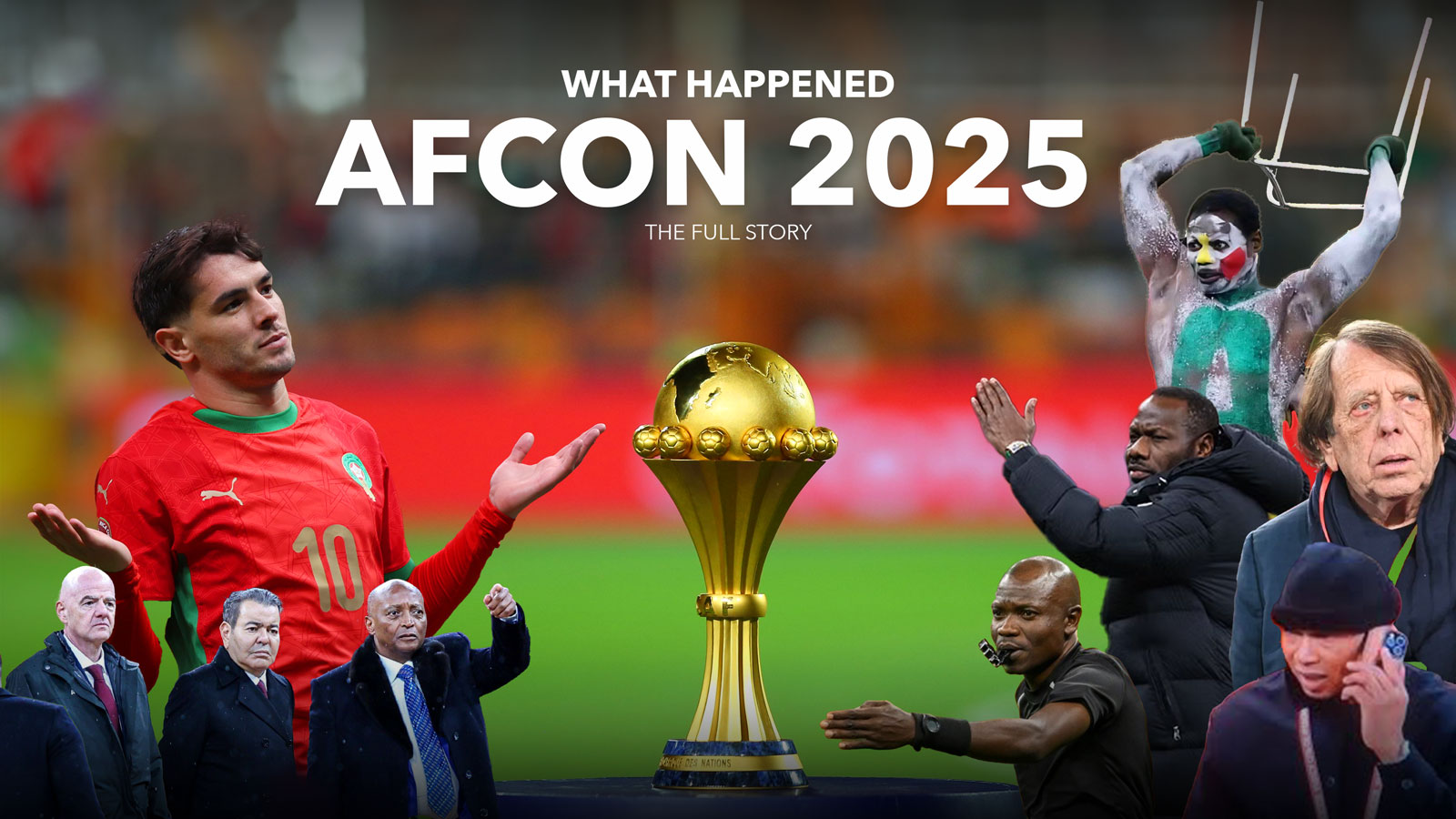
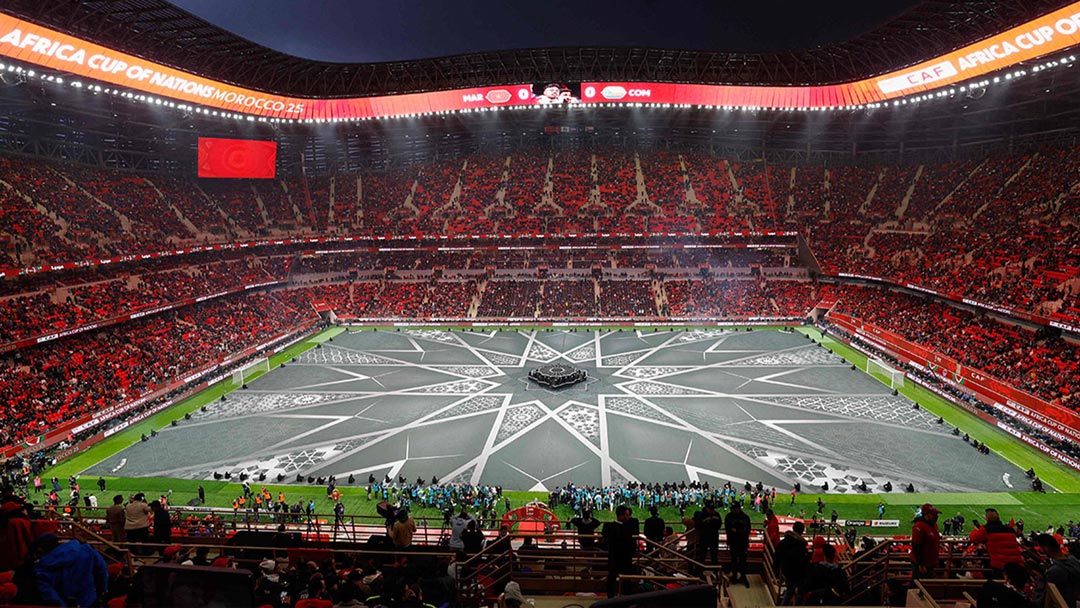
If you only caught the highlights, you missed everything. The 2025 Africa Cup of Nations was the most watched, most attended, and most economically impactful football tournament in African history. Morocco built nine world-class stadiums across six cities, welcomed 600,000 tournament-specific visitors, and delivered an event that left even rival fans speechless. Total tournament attendance exceeded 1.25 million spectators, setting a new record for the highest-attended AFCON in history. And then came the final.
What unfolded on the night of January 18, 2026, in Rabat was unlike anything African football had ever seen. A walkout, a missed penalty, a riot, 860,000 tweets attacking Morocco, and ultimately a ruling that stripped the trophy from Senegal and handed it to the Atlas Lions. Two months after the whistle blew, the story was still not over.
This is the full account of what happened at AFCON 2025.
Morocco Built Something Africa Had Never Seen Before
When CAF awarded Morocco the hosting rights in September 2023, after stripping Guinea for inadequate preparations, the kingdom had roughly two years to deliver a tournament of historic scale. It delivered far beyond expectations.
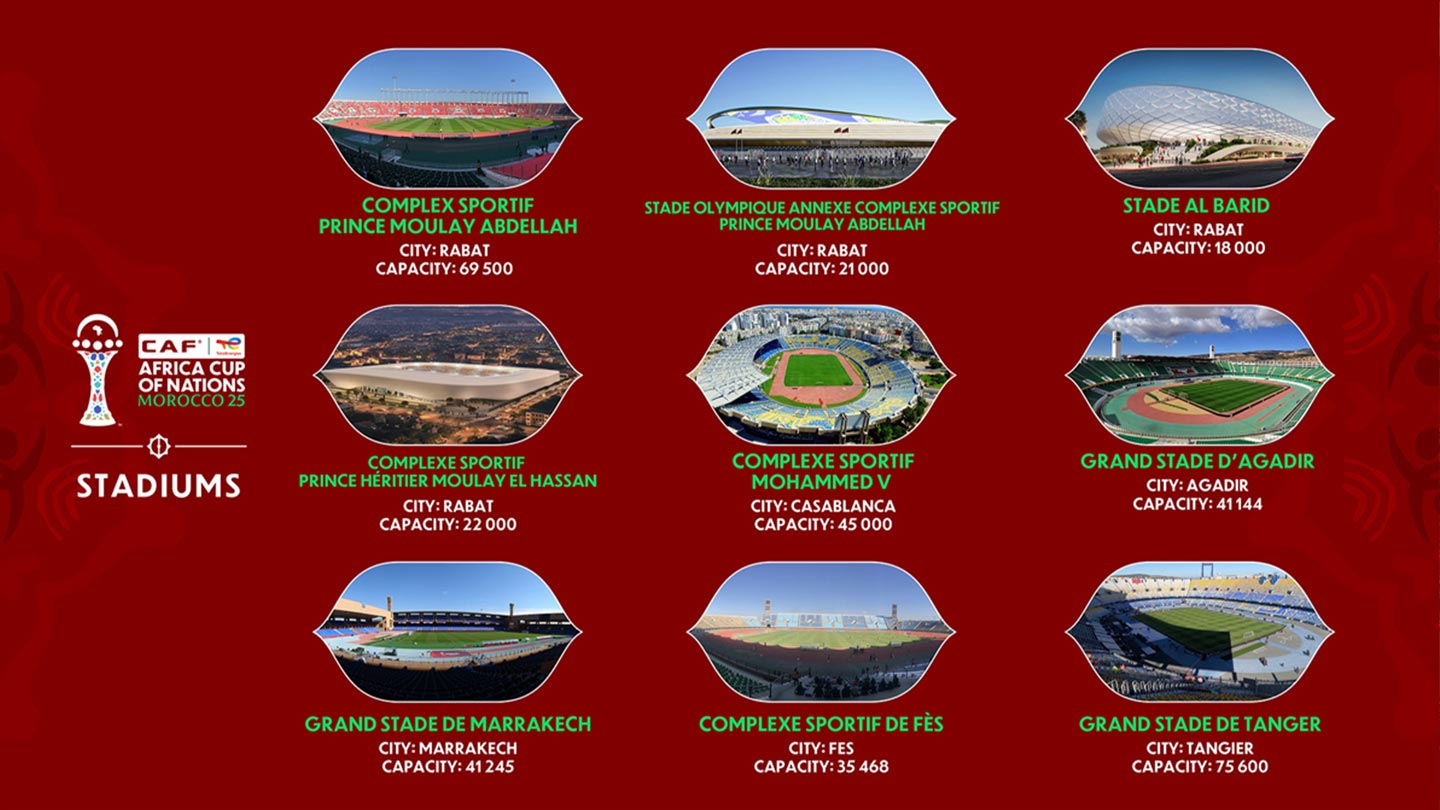
The 35th edition of AFCON was the first ever held over the Christmas and New Year period, and only the second time Morocco had hosted the competition after 1988. What Morocco built for it was unprecedented. The government invested over $500 million in stadium infrastructure, with 52 matches played across nine world-class venues over 29 days. Six host cities were chosen for the nine stadiums.
Those six cities were Rabat, Casablanca, Tangier, Marrakech, Fez, and Agadir. Each brought a distinct identity to the tournament. Rabat served as the nerve center, hosting four venues within the capital alone. Its centerpiece was the brand-new Prince Moulay Abdellah Stadium, a 68,000-seat football-only arena built on the site of the old facility, designed with no athletics track and modeled on the great modern European grounds. One of its supporting venues, the Rabat Olympic Stadium, was completed in a record nine months and opened in May 2025. Tangier’s Ibn Battuta Stadium, expanded to 68,000 seats, included over 7,000 press seats, a 600-square-meter media center, and parking for 7,500 vehicles. In Marrakech, the Grand Stadium received a 400 million MAD renovation completed in June 2025, bringing it to the highest international standards. Across all six cities, delegation hotels, fan zones, and hospitality infrastructure were upgraded to match the ambitions of the event.
The government invested a total of 2.3 billion euros in the tournament, a figure described by Morocco’s Minister of Industry as a “sovereign investment” in long-term national development, effectively compressing a decade of infrastructure progress into 24 months. Six of the nine stadiums are also earmarked to host matches at the 2030 FIFA World Cup, which Morocco will co-host with Spain and Portugal.
The numbers that came back were extraordinary. Direct revenues exceeded 1.5 billion euros, funding 80 percent of the infrastructure needed for the 2030 World Cup. CAF revenues increased by more than 90 percent compared to the 2023 edition in Ivory Coast. The tournament generated 6.1 billion digital impressions and 5.2 billion video views across social media platforms, establishing it as the most digitally engaged continental football competition in history. Morocco closed 2025 with nearly 20 million tourist arrivals, a 14 percent increase over the previous year, with tourism receipts exceeding 13.4 billion dollars.
This was not just an African football tournament. It was a global event, and Morocco hosted it flawlessly.
What Happened in the Final That Shook African Football
Senegal came to Rabat as defending champions, and the final between the two sides promised to be the defining match of the tournament. It became something else entirely.
The match was tight from the first whistle, ending at a perfectly even 50-50 split in possession through most of normal time, with Senegal holding through long defensive plays while Morocco repeatedly pressed forward without converting.
The eruption came in stoppage time. Referee Jean-Jacques Ndala Ngambo disallowed a Senegal goal by Ismaila Sarr, ruling that Abdoulaye Seck had fouled Morocco defender Achraf Hakimi. Three minutes later, following a VAR review, he awarded Morocco a penalty for a foul on Brahim Diaz.
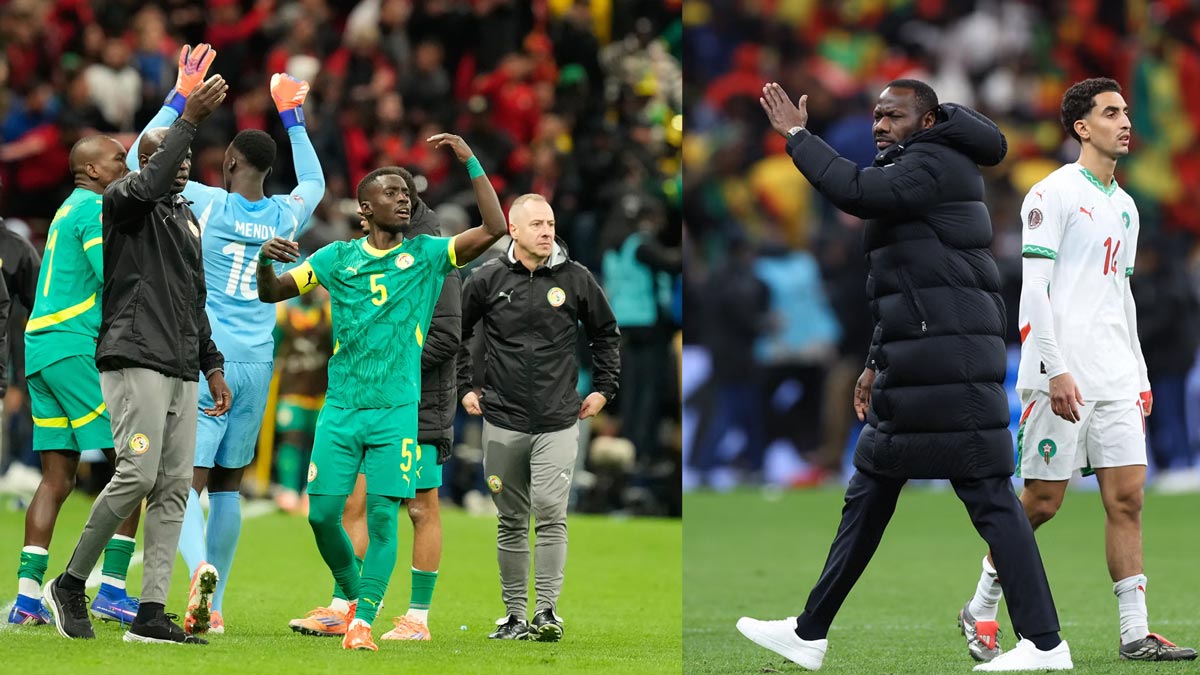
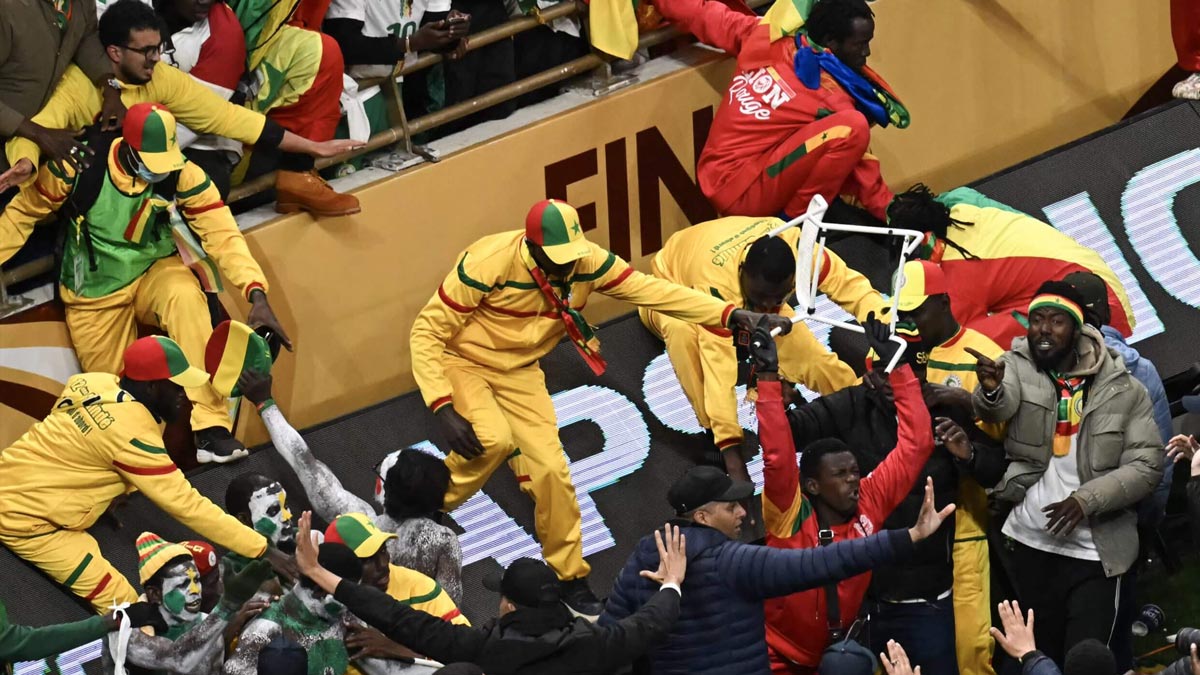
Senegal coach Pape Thiaw felt his team had been cheated, and when he ushered his players off the field and down the tunnel in protest, he pivoted the final into dangerous territory. It took over 17 minutes for play to restart, while objects were thrown from the crowd and some fans staged a pitch invasion. Thiaw later admitted he should not have taken that action, but the damage was done.
When the match finally resumed, Brahim Diaz, the tournament’s top scorer with five goals and the Atlas Lions’ biggest star, stepped up to take the penalty that would have made Morocco champions. After being made to wait nearly 21 minutes while Senegal protested, he inexplicably attempted a Panenka chip that went straight into the arms of goalkeeper Edouard Mendy. The stadium fell silent.
In the 94th minute of extra time, Pape Gueye curled a left-footed shot high into the top-right corner to give Senegal a 1-0 victory on the field. The trophy was handed to Kalidou Koulibaly. Moroccan fans left the stadium in tears. The country that had built everything, hosted everything, and given Africa its greatest tournament, had nothing to show for it. Or so it seemed.
What Happened After the Final: The Campaign Against Morocco
What followed the final was not a celebration of Senegalese football. It was a coordinated assault on Morocco’s reputation, launched across social media, the press, and the streets.
The Senegalese supporters who had traveled to Rabat for the match did not leave without incident. Eighteen Senegalese supporters were tried in Morocco and sentenced to prison terms of up to one year for hooliganism. Senegal’s football federation protested the verdicts, while demonstrators in Dakar described the jailed fans as hostages. Calls for a consumer boycott of Moroccan goods and services gathered momentum, and Senegalese Prime Minister Ousmane Sonko said the affair appeared to go beyond sport.
Online, the scale of the campaign against Morocco was staggering. No fewer than 860,000 anti-Morocco tweets were recorded, fueled by digital networks with dubious agendas, all built on the narrative that Morocco had won by civil or criminal means.
Fake news spread rapidly on social media, including false reports that Guinea had demanded a retroactive review of its 1976 AFCON defeat to Morocco. Guinea officially denied the claim.
Algeria’s state-aligned media ran a relentless campaign throughout the entire tournament to undermine every Moroccan achievement. When the infrastructure impressed visitors, it was dismissed as propaganda. When Morocco reached the final, the refereeing was suddenly corrupt. This was not sporting criticism. It was a political project dressed in football colors.
Even before the CAF ruling came down, Moroccan King Mohammed VI appealed publicly for calm amid rising hate speech, saying: “Nothing can undermine the closeness nurtured over centuries between our African peoples, nor the fruitful cooperation built with the various countries of the continent.”
Morocco did not respond with anger. It responded with its lawyers and its rulebook.
What Happened Next: The Ruling That Made Morocco Champion
Fifty-eight days after the final, on March 17, 2026, the CAF Appeals Board delivered a verdict that changed everything.
Citing Article 84 of the AFCON Regulations, the CAF Appeal Board ruled that the Senegal National Team had forfeited the final, with the result officially recorded as 3-0 in favor of Morocco. The rule is unambiguous: if a team leaves the ground before the regular end of a match without the authorization of the referee, it shall be considered the loser, regardless of whether it later returns to complete the game.
The board also found that the original disciplinary body had erred procedurally by failing to properly hear Senegal on the forfeit issue before issuing its initial decision. The process had not been rushed. It had been done correctly the second time.
Senegal’s reaction was fierce and defiant. Federation president Abdoulaye Fall called the ruling “the most grossly unfair administrative robbery” in football history. Captain Kalidou Koulibaly and his teammates carried the AFCON trophy onto the Stade de France pitch before a March 28 friendly against Peru in an open act of defiance. CAS confirmed Senegal’s appeal had been registered under case number CAS 2026/A/12295, with no hearing schedule yet set.
As of the date of this article, Morocco is officially the 2025 AFCON champion.
What Morocco Proved to the World
Morocco is the African champion for the first time since 1976. The wait is over, and the manner in which it ended matters.
The country built the greatest tournament in AFCON history. It welcomed over a million fans, delivered flawless organization, and earned praise from players, coaches, and officials representing every corner of the continent. It was then attacked online, targeted by disinformation, and subjected to a sustained narrative war. It responded not with noise, but with patience, legal process, and institutional trust.
As Morocco World News put it, the Royal Moroccan Football Federation stood firm throughout, acting with fraternal elegance, without complacency or weakness, while waiting for the law to do what the law does.
Coach Walid Regragui, who took Morocco to the World Cup semifinals in Qatar and to the AFCON final on home soil, departed two weeks after the final amid criticism over the on-pitch result. His legacy is intact. The foundation he helped build now carries the Atlas Lions directly toward the 2026 World Cup, where Morocco will arrive as the reigning champion of Africa.
The success of AFCON 2025 was Africa’s success, not Morocco’s alone. The argument that Africa can host elite international sport, and host it magnificently, was made more convincingly than ever before. Morocco made that argument with stadiums, hotels, roads, and dignity. And in the end, justice confirmed it.
Want to See the Morocco That Hosted Africa?
The six cities that staged AFCON 2025 are the same cities Simply Morocco has been guiding travelers through since 2013. Rabat, Casablanca, Tangier, Marrakech, Fez, and Agadir are not just football venues. They are living expressions of Moroccan culture, history, and hospitality.
If AFCON 2025 put Morocco on your radar, let us show you the country beyond the stadiums. From the Sahara Desert to the blue streets of Chefchaouen, from the ancient medinas of Fez to the Atlantic coast of Agadir, we build private tours around authentic experiences and real connections.
Morocco is ready for you. We will take you there.