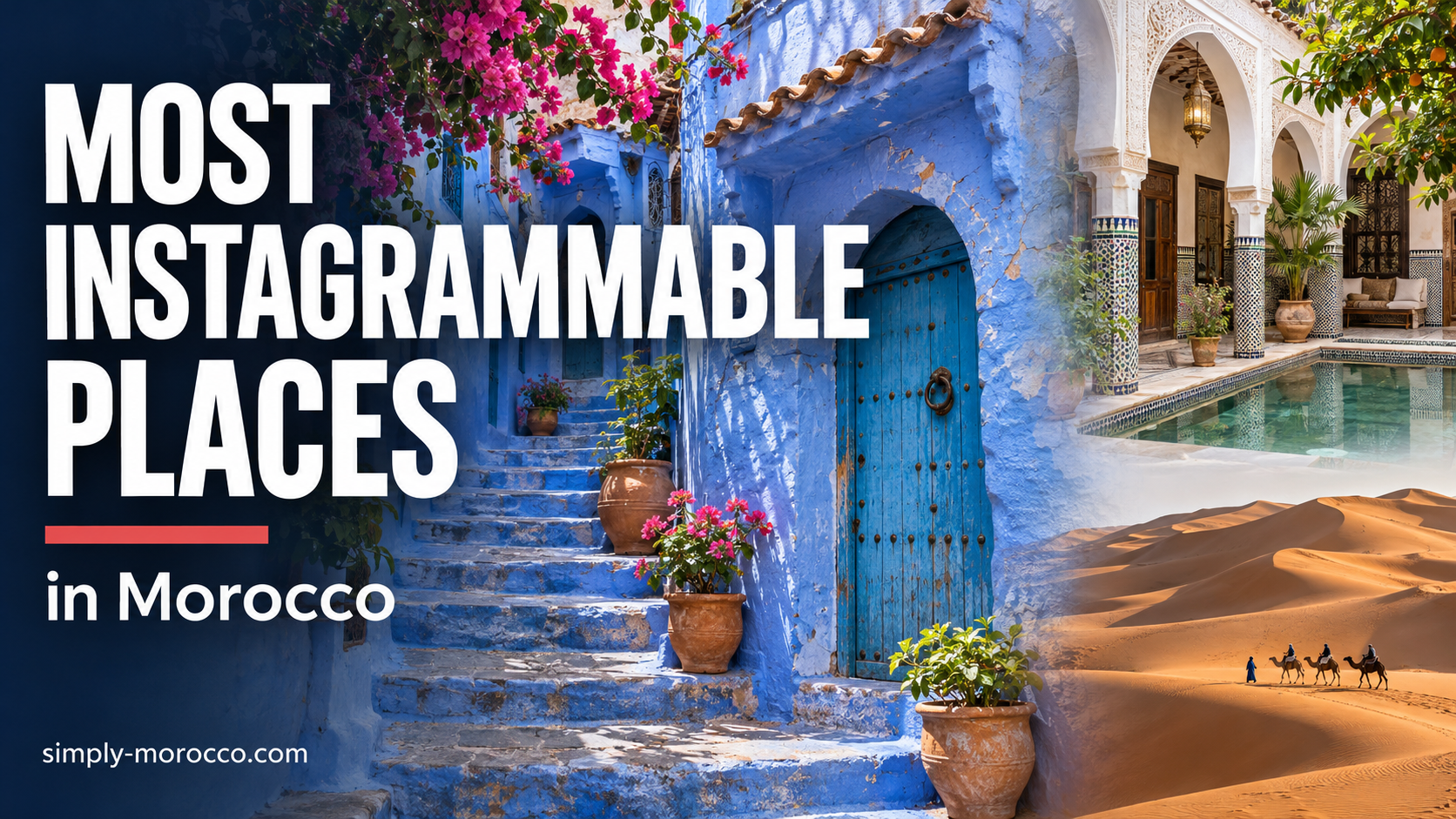
The most Instagrammable places in Morocco are the blue streets of Chefchaouen, the Chouara Tannery in Fes, Jemaa el-Fnaa at dusk with the Koutoubia behind it, Jardin Majorelle, the Hassan II Mosque, Ait Ben Haddou and a camel caravan on the dunes of Erg Chebbi. Below are 45 specific photo spots across the country, ranked from the most famous to the lesser known gems, with the best time to shoot each one and the local rules worth knowing.
We plan private tours across Morocco every week, and these are the places our travelers ask to stop at most. Every entry is one specific spot, so you can pin it on a map and build your route around it.
At a Glance
| # | Photo spot |
|---|---|
| 1 | The Blue Streets of Chefchaouen |
| 2 | Jemaa el-Fnaa with the Koutoubia, Marrakech |
| 3 | Jardin Majorelle, Marrakech |
| 4 | Camel Caravan at Sunset, Erg Chebbi |
| 5 | Hassan II Mosque, Casablanca |
| 6 | Chouara Tannery, Fes |
| 7 | Ait Ben Haddou |
| 8 | Ben Youssef Madrasa, Marrakech |
| 9 | Bahia Palace, Marrakech |
| 10 | A Desert Camp at Night, Merzouga |
| 11 | The Blue Fishing Boats, Essaouira Port |
| 12 | Bab Bou Jeloud, Fes |
| 13 | The Royal Palace Doors, Fes |
| 14 | The Skala de la Ville, Essaouira |
| 15 | The Goats in the Argan Trees |
| 16 | The Kasbah of the Udayas, Rabat |
| 17 | Hassan Tower, Rabat |
| 18 | Legzira Beach Arch |
| 19 | The Spanish Mosque Viewpoint, Chefchaouen |
| 20 | The Tissadrine Road, Dades Gorge |
| 21 | Ouzoud Waterfalls |
| 22 | Le Jardin Secret, Marrakech |
| 23 | El Badi Palace, Marrakech |
| 24 | The Arch of Caracalla, Volubilis |
| 25 | Todra Gorge |
| 26 | Bab Mansour, Meknes |
| 27 | Mausoleum of Mohammed V, Rabat |
| 28 | Bou Inania Madrasa, Fes |
| 29 | The Cave of Hercules, Tangier |
| 30 | Café Hafa, Tangier |
| 31 | The Souks of Marrakech |
| 32 | Menara Gardens, Marrakech |
| 33 | The Tizi n’Tichka Pass |
| 34 | The Painted Rocks of Tafraoute |
| 35 | Agadir Oufella and the Hillside Inscription |
| 36 | Imsouane Bay |
| 37 | Atlas Film Studios, Ouarzazate |
| 38 | The Merinid Tombs and Borj Nord, Fes |
| 39 | God’s Bridge in Akchour |
| 40 | Bab Agnaou, Marrakech |
| 41 | The Chellah, Rabat |
| 42 | Cap Spartel Lighthouse, Tangier |
| 43 | The Monkey Fingers, Dades Valley |
| 44 | Kasbah Telouet |
| 45 | Almond Blossom in the Ameln Valley |
The Photo Spots, From Most to Least Famous
1. The Blue Streets of Chefchaouen
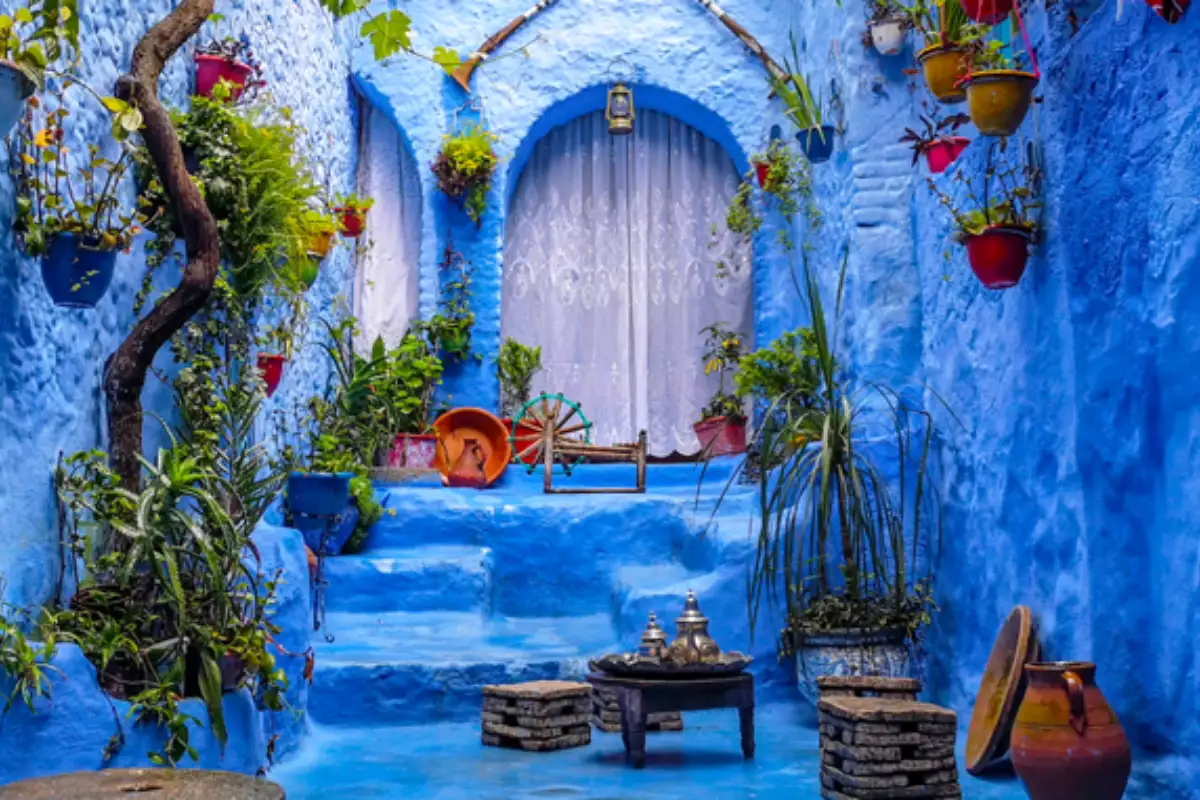
Chefchaouen is the most photographed town in Morocco, and the reason is simple: whole lanes, stairways and doorways are washed in shades of blue. The classic shots are the painted staircases and potted plants in the old medina, especially around Calle Granada and the lanes above Place Outa el Hammam.
Photo tip: Go right after sunrise, before the day trippers arrive. Many of the prettiest doors belong to private homes, so keep your voice down, do not block doorways and always ask before photographing residents.
2. Jemaa el-Fnaa with the Koutoubia, Marrakech
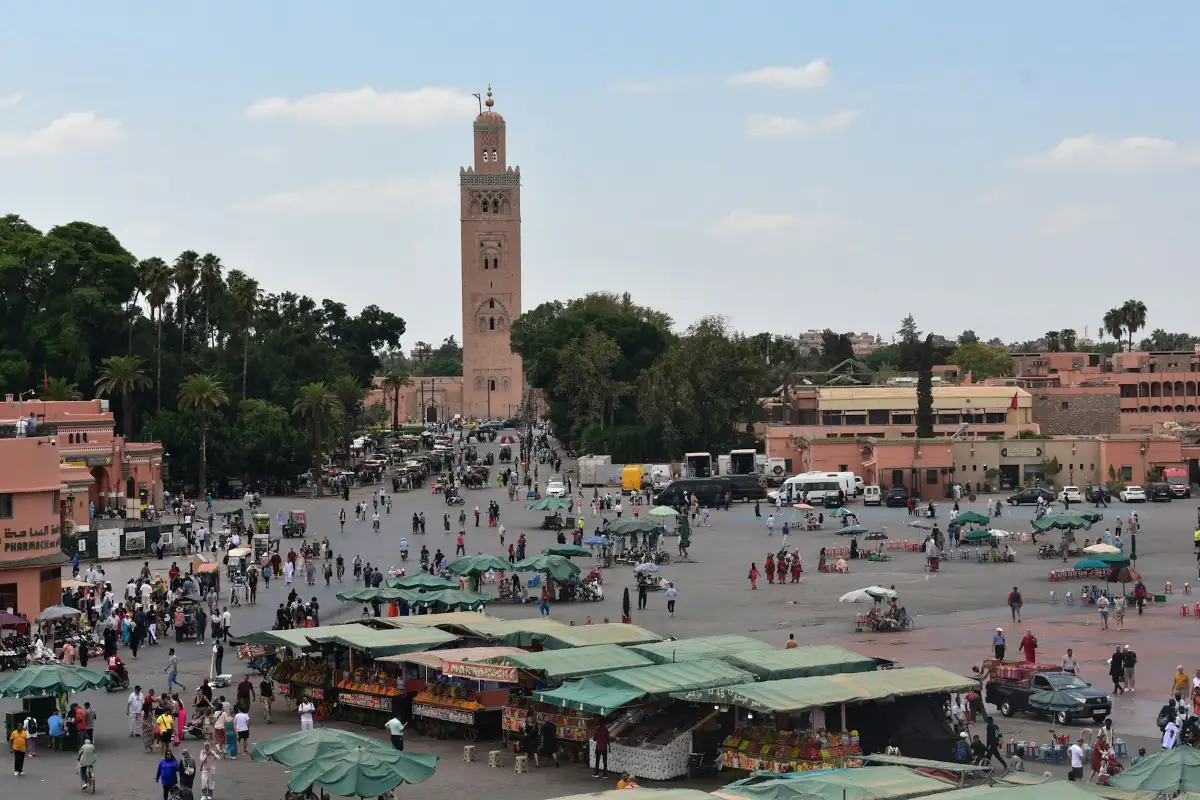
The classic Marrakech photo is the main square from a rooftop café at dusk, with the food stalls smoking below and the Koutoubia minaret lit up behind.
Photo tip: Get a rooftop table about 30 minutes before sunset. In the square itself, snake charmers, monkey handlers and performers expect payment for photos, so agree a price first or keep your camera down.
3. Jardin Majorelle, Marrakech
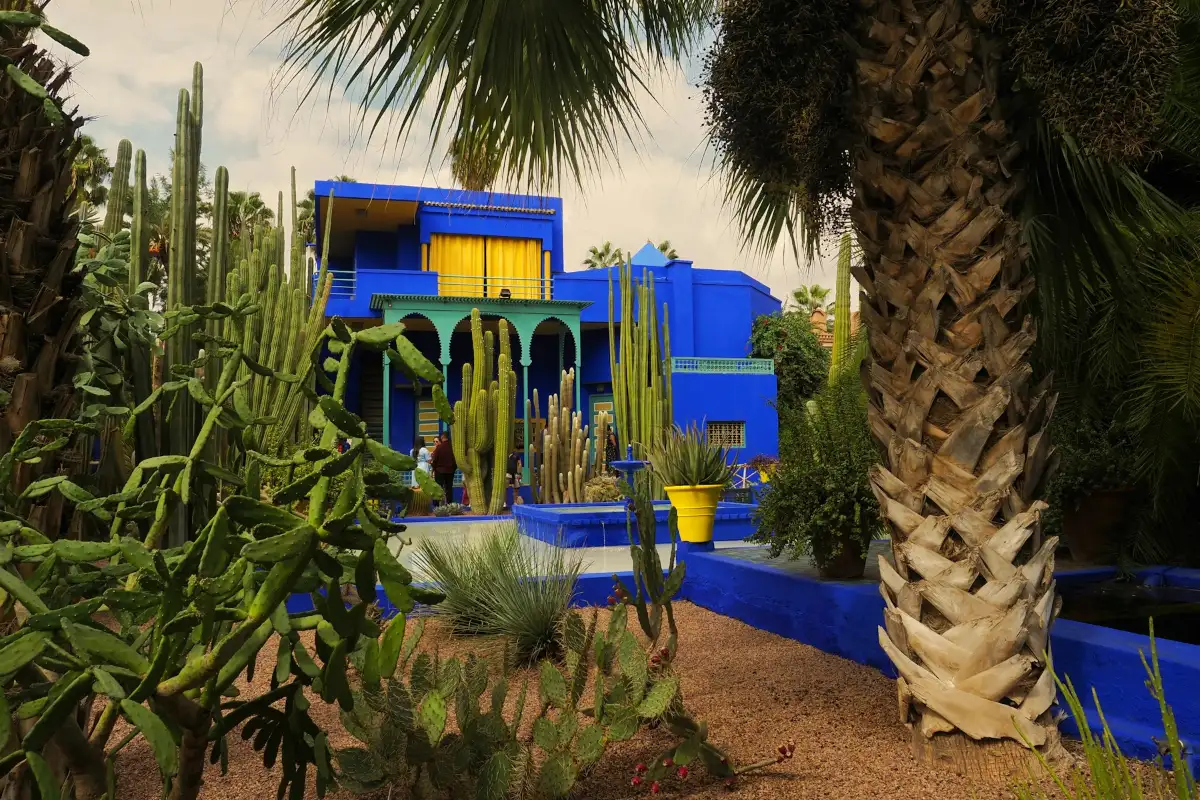
Majorelle is famous for its electric blue villa, cactus garden and yellow pots, once restored by Yves Saint Laurent and Pierre Bergé.
Photo tip: Tickets are sold online for set time slots, so book ahead and take the first slot of the day. Photography is not allowed inside the YSL Museum next door.
4. Camel Caravan at Sunset, Erg Chebbi
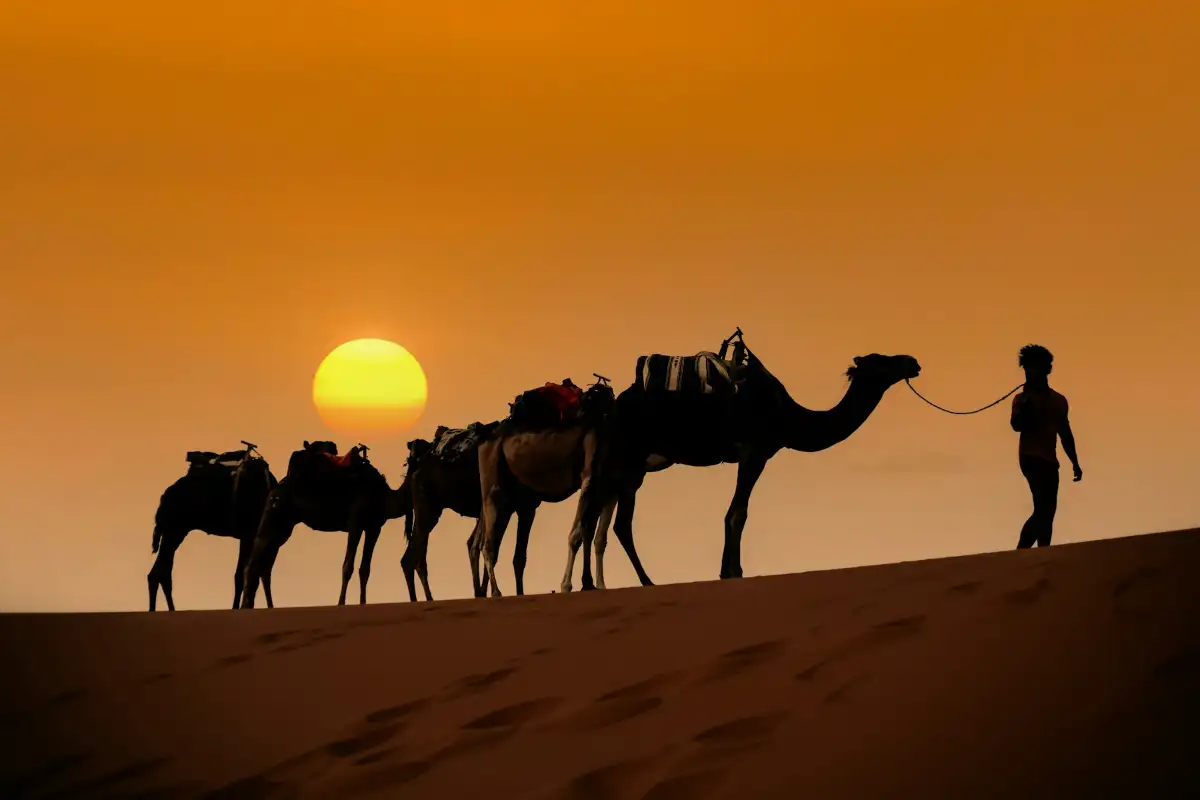
The defining photo of Morocco is a camel caravan crossing the orange dunes of Erg Chebbi near Merzouga, with long shadows at sunset.
Photo tip: Climb a dune before sunset and shoot the caravan from above, or ask your guide for a photo from the side.
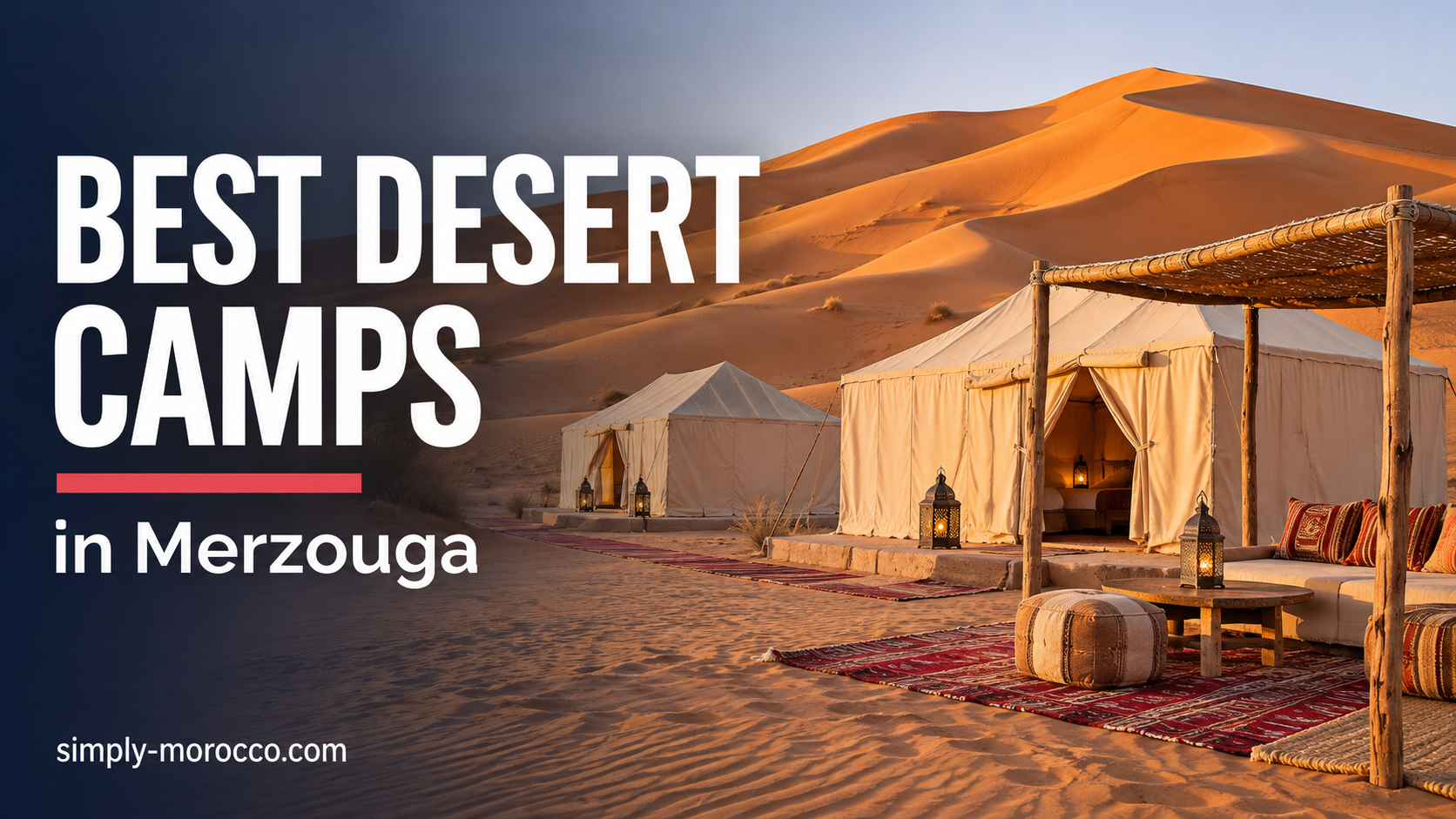
Where to stay: Check hotels and riads in Merzouga on Booking.com.
5. Hassan II Mosque, Casablanca
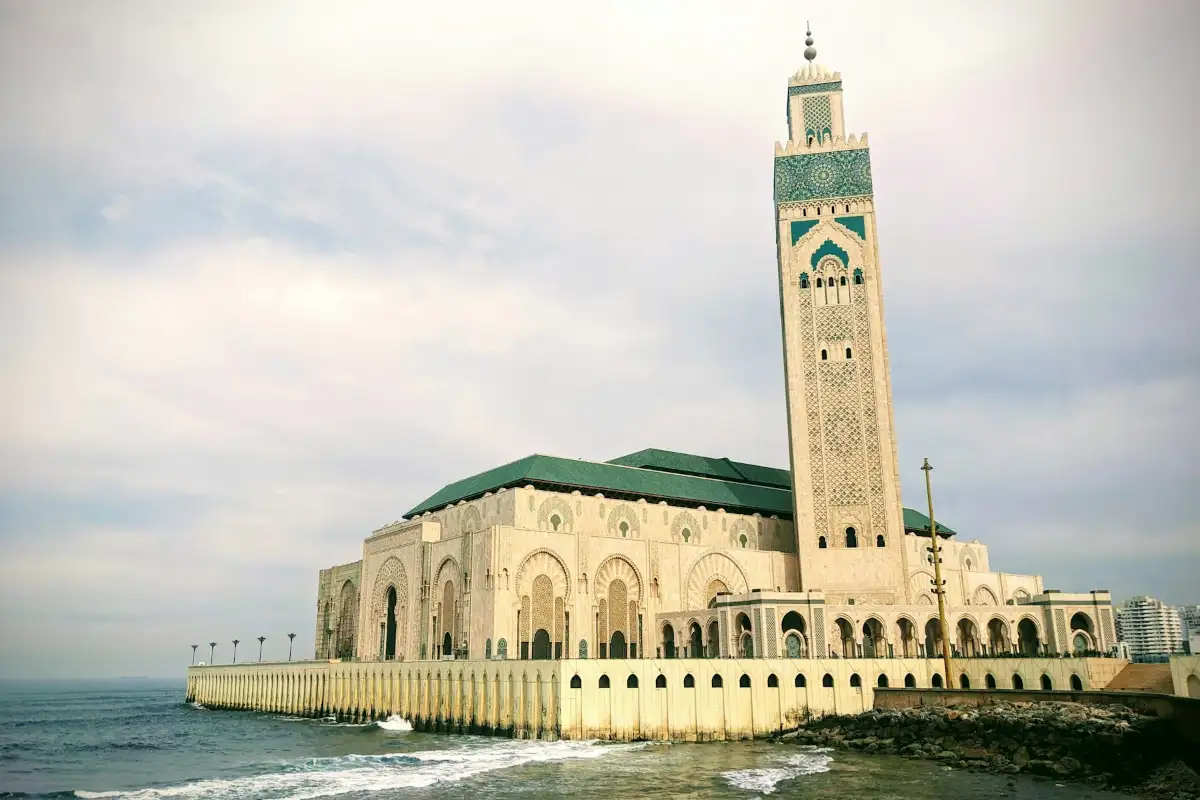
Built partly over the Atlantic, the Hassan II Mosque has one of the tallest minarets in the world and is one of the few mosques in Morocco open to non-Muslims, by guided tour.
Photo tip: Visits are by guided tour only, with a modest dress code. For the outside photo, walk along the corniche at sunset, or come at high tide when waves hit the rocks below.
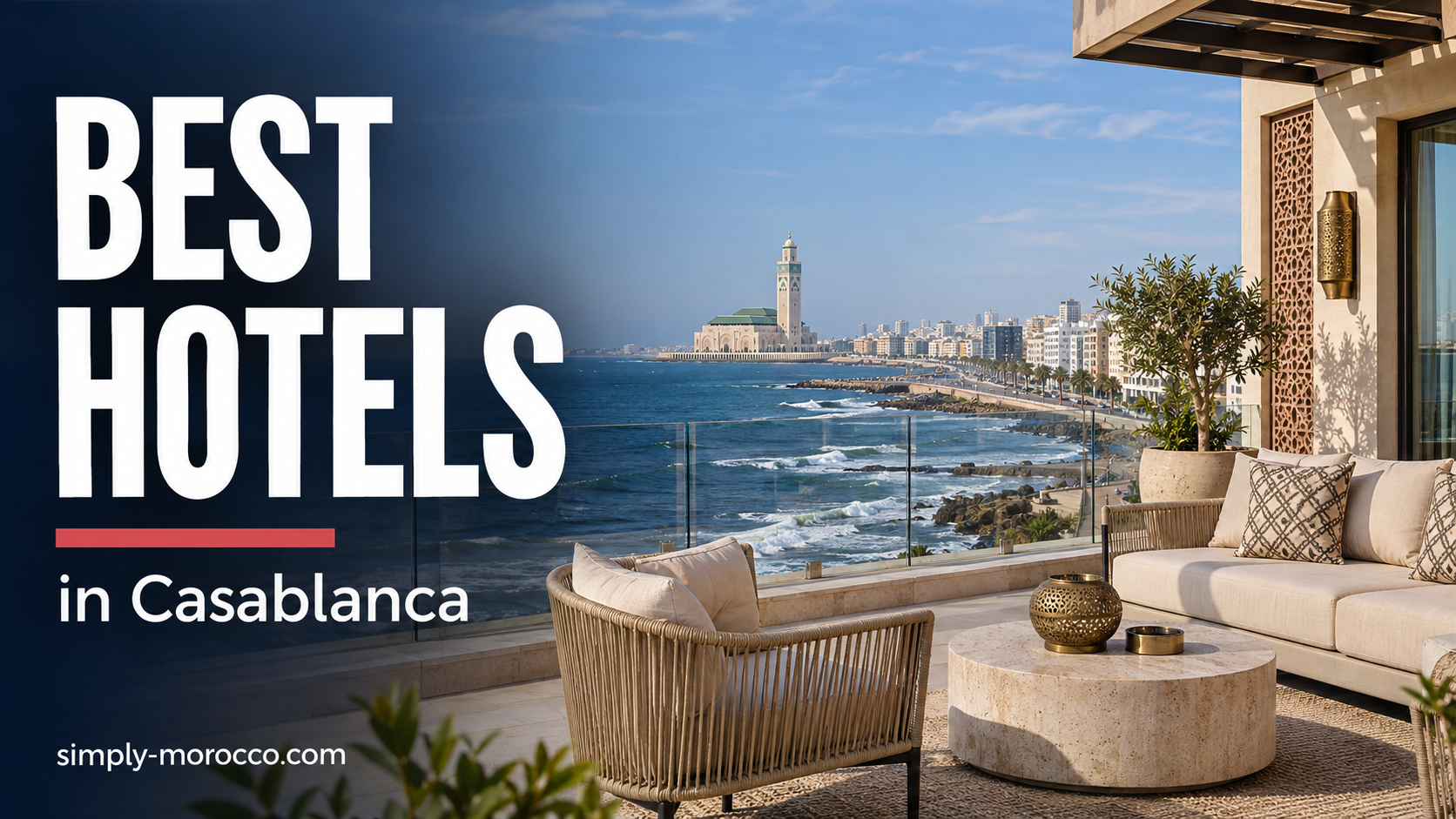
Where to stay: Royal Mansour Casablanca is one of our favorite stays nearby. See more in our guide to the best hotels in Casablanca.
6. Chouara Tannery, Fes
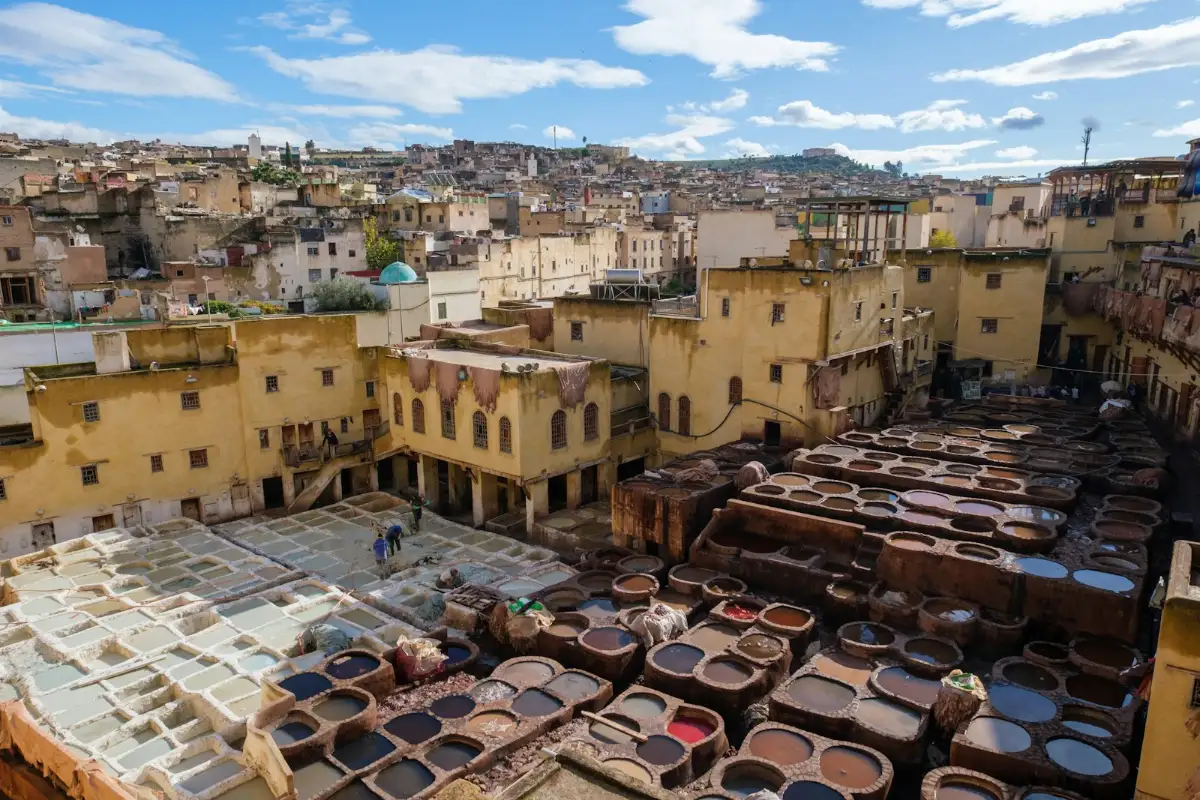
Chouara is the largest and most famous of the Fes tanneries, a honeycomb of stone vats filled with dyes, seen from the leather shop terraces above.
Photo tip: Go in the morning, roughly 9:00 to 11:00, when the vats are full of color and workers are active. Expect to tip around 20 to 50 dirhams at the terrace and to be offered leather goods, with no obligation to buy.
7. Ait Ben Haddou
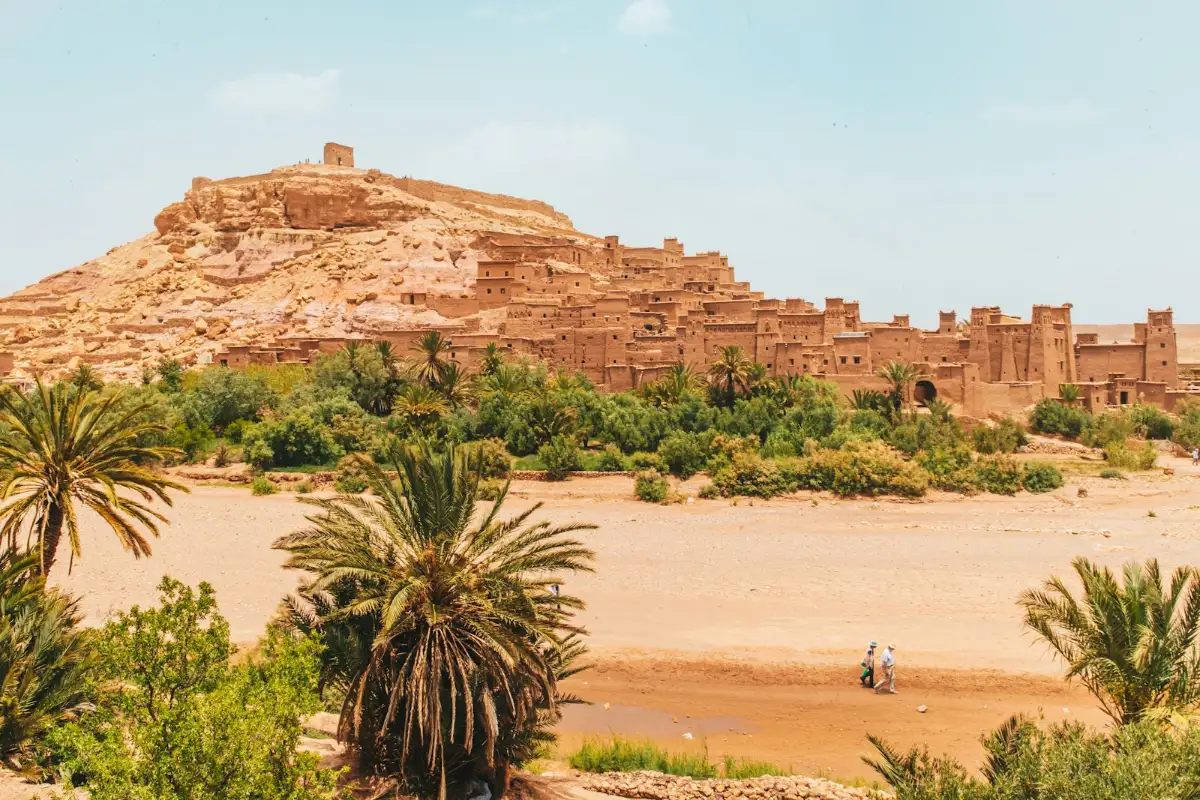
Ait Ben Haddou is the most famous ksar in Morocco, a fortified mud brick village climbing a hill above the Ounila River. It has appeared in films like Gladiator and in Game of Thrones.
Photo tip: The classic photo is from across the river in the late afternoon. Climb to the granary at the top for sunset over the valley.
Where to stay: Check hotels and riads in Ait Ben Haddou on Booking.com.
8. Ben Youssef Madrasa, Marrakech
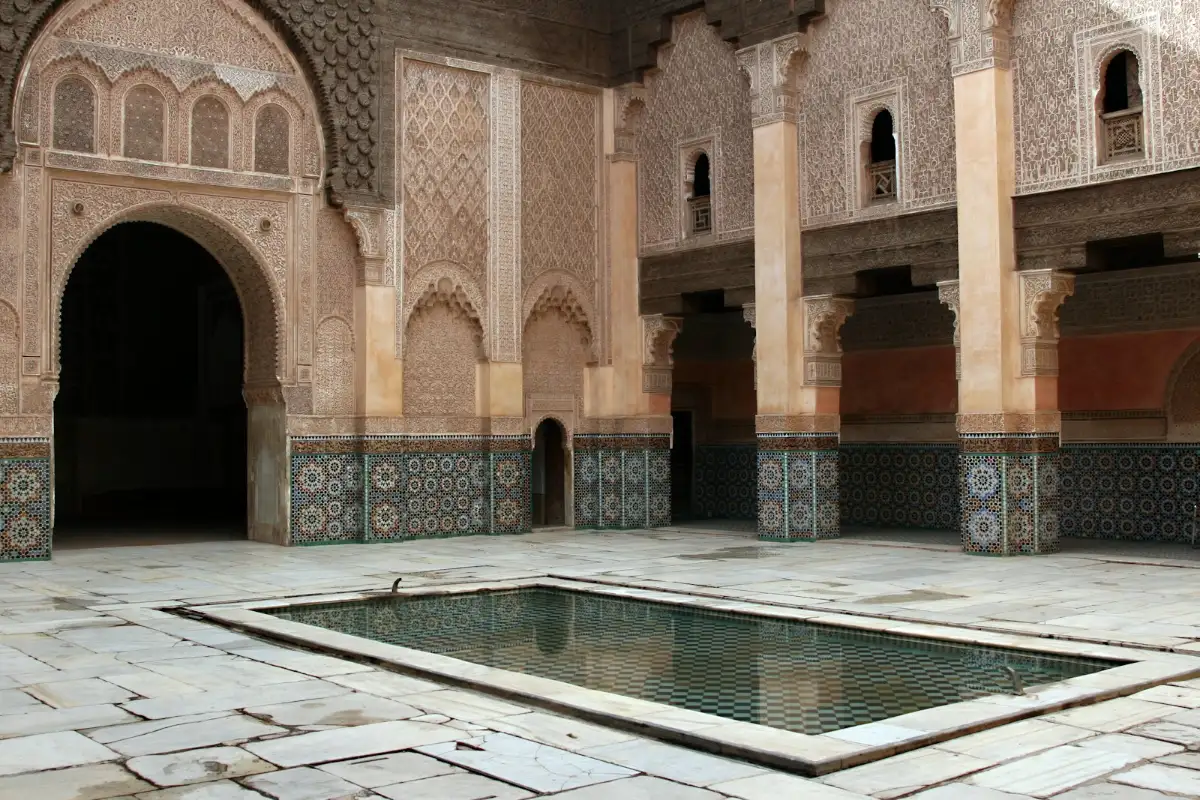
The courtyard of Ben Youssef, with its long reflecting pool, carved cedar and stucco, is one of the most beautiful interiors in Morocco.
Photo tip: Be there at opening time for a photo without crowds, and shoot from the end of the pool for the symmetrical view.
9. Bahia Palace, Marrakech
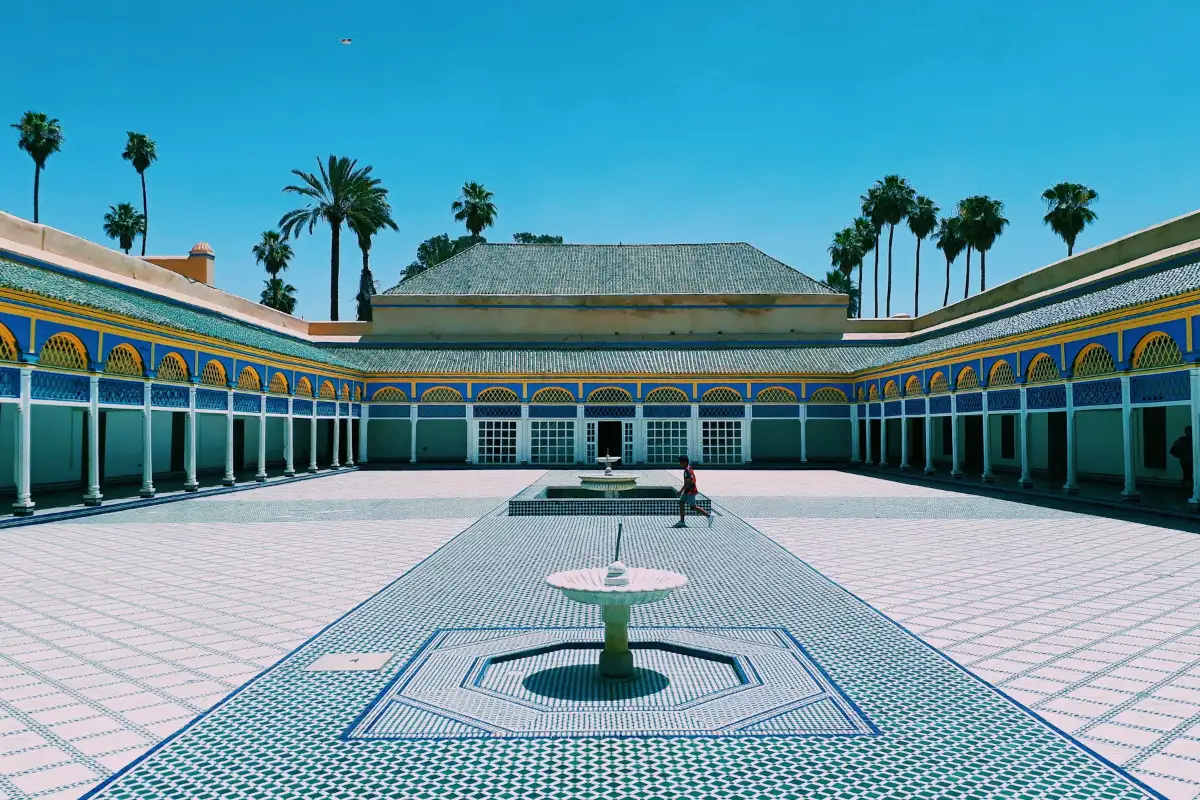
Bahia Palace is a 19th century palace with painted ceilings, tiled courtyards and the huge marble courtyard that appears in most Marrakech feeds.
Photo tip: Arrive at opening. Mid morning tour groups fill the main courtyard quickly.
10. A Desert Camp at Night, Merzouga
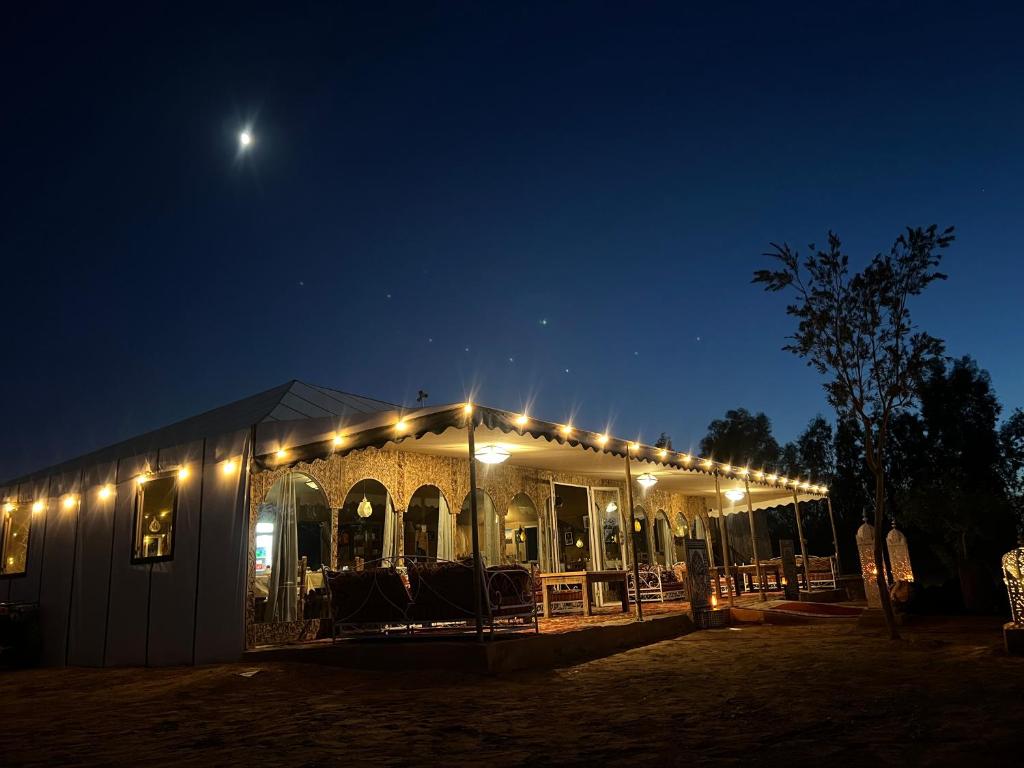
Lantern lit tents, rugs on the sand and a sky full of stars make a night in a Merzouga camp one of the most memorable photos of a trip.
Photo tip: Bring a small tripod for the stars, and choose a camp away from the main tourist cluster for darker skies.
Where to stay: the camp in this photo is Sahara Majestic Luxury Camp. Compare more options in our guide to the best desert camps in Merzouga.
11. The Blue Fishing Boats, Essaouira Port
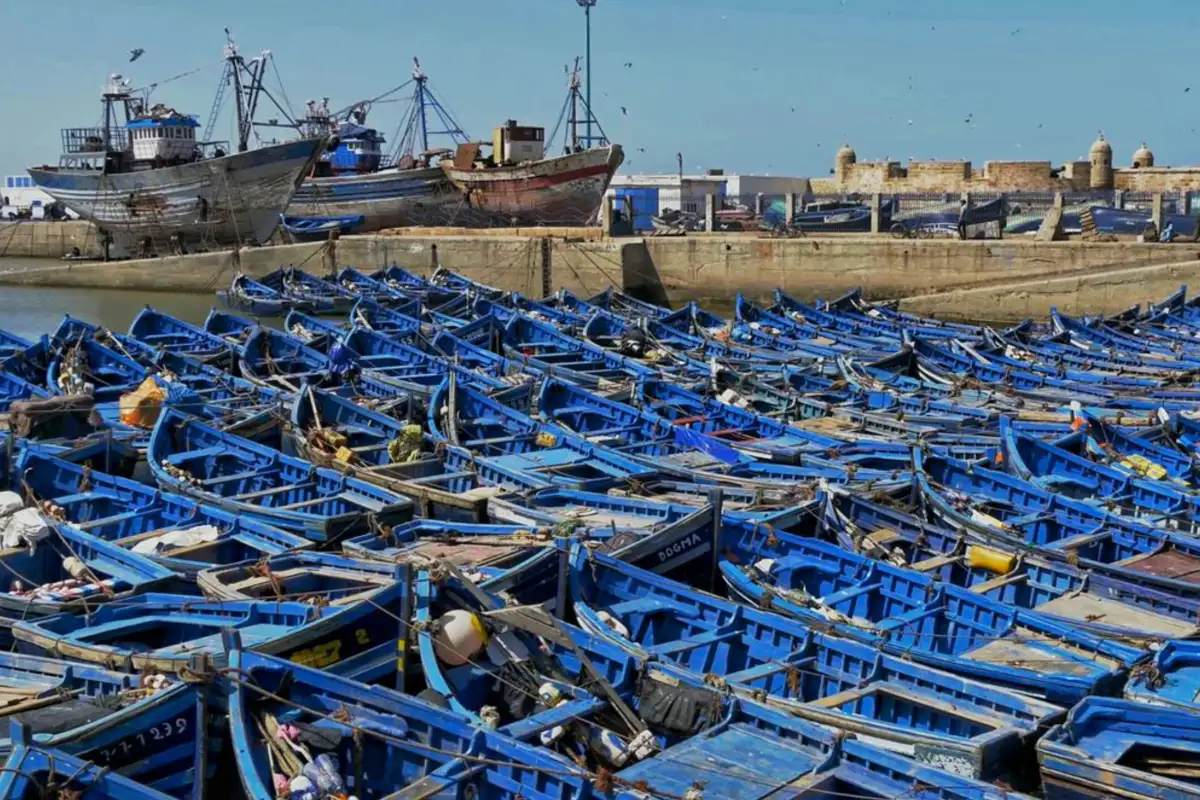
Hundreds of small blue fishing boats fill Essaouira’s harbor, with seagulls, fish stalls and the old fortress walls behind.
Photo tip: Go in the morning when the boats come in and the fish market is busy. Ask before photographing fishermen.
12. Bab Bou Jeloud, Fes
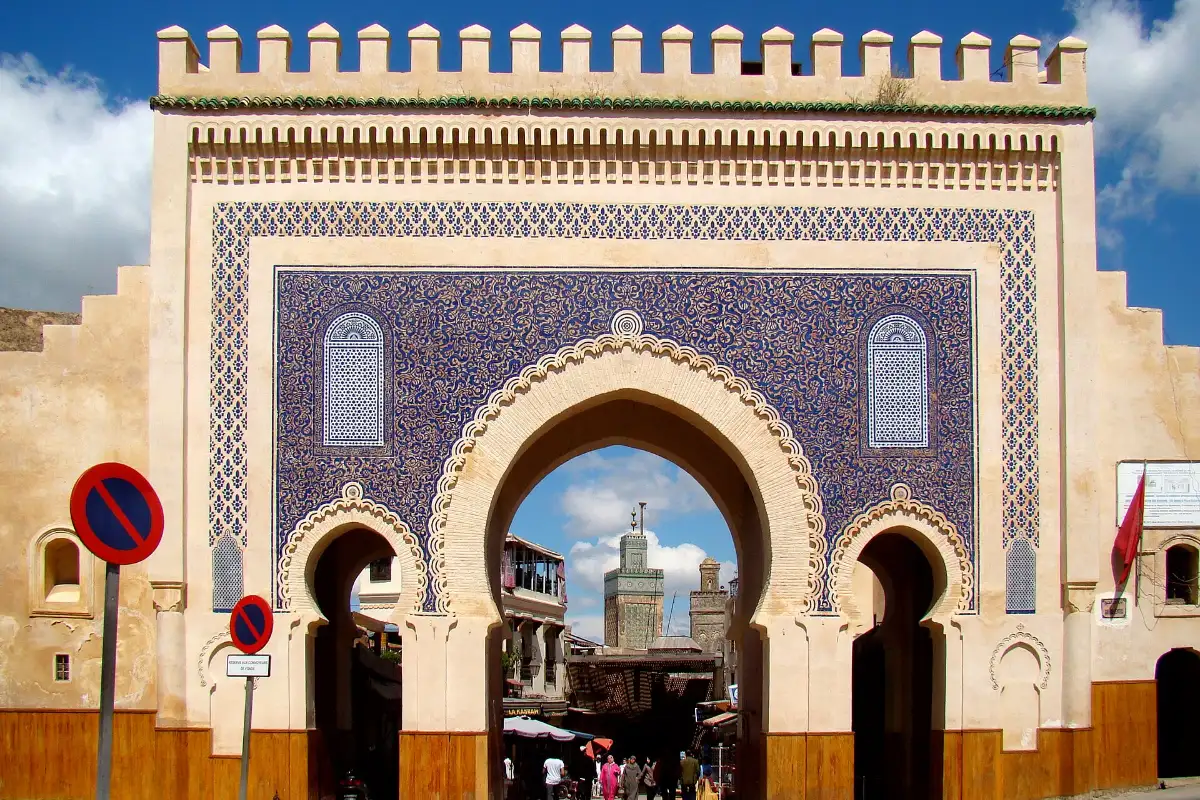
Known as the Blue Gate, Bab Bou Jeloud is the main entrance to the old medina of Fes. It is blue on the outside and green on the inside, with the minarets of the medina framed through its arches.
Photo tip: Shoot the green side in the morning and the blue side in the late afternoon or just after sunset.
13. The Royal Palace Doors, Fes
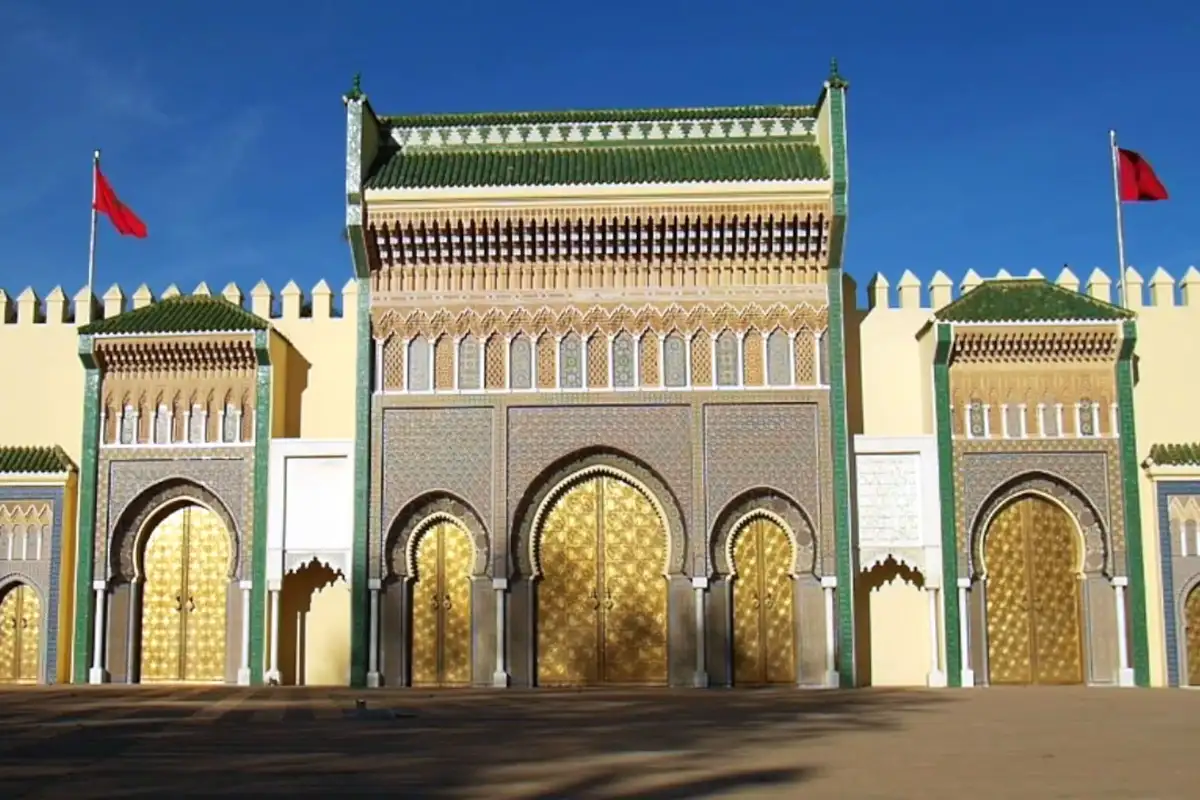
The golden doors of Dar el Makhzen, the Royal Palace of Fes, are covered in brass work and framed by zellige tiles and carved cedar. It is one of the most recognizable photos in Morocco.
Photo tip: The palace itself cannot be visited, so this is an outside photo only. Late afternoon light makes the brass glow. Do not photograph the guards.
14. The Skala de la Ville, Essaouira
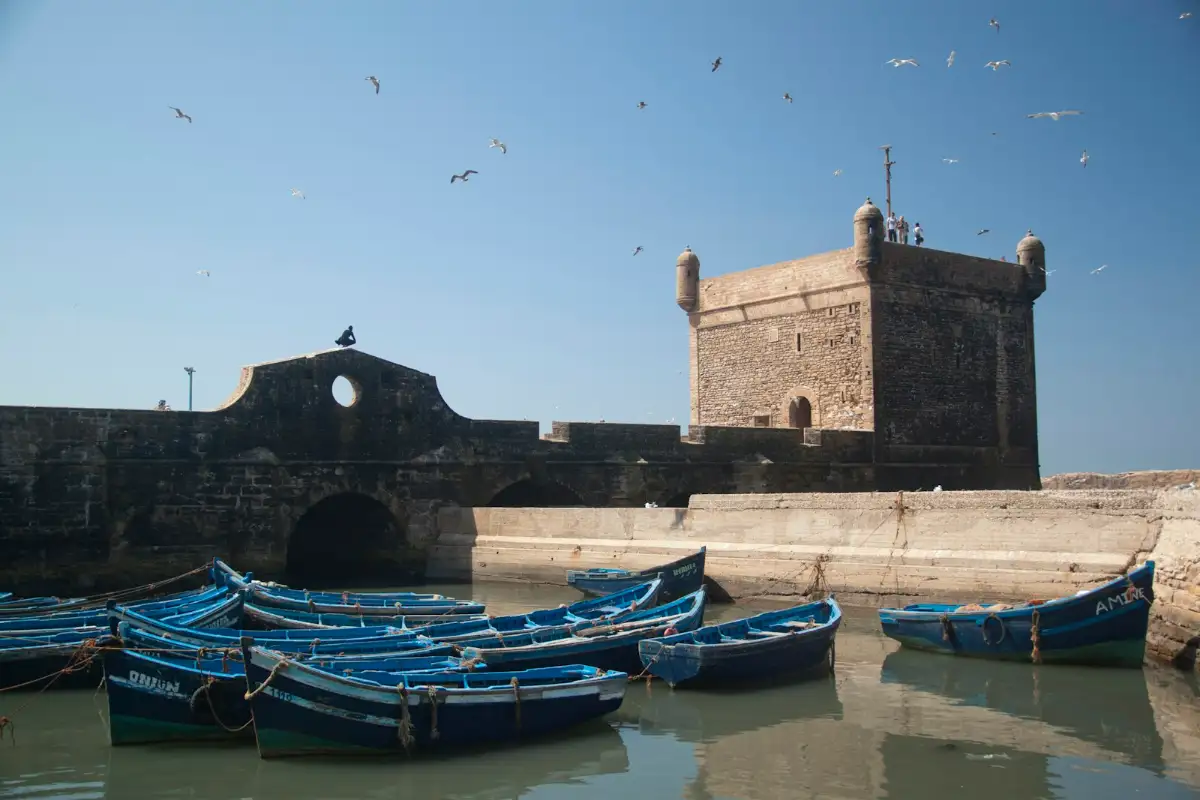
The Skala is the sea bastion of Essaouira’s medina, lined with old bronze cannons pointing out at the Atlantic. Fans of Game of Thrones will recognize it.
Photo tip: Sunset is the time, when the light turns gold on the walls. It gets windy, so hold on to your hat.
15. The Goats in the Argan Trees
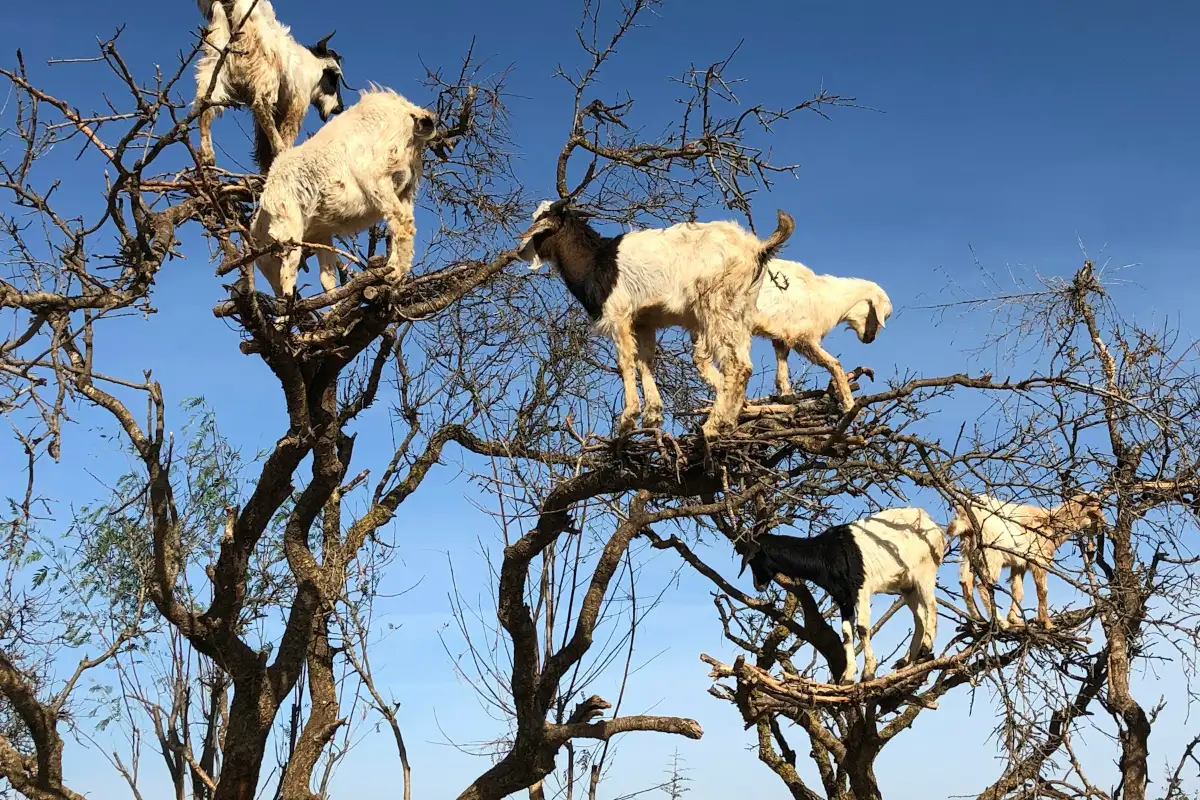
Goats really do climb argan trees to eat the fruit, especially in the late summer when the fruit is ripe, and you can see it naturally in the Souss region. Along the Marrakech to Essaouira road, though, the trees you see packed with goats are photo stops run by herders, who place the goats in the trees and ask for a tip.
Photo tip: If you stop, know what you are paying for. Many travelers prefer to look for goats feeding naturally in the countryside instead of the roadside setups.
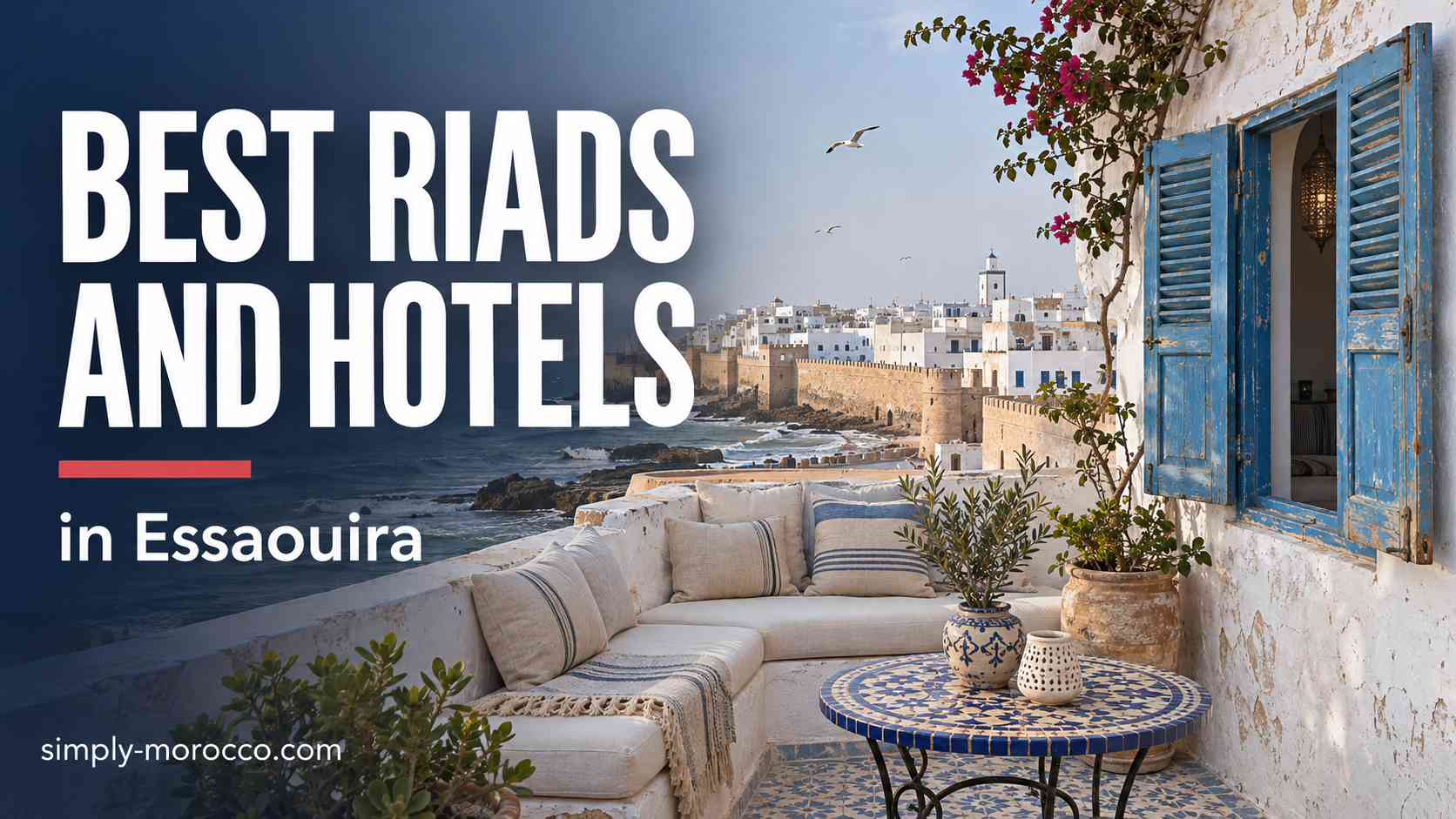
Where to stay: Heure Bleue Palais is one of our favorite stays nearby. See more in our guide to the best riads and hotels in Essaouira.
16. The Kasbah of the Udayas, Rabat
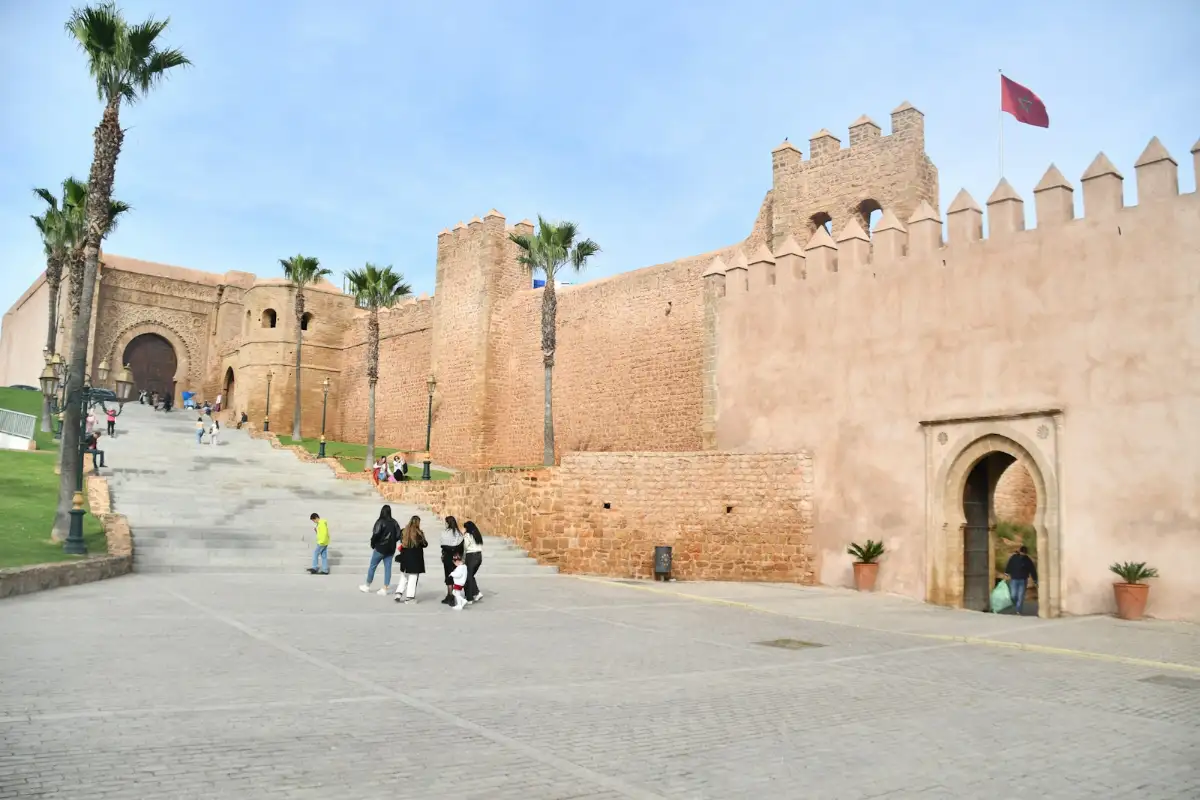
The Udayas kasbah sits on a hill above the ocean, with blue and white lanes inside its walls that feel like a small Chefchaouen by the sea. The big gate, Bab Oudaia, and the terrace overlooking the river mouth are the classic shots.
Photo tip: Go in the morning on a weekday. The Andalusian Garden just inside the walls is a quiet spot for portraits.
17. Hassan Tower, Rabat
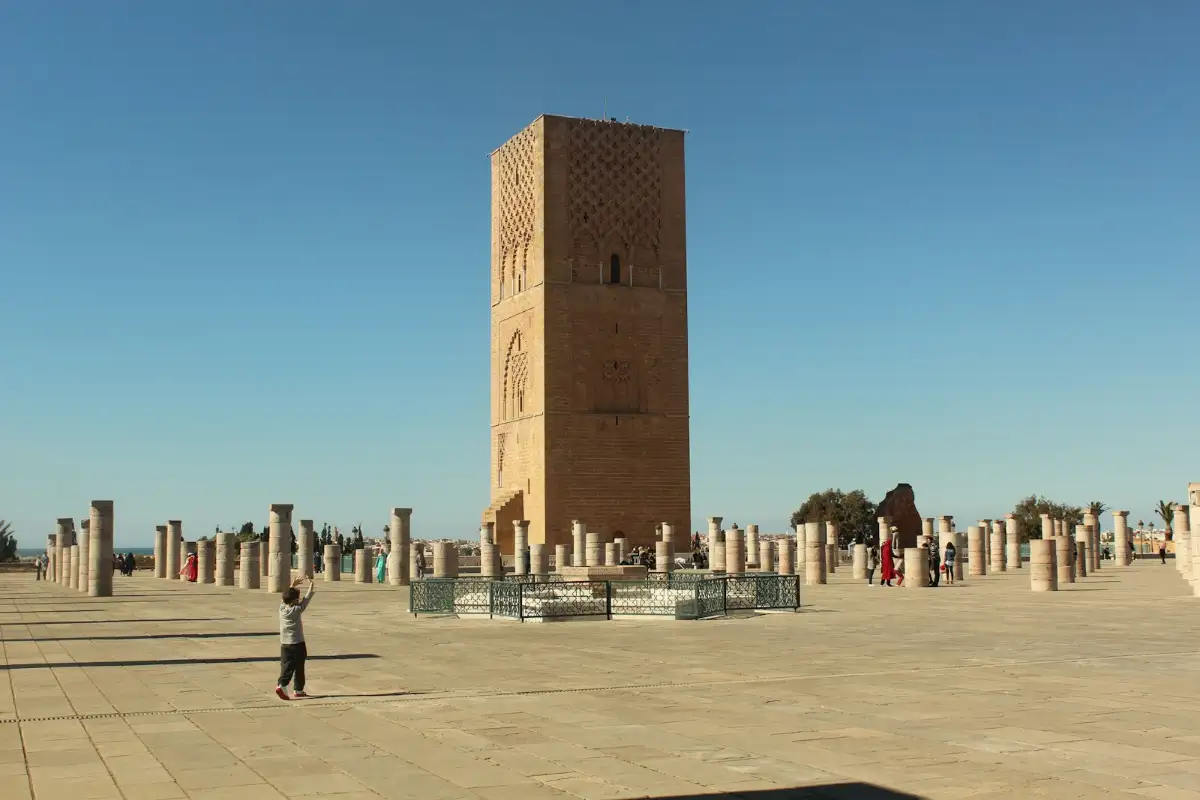
Hassan Tower is the unfinished minaret of a 12th century mosque that was never completed. The rows of broken columns leading up to it make a striking, symmetrical photo.
Photo tip: Shoot early or late in the day for warm light on the stone. The royal guards on horseback at the entrance are popular, but photograph them from a respectful distance.
18. Legzira Beach Arch
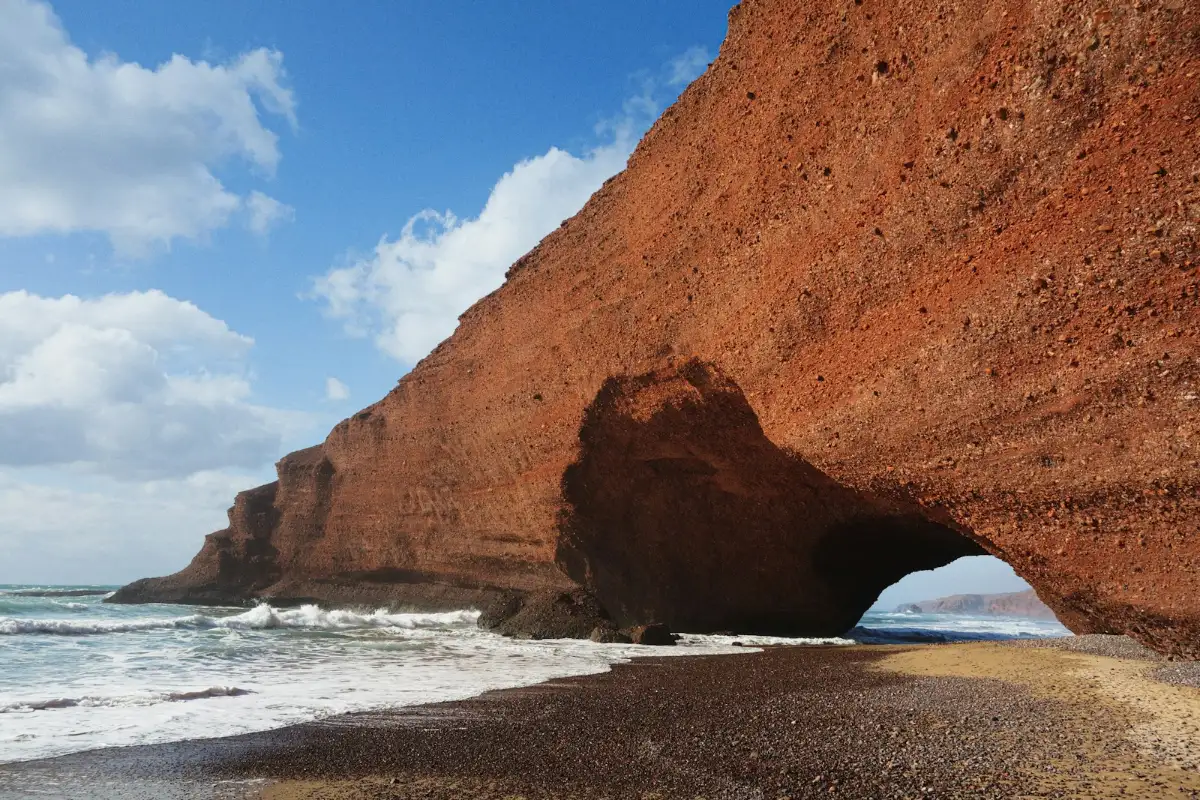
Legzira was famous for two red rock arches. One collapsed in 2016, but the other is still standing, and it is still one of the most striking beach photos in Morocco.
Photo tip: Check the tide, as you need low tide to walk under and around the arch. Sunset turns the rock deep red.
19. The Spanish Mosque Viewpoint, Chefchaouen
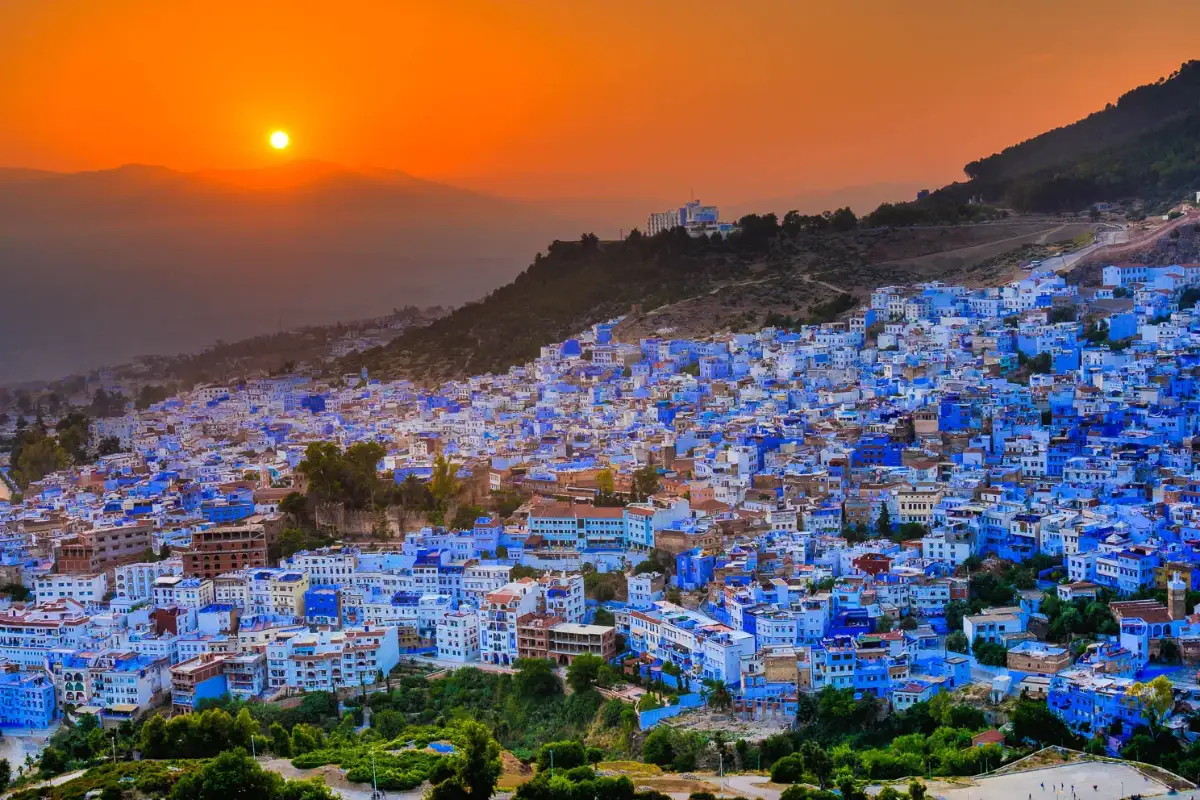
A short uphill walk from the east gate of the medina takes you to the old Spanish Mosque, with the whole blue town spread out below you and the Rif Mountains behind.
Photo tip: Come for sunset. The walk takes about 20 to 30 minutes from Ras el Maa, so bring water and a light layer for the way down.
Where to stay: Check hotels and riads in Chefchaouen on Booking.com.
20. The Tissadrine Road, Dades Gorge
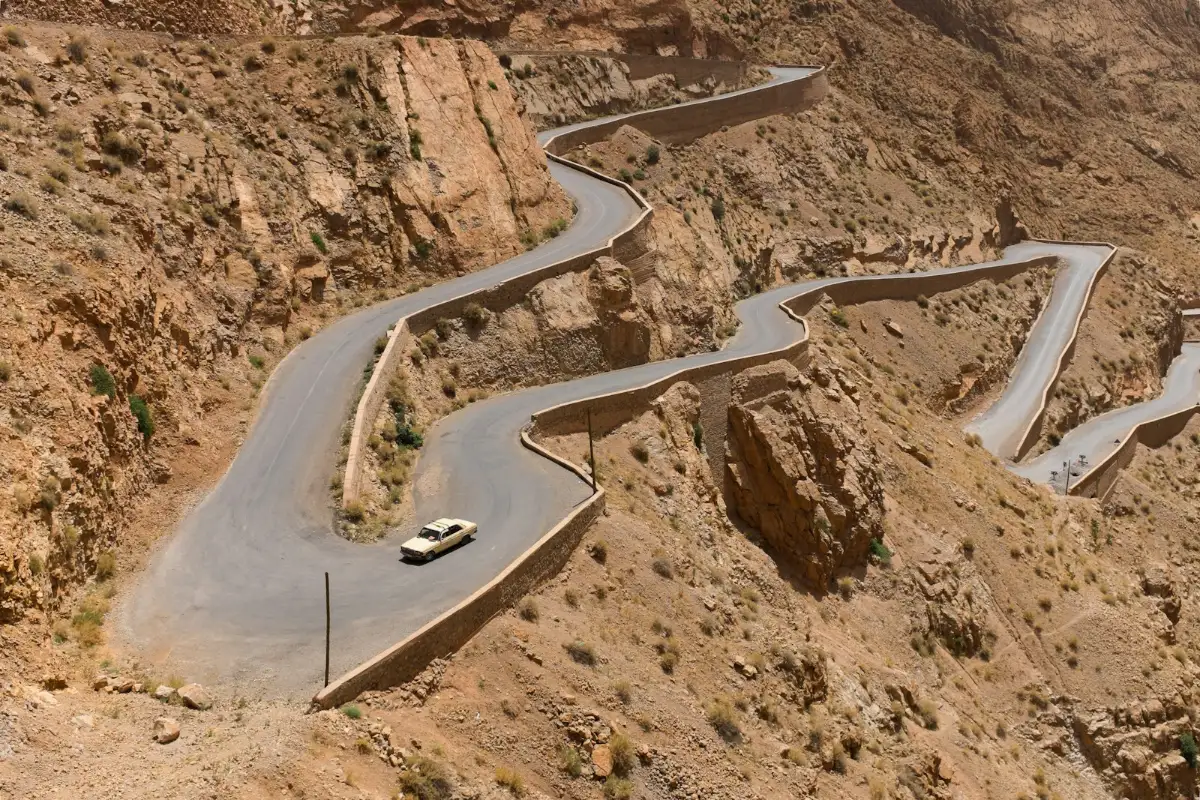
The Tissadrine road climbs out of the Dades Gorge in a series of tight hairpin bends, one of the most famous road photos in Morocco. The classic view is from the café terrace at the top of the switchbacks.
Photo tip: Mid afternoon light lights up the road. Stop at the café at the top for a mint tea and the full view.
21. Ouzoud Waterfalls
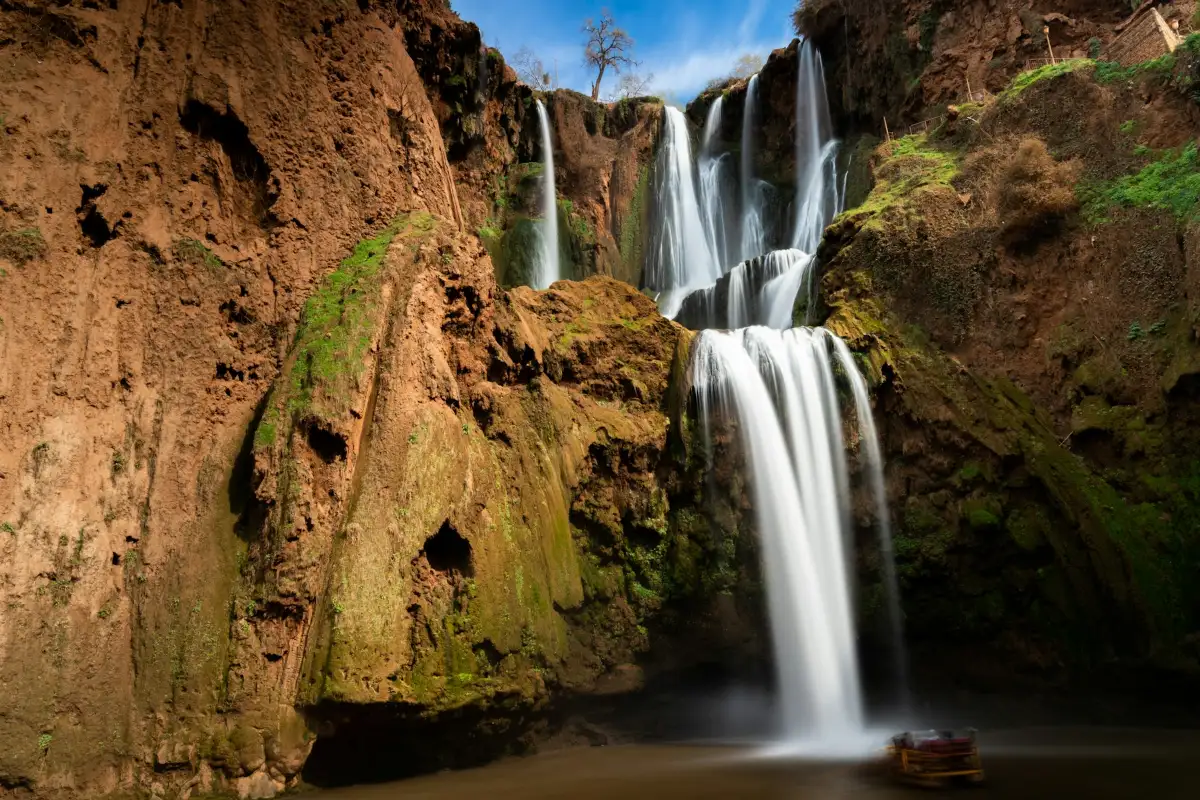
The Ouzoud Falls drop around 110 meters into a green gorge, with rainbows in the spray and Barbary macaques on the trails.
Photo tip: Go in the morning for rainbows in the spray. Do not feed the monkeys, however tempting.
Where to stay: Check hotels and riads in Ouzoud on Booking.com.
22. Le Jardin Secret, Marrakech
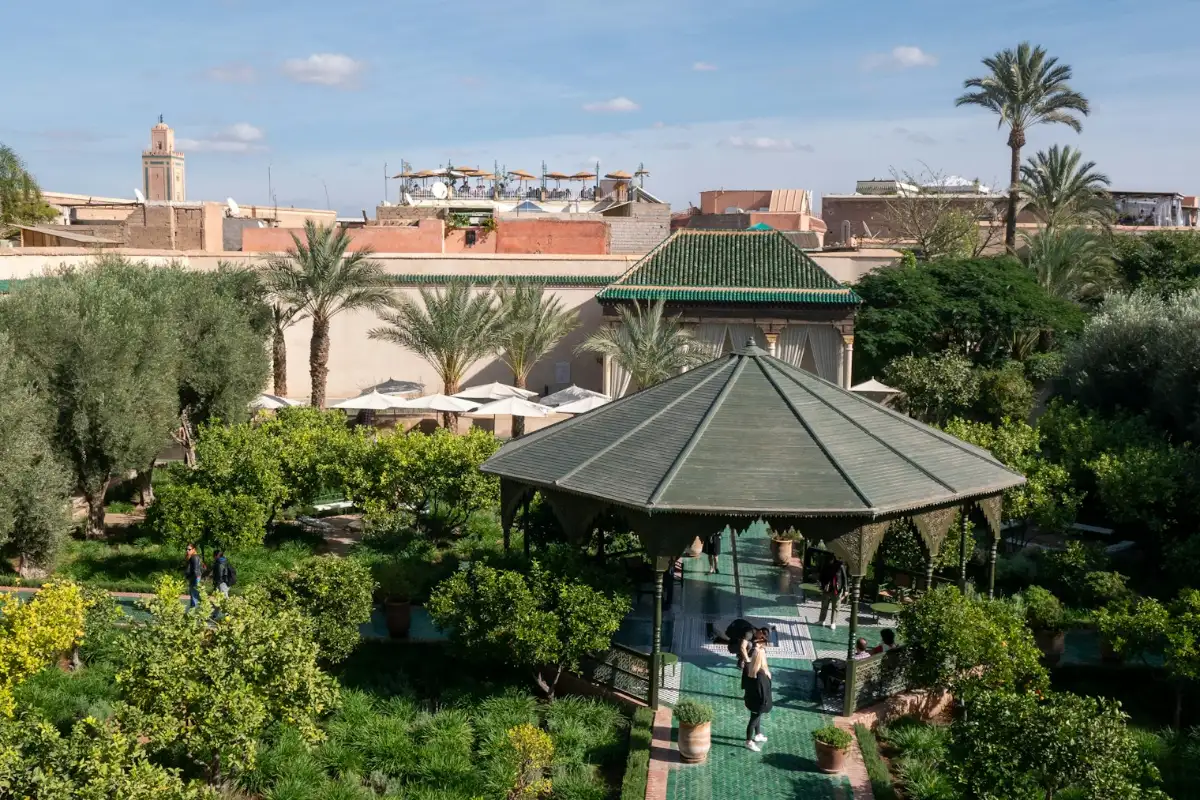
Le Jardin Secret is a restored riad garden in the heart of the medina, with green pavilions, fountains and a tower that looks over the rooftops.
Photo tip: Climb the tower for a medina view, and visit in the morning when the light is soft.
23. El Badi Palace, Marrakech
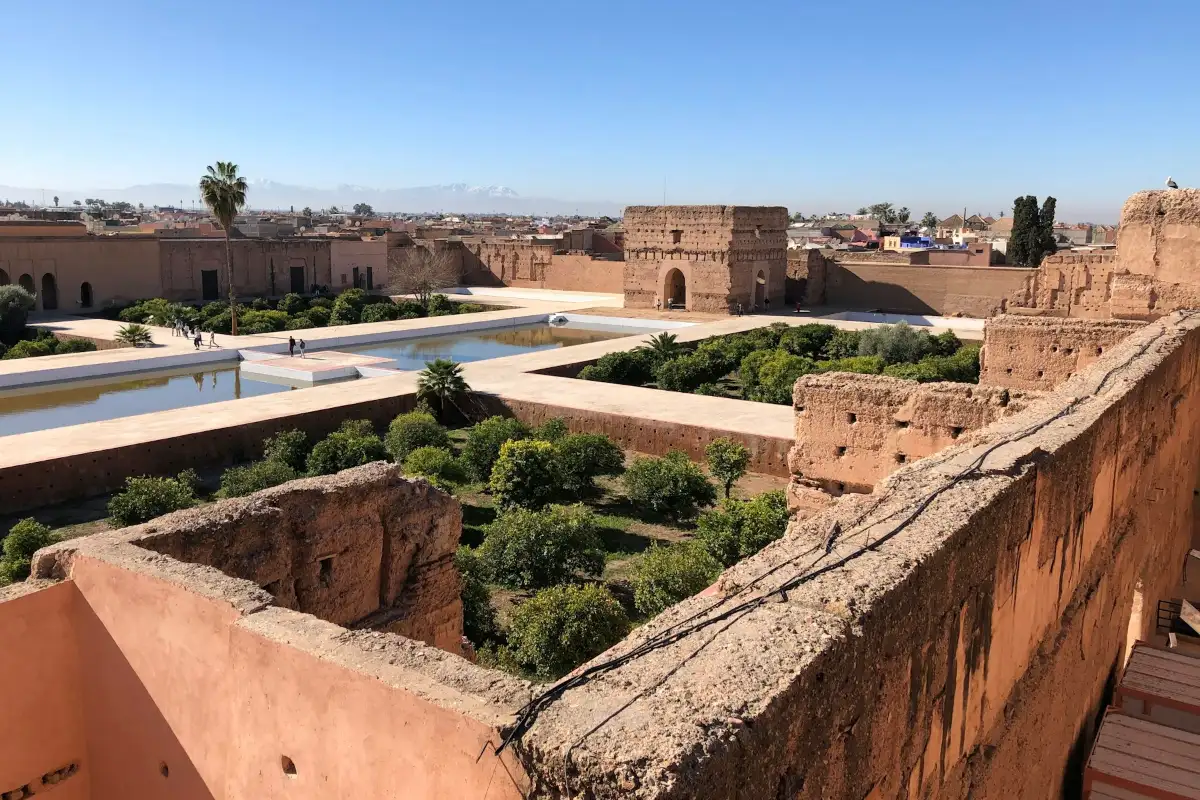
The ruined 16th century El Badi Palace has huge sunken gardens, orange trees and storks nesting on the walls. The ramparts give a wide view of the medina.
Photo tip: Climb the terrace at the corner for the view over the sunken gardens, and visit in the late afternoon.
24. The Arch of Caracalla, Volubilis
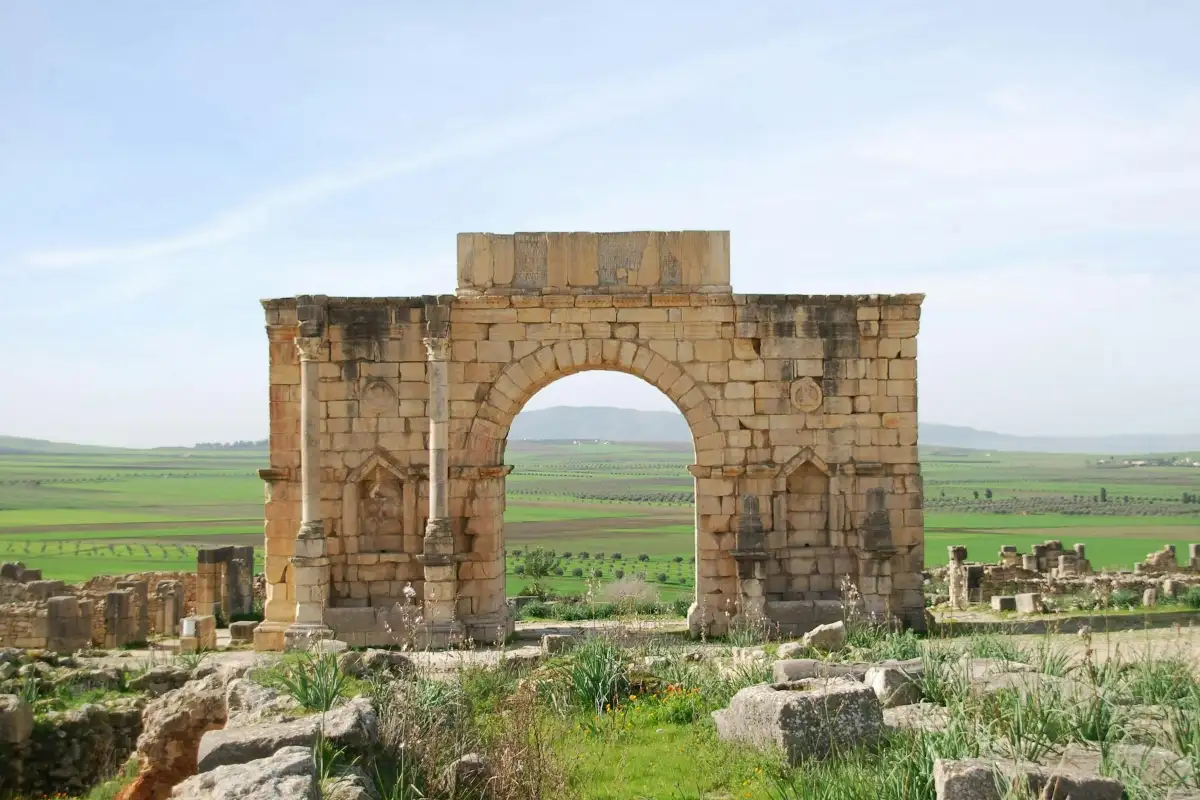
Volubilis is the best preserved Roman site in Morocco, with the triumphal Arch of Caracalla standing in open fields below the Zerhoun hills. The floor mosaics are a second must.
Photo tip: Go early or late, as there is little shade at midday. In spring the fields around the ruins are green and full of wildflowers.
25. Todra Gorge
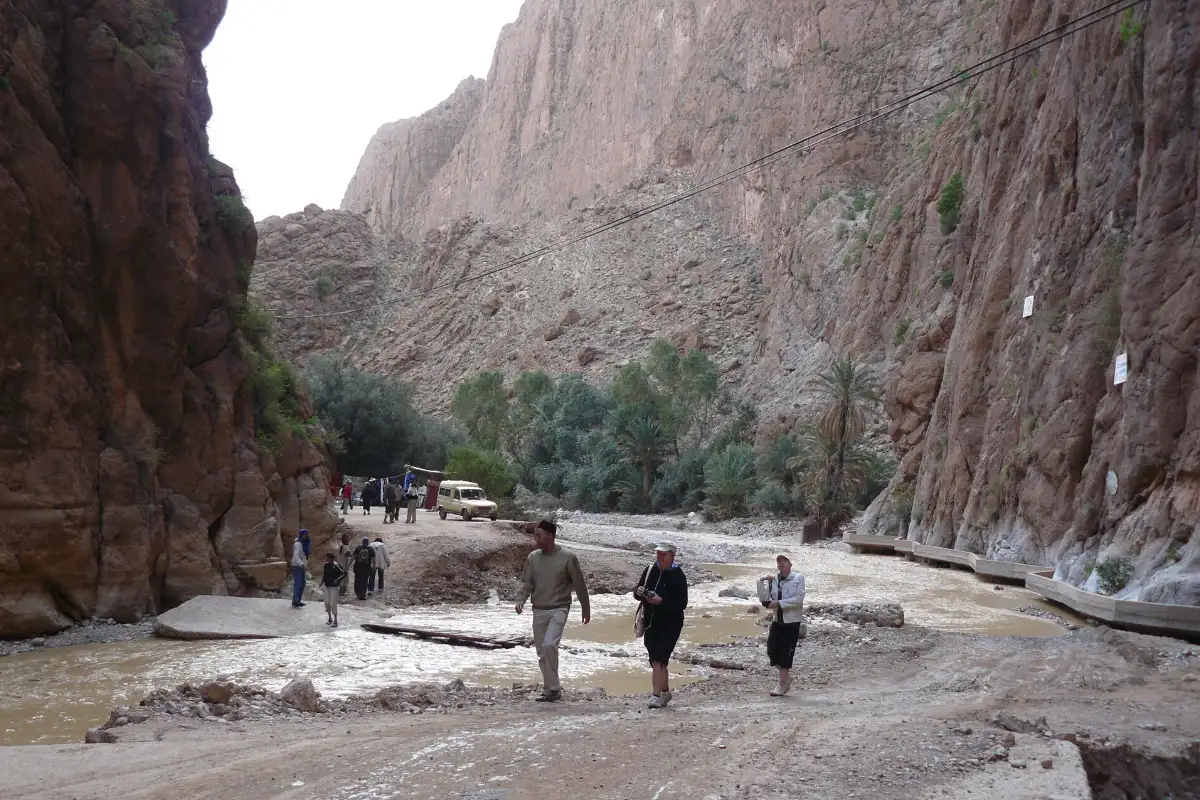
At its narrowest point, Todra Gorge is only a few meters wide, with sheer rock walls rising up to 300 meters on both sides.
Photo tip: Go in the morning when the sun reaches the bottom of the gorge, and walk past the first section for quieter spots.
Where to stay: Check hotels and riads in Tinghir on Booking.com.
26. Bab Mansour, Meknes
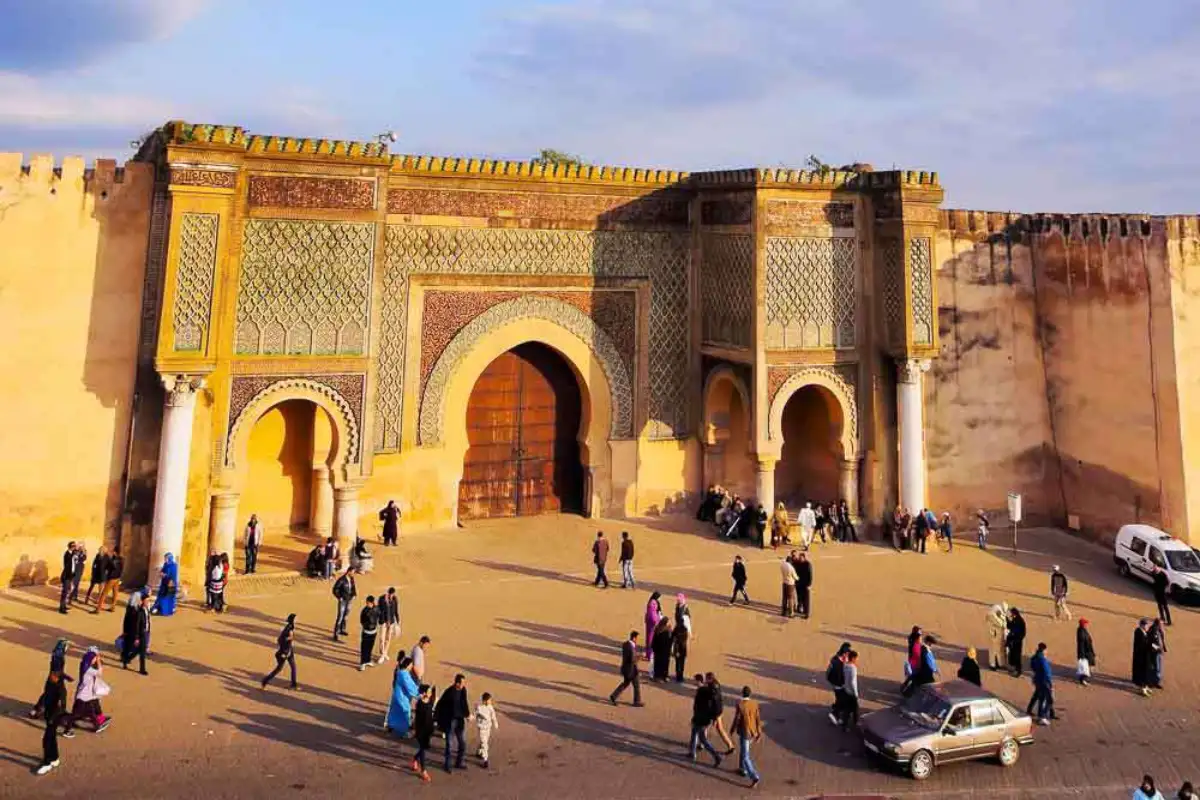
Bab Mansour is often called the most beautiful gate in Morocco, a huge arch covered in green and white tiles facing Lahdim Square.
Photo tip: Shoot it from the square in the late afternoon. Restoration work is ongoing in this part of Meknes, so check whether the gate is under scaffolding before you plan your trip around it.
Where to stay: Check hotels and riads in Meknes on Booking.com.
27. Mausoleum of Mohammed V, Rabat
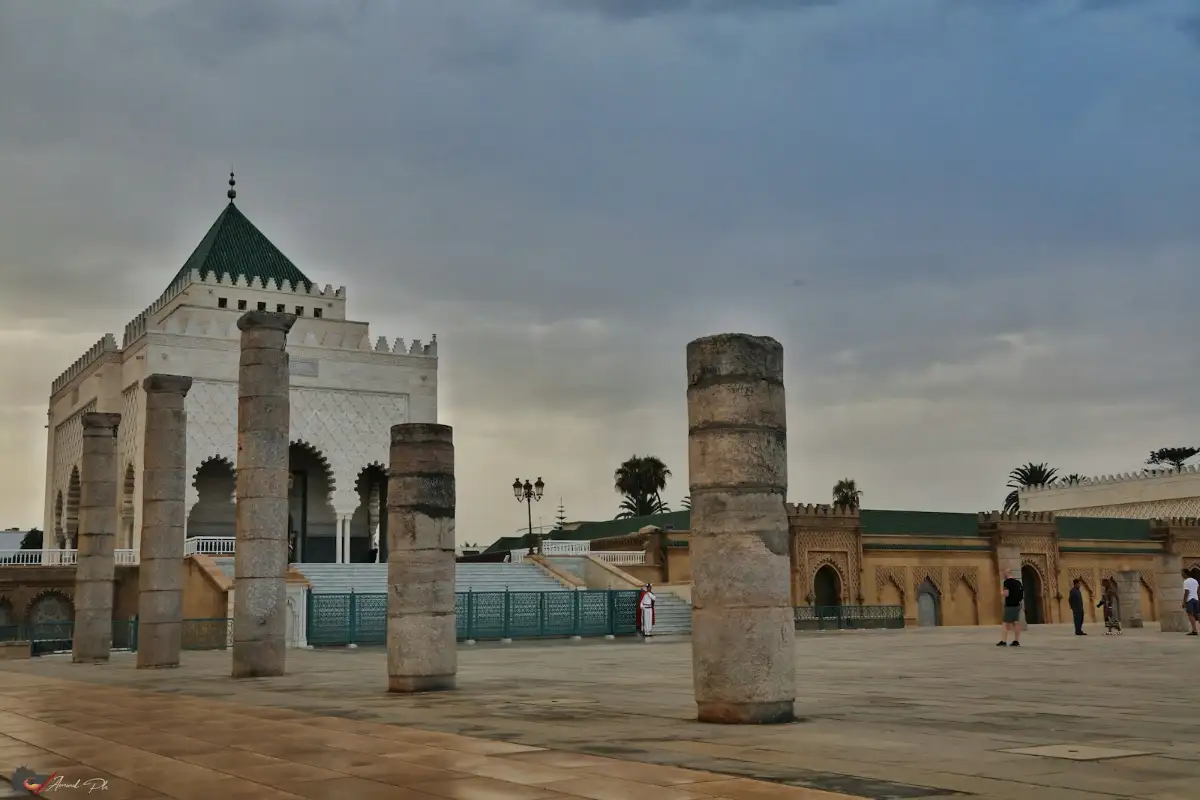
Across the esplanade from Hassan Tower, the white mausoleum with its green tiled roof holds the tombs of King Mohammed V and King Hassan II. The guards in ceremonial uniform at the doors are one of the most photographed scenes in Rabat.
Photo tip: Dress modestly. Photos of the interior from the balcony are usually allowed, but follow any instruction from the guards.
28. Bou Inania Madrasa, Fes
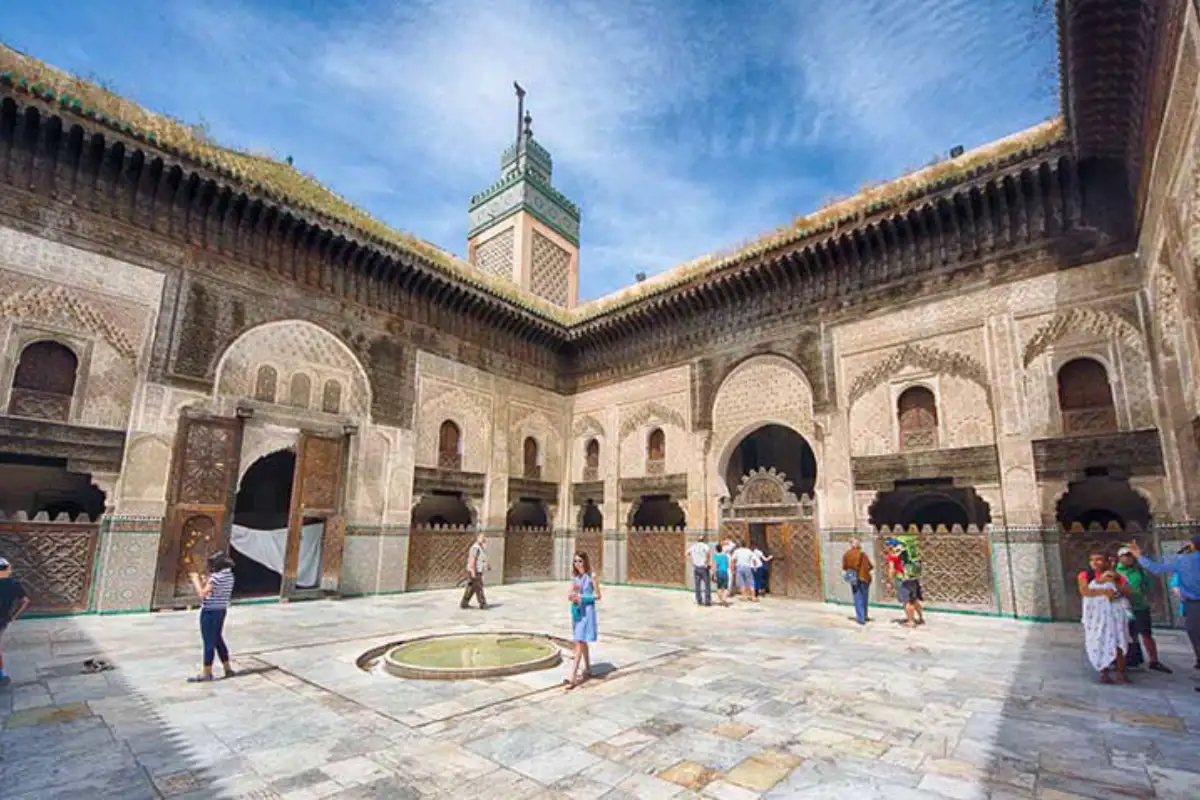
Bou Inania is a 14th century Merinid school with some of the finest carved stucco, cedar and zellige in the country, and one of the few religious buildings in Fes that non-Muslims can enter.
Photo tip: Arrive at opening time to have the courtyard to yourself and look up for the carved wooden ceilings.
29. The Cave of Hercules, Tangier
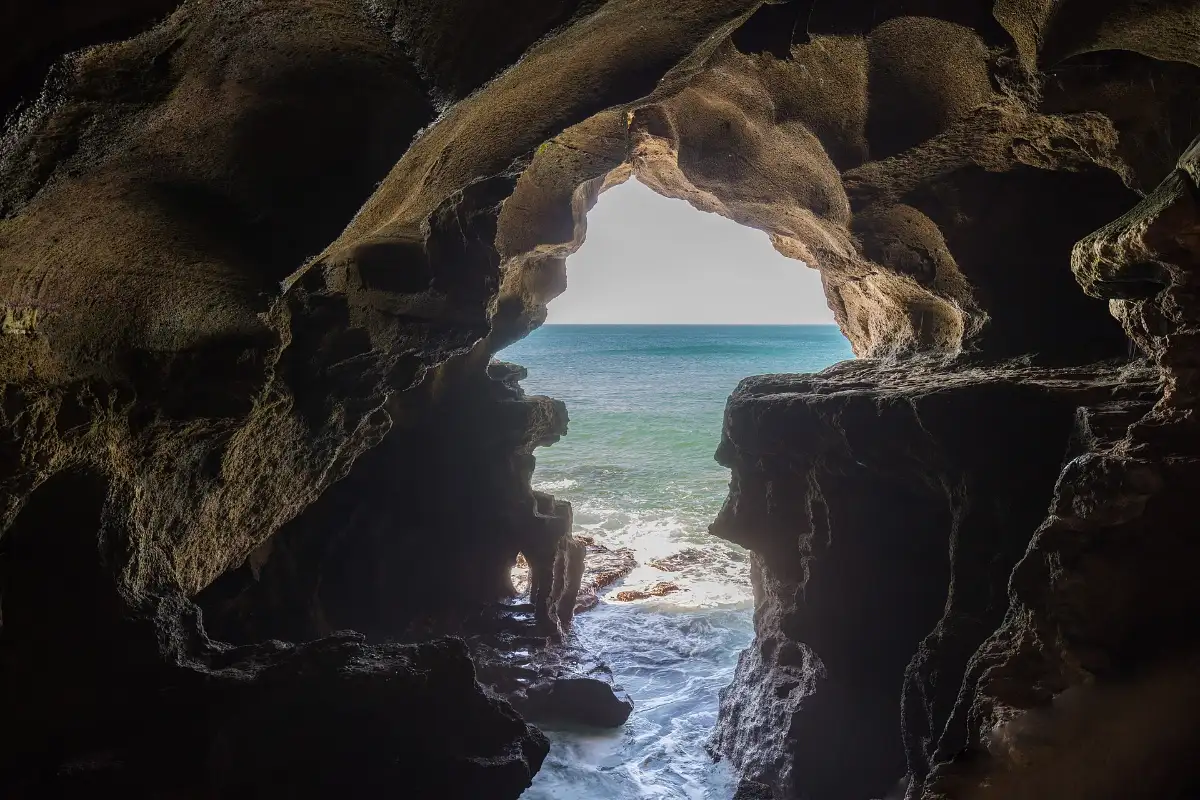
The famous shot here is the sea opening of the cave, which from inside looks like a map of Africa framing the Atlantic.
Photo tip: Late afternoon light through the opening is best. It gets crowded on weekends, so a weekday morning or late afternoon is easier for a clean photo.
30. Café Hafa, Tangier
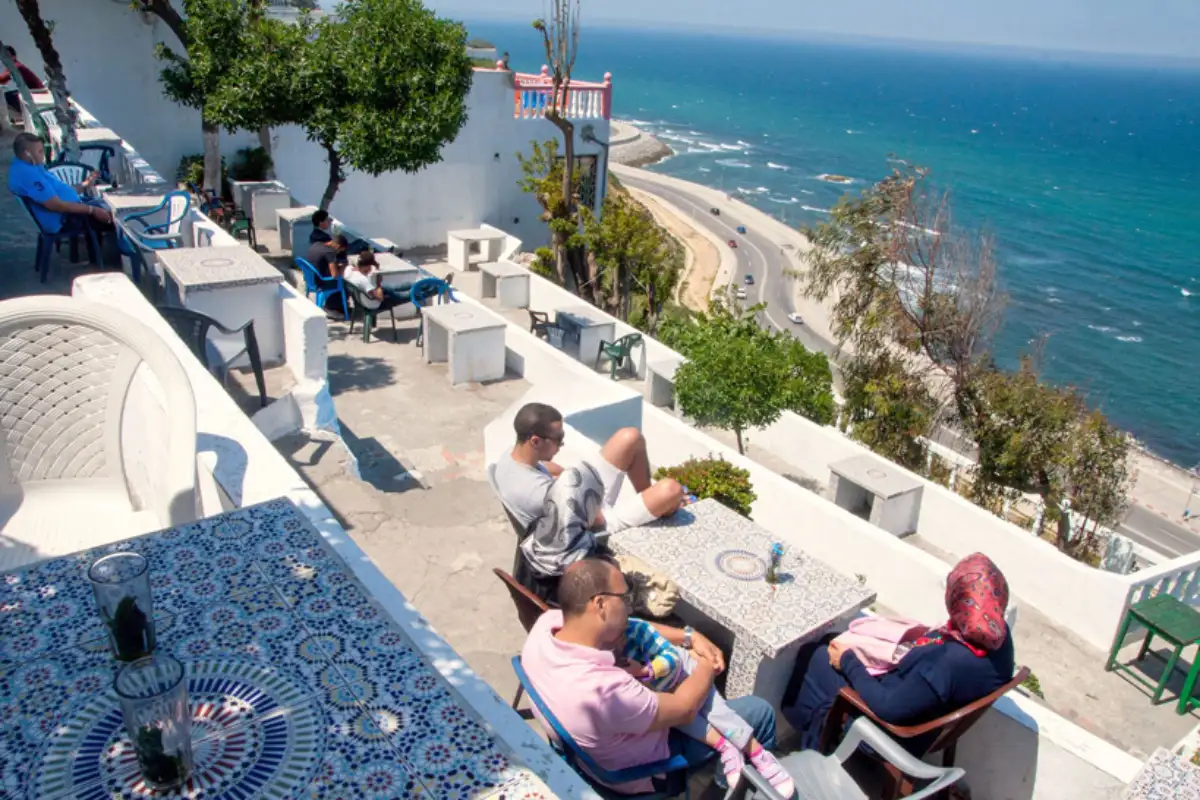
Open since 1921, Café Hafa is a set of simple terraces stepping down a cliff, with mint tea and a straight view across the Strait of Gibraltar to Spain. It is less about a perfect frame and more about the mood.
Photo tip: Order a mint tea and take your photo from the lower terraces in the late afternoon, when the light hits the water.
Where to stay: Check hotels and riads in Tangier on Booking.com.
31. The Souks of Marrakech
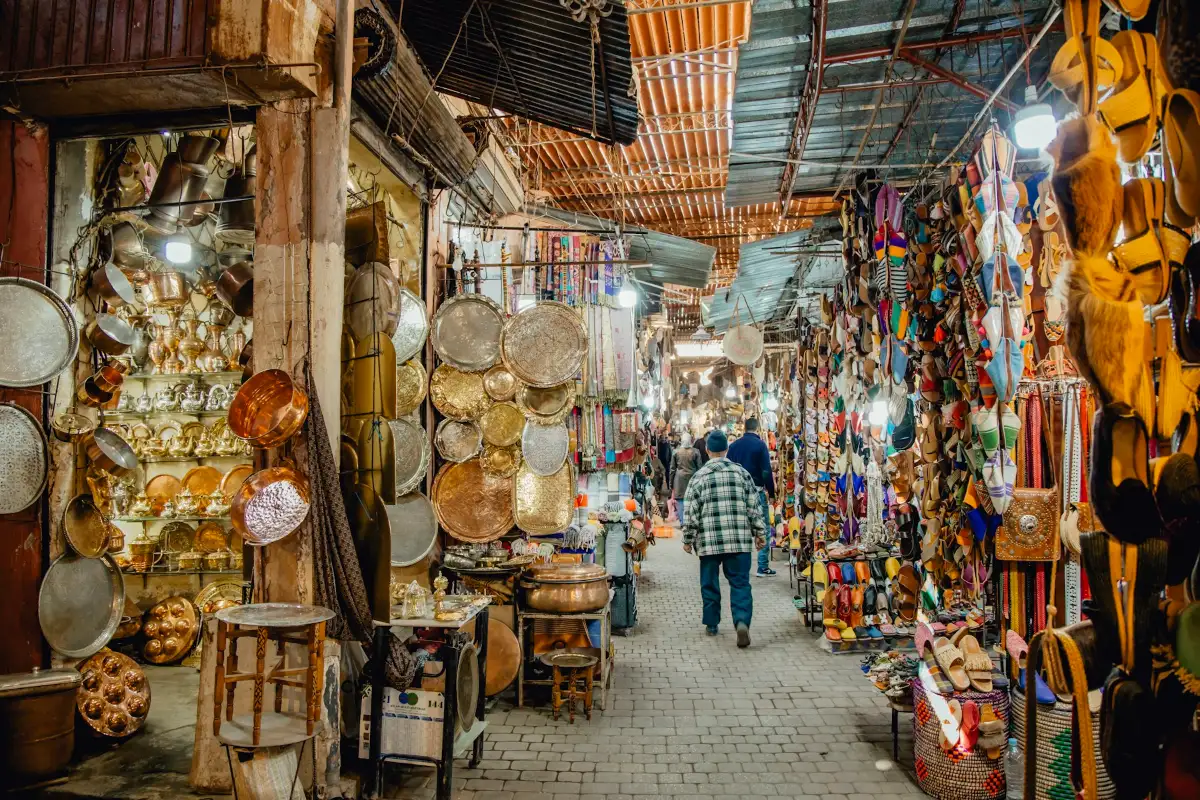
North of Jemaa el-Fnaa, the covered bazaar of Marrakech winds through the medina in a maze of lanes lined with brass lanterns, spice pyramids, leather slippers, rugs and pottery. Souk Semmarine is the main artery, and the lantern stalls around Rahba Kedima square are among the most photographed corners.
Photo tip: Go in the morning, before the lanes fill up, when sunlight filters through the reed roofs. Many shopkeepers are happy to be photographed with their stalls if you ask first, and some expect you to buy or tip.
32. Menara Gardens, Marrakech
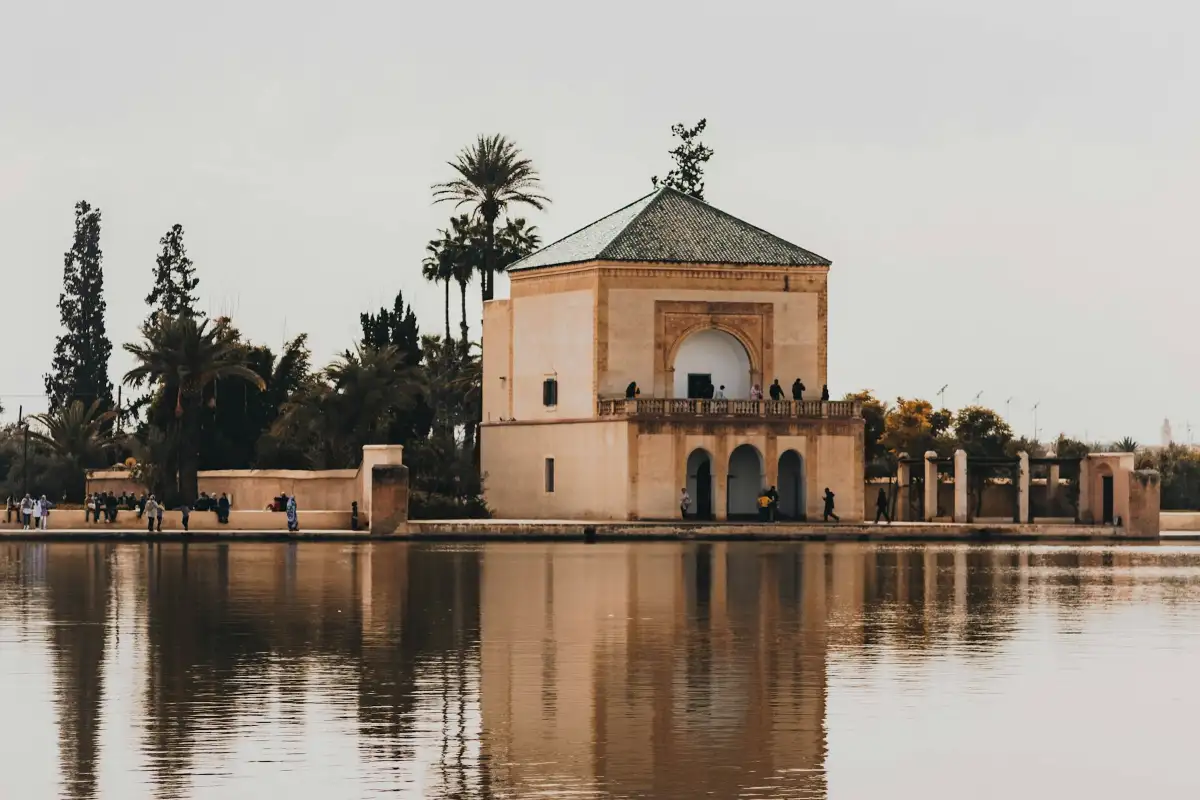
The olive groves and large pool of the Menara Gardens frame a green roofed pavilion, with the Atlas Mountains behind on a clear day.
Photo tip: Go on a clear winter morning, when snow on the Atlas makes the background.
33. The Tizi n’Tichka Pass
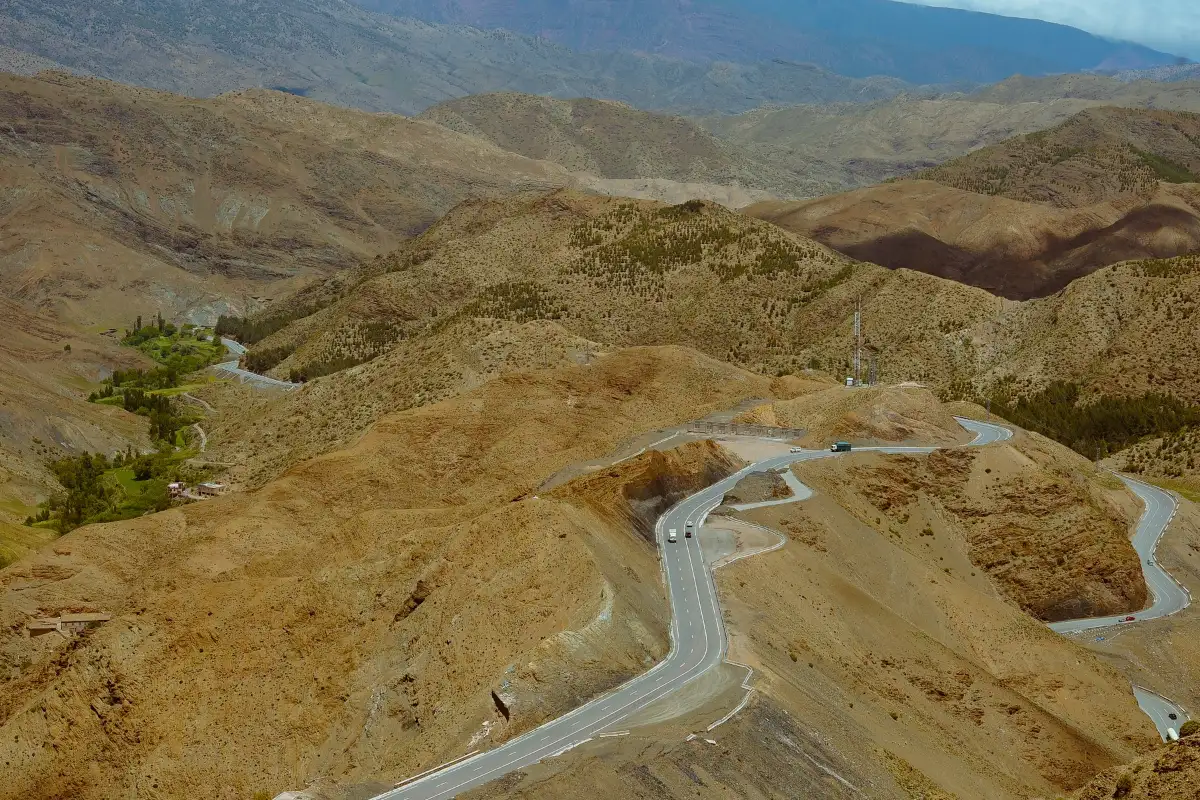
The road from Marrakech to Ouarzazate climbs to over 2,200 meters through the High Atlas, with hairpin bends and Berber villages along the way.
Photo tip: Stop at the lookouts before the summit for the switchback view, and keep in mind that snow can close the pass for short periods in winter.
34. The Painted Rocks of Tafraoute
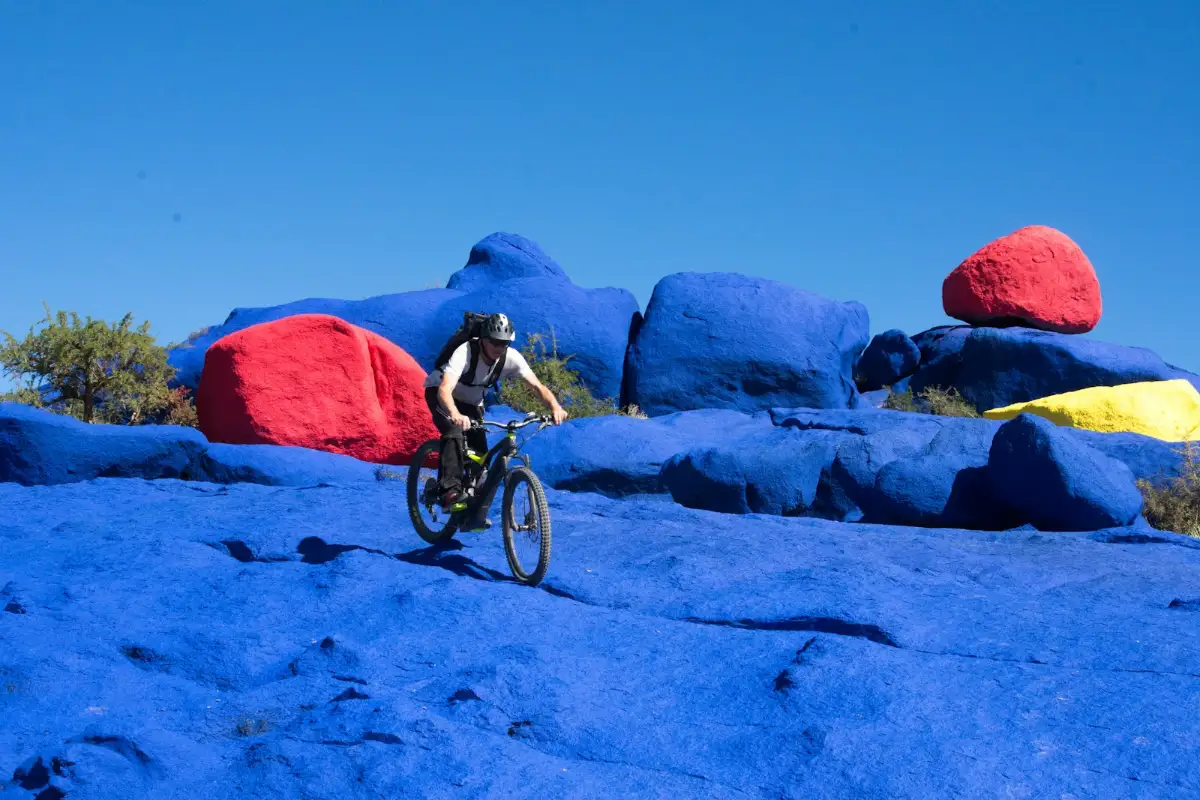
Near Tafraoute, the Belgian artist Jean Vérame painted a field of huge granite boulders blue, pink and red in 1984. The rocks are repainted from time to time, and they make one of the most surreal photos in the south.
Photo tip: Go in the late afternoon. The colors can look faded between repaintings, but the landscape around them is worth the trip on its own.
35. Agadir Oufella and the Hillside Inscription
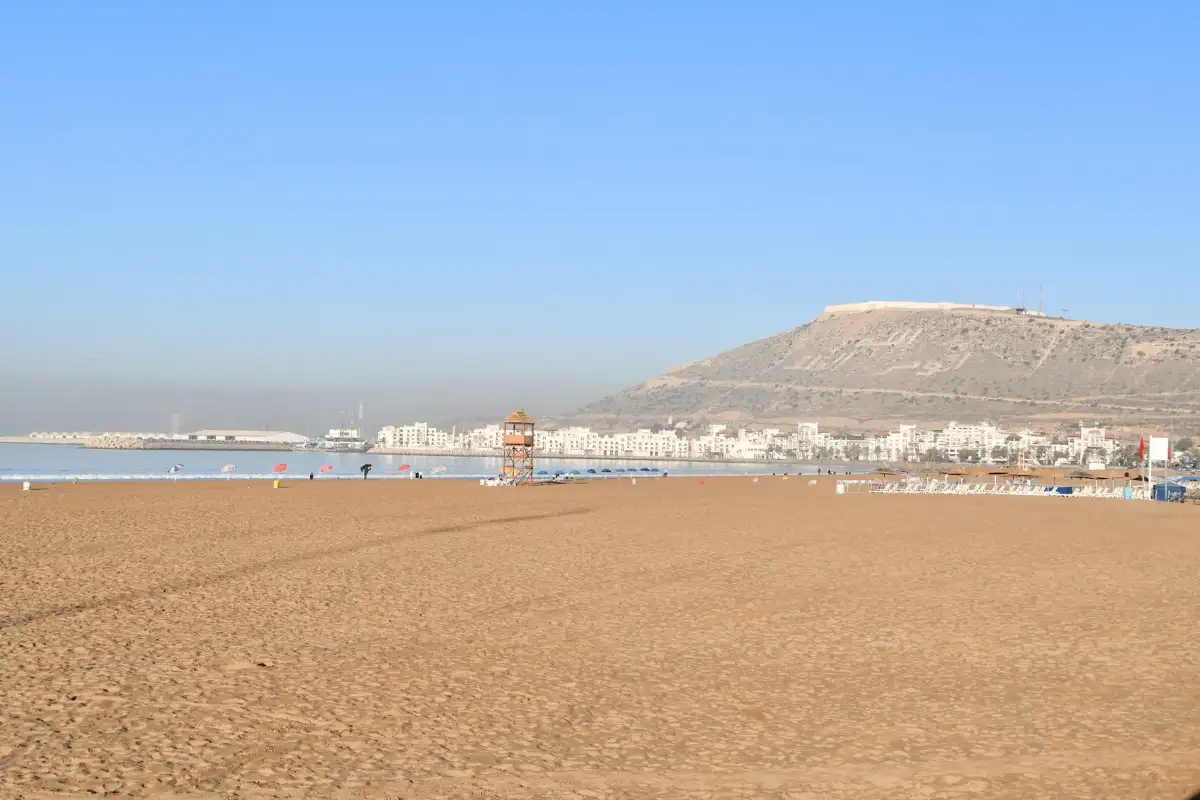
Above Agadir’s long beach rises the hill of Agadir Oufella, crowned by the restored walls of the old kasbah, which was largely destroyed in the 1960 earthquake. On its slope, giant Arabic letters spell out “God, Country, King”, Morocco’s national motto, and they light up at night. From the top you get the whole bay, the port and the marina below.
Photo tip: Shoot the hill and its inscription from the beach promenade at sunset, then go up to the kasbah walls for the view over the bay. The letters are lit after dark.
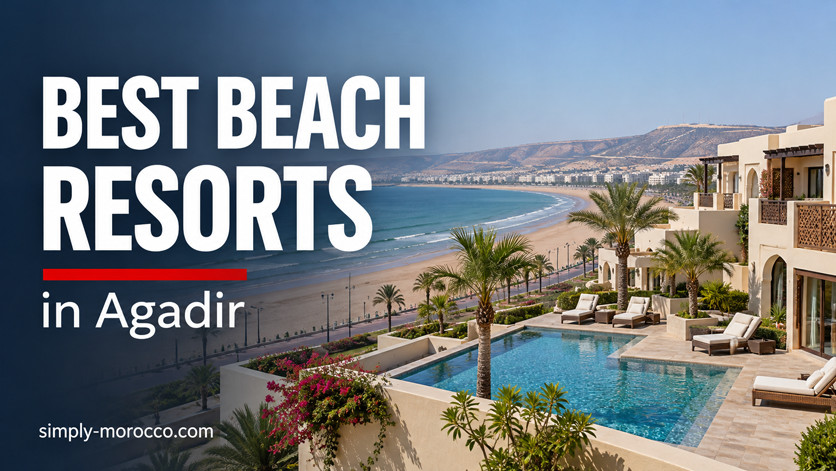
Where to stay: Pickalbatros Palais des Roses is one of our favorite stays nearby. See more in our guide to the best beach resorts in Agadir.
36. Imsouane Bay
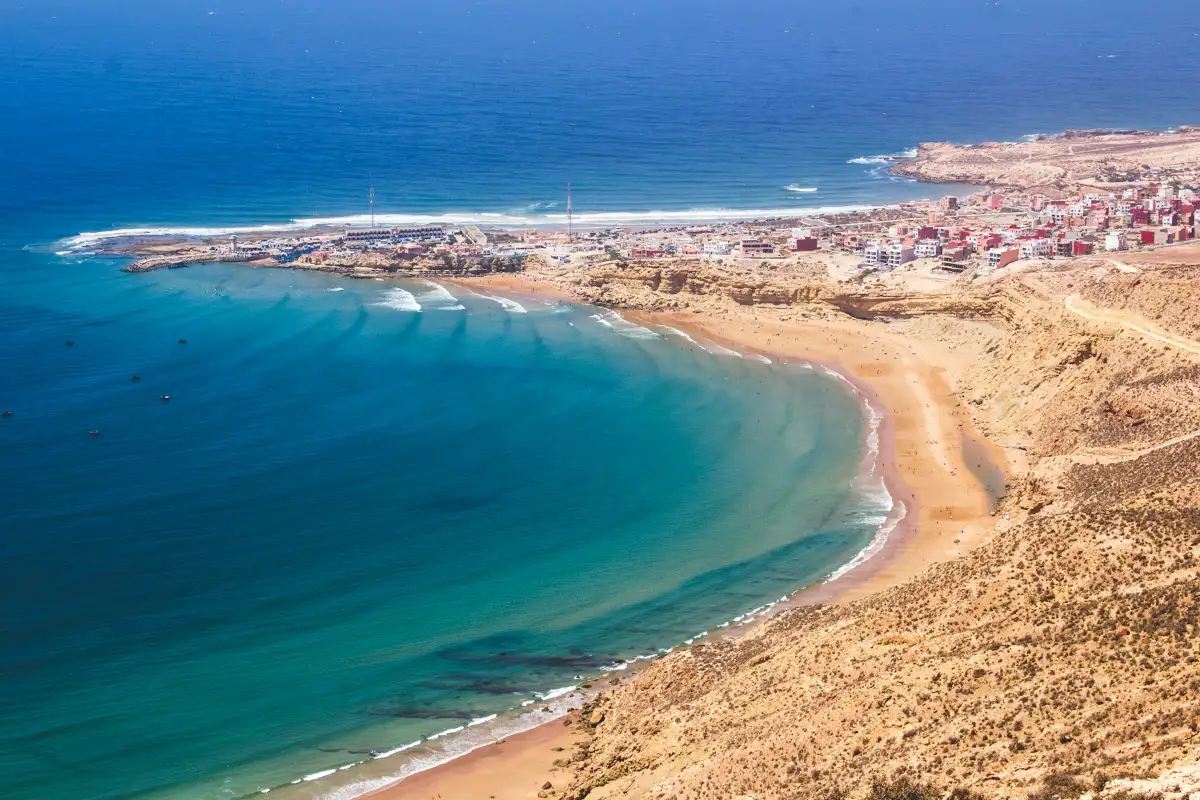
Imsouane is a small fishing village with one of the longest surf waves in Africa, and the curve of its bay makes a beautiful wide shot from the cliffs above.
Photo tip: Go at sunset and watch the surfers on the long right hand wave from the cliff path.
Where to stay: Fairmont Taghazout Bay is one of our favorite stays nearby. See more in our guide to the best hotels and surf resorts in Taghazout.
37. Atlas Film Studios, Ouarzazate
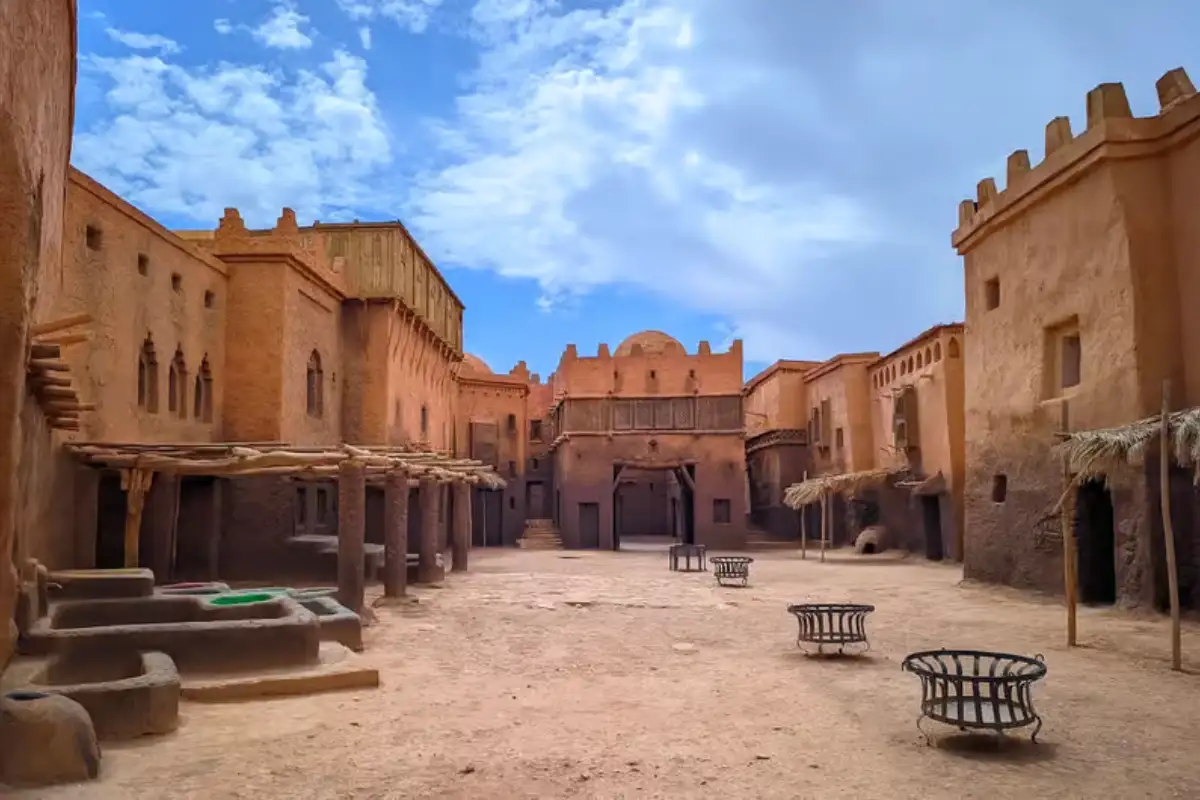
Just outside Ouarzazate, Atlas Studios is a working film lot with Egyptian temples, palaces and sets from films shot in Morocco.
Photo tip: It makes a fun, quick stop on the way to the desert. Go in the morning before the heat.
Where to stay: Check hotels and riads in Ouarzazate on Booking.com.
38. The Merinid Tombs and Borj Nord, Fes
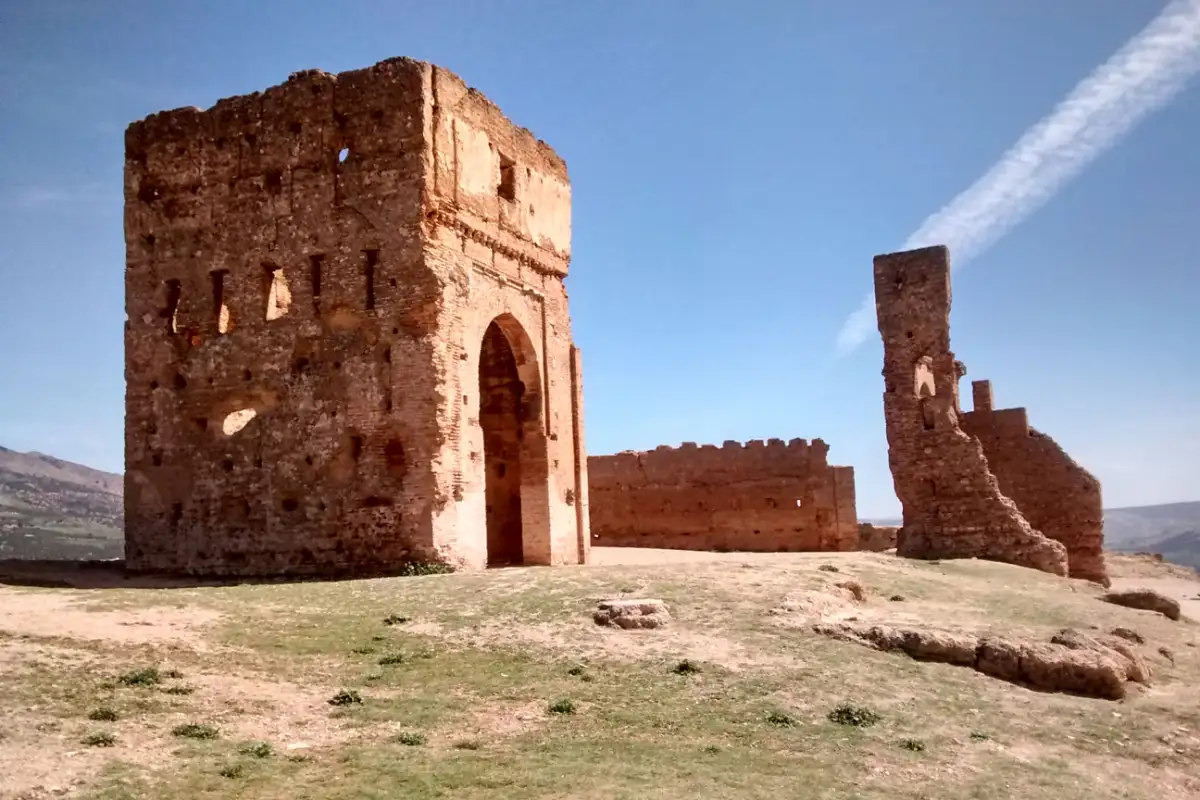
On the hill north of the medina, the ruined Merinid Tombs and the Borj Nord fortress give the best panorama of Fes el Bali, a sea of rooftops and minarets.
Photo tip: Come at sunset, when the call to prayer echoes across the valley. Go with a guide or in a group, as the hill is quiet after dark.
Where to stay: Check hotels and riads in Fes on Booking.com.
39. God’s Bridge in Akchour
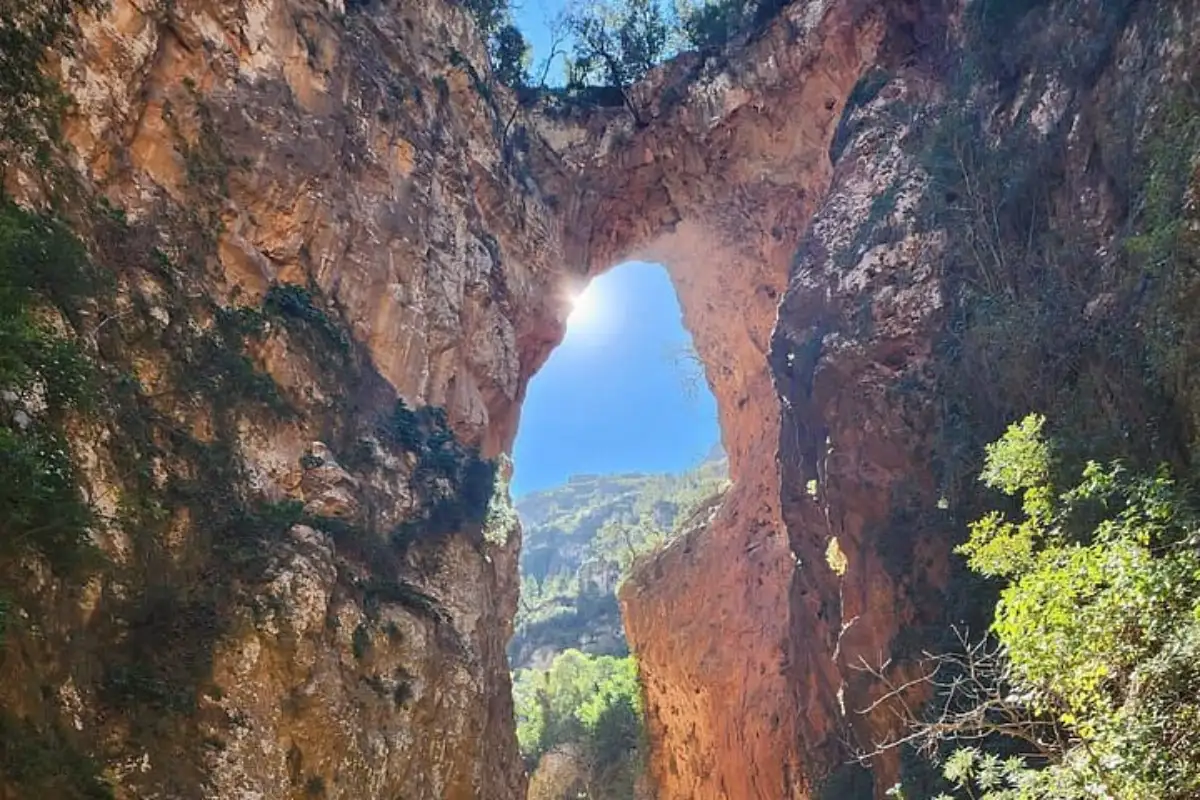
God’s Bridge (Pont de Dieu) is a natural rock arch high above a turquoise river in Talassemtane National Park, about 45 minutes from Chefchaouen. The hike in passes waterfalls and swimming pools that make the day worth it even before you reach the arch.
Photo tip: Wear real shoes, not sandals, and start early in summer. After heavy rain the trail and river crossings can be closed or unsafe, so ask locally before you go.
40. Bab Agnaou, Marrakech
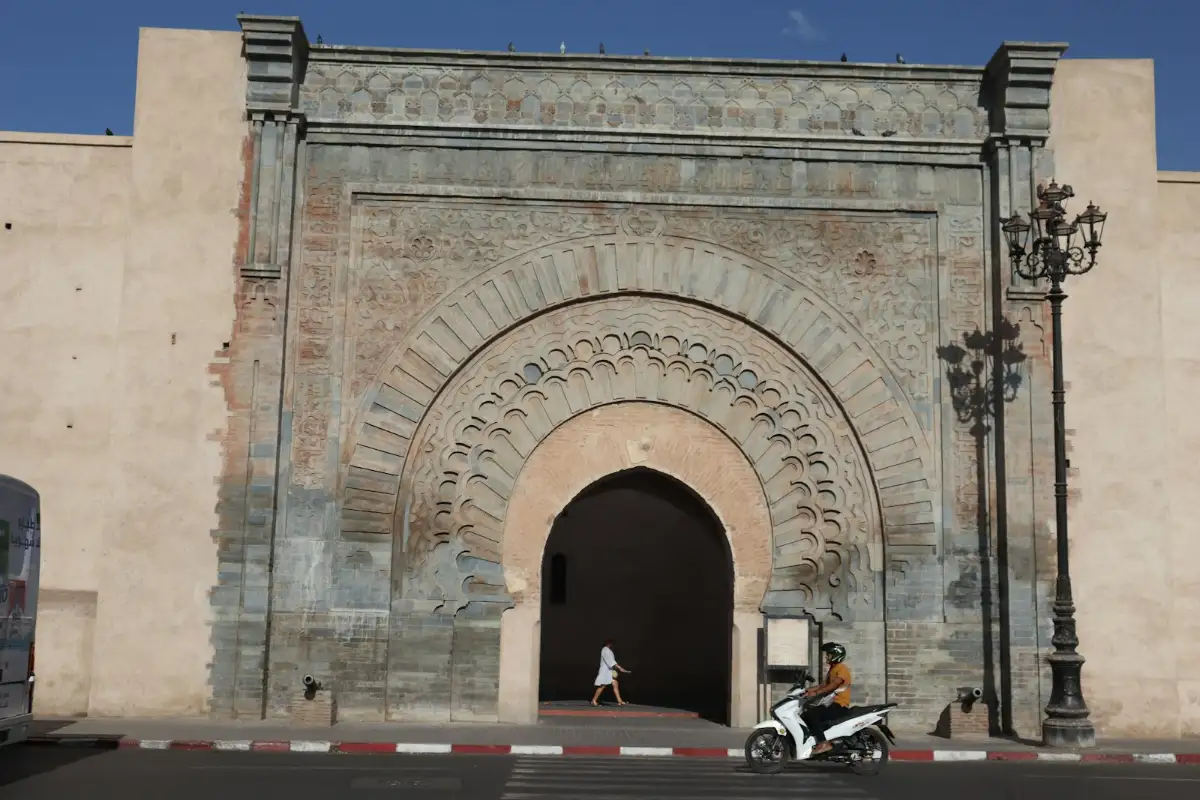
Bab Agnaou is the carved stone gate of the kasbah, next to the Saadian Tombs. Its arches and old Kufic script make a quick, easy photo.
Photo tip: Late afternoon light brings out the carving. Combine it with the Saadian Tombs next door.
Where to stay: Check hotels and riads in Marrakech on Booking.com.
41. The Chellah, Rabat
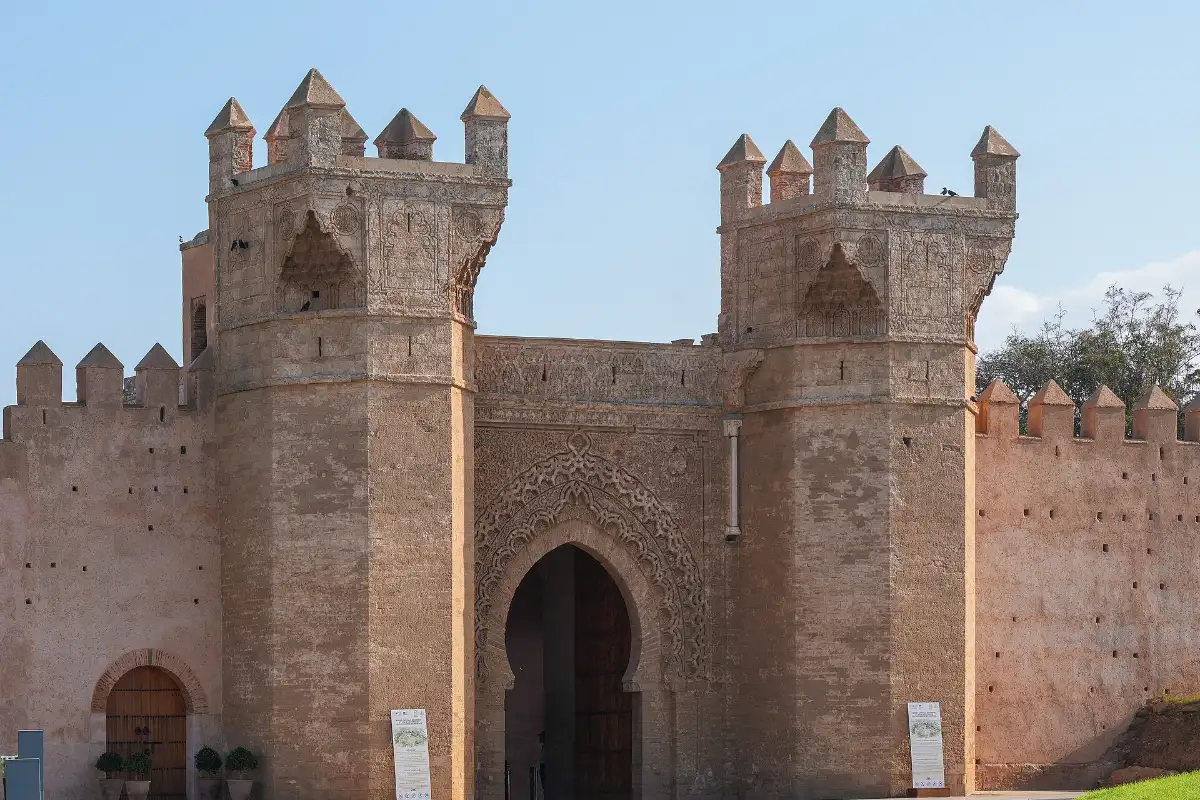
The Chellah is a walled site with Roman ruins and a medieval Merinid necropolis, overgrown with gardens and topped by storks nesting on the old minaret.
Photo tip: Spring is the best time, when the storks are nesting and the gardens are green.
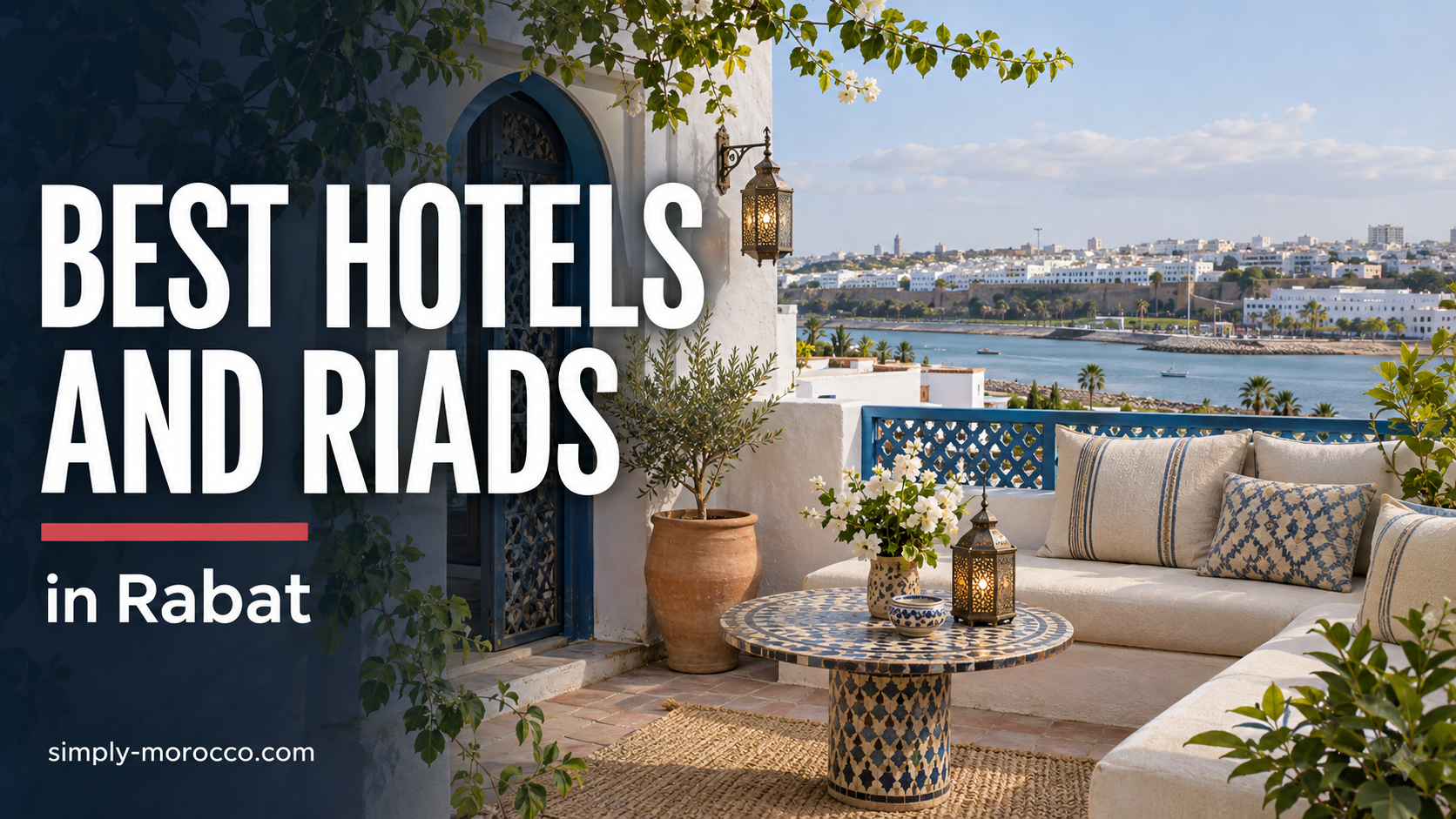
Where to stay: The Ritz-Carlton Rabat, Dar Es Salam is one of our favorite stays nearby. See more in our guide to the best hotels and riads in Rabat.
42. Cap Spartel Lighthouse, Tangier
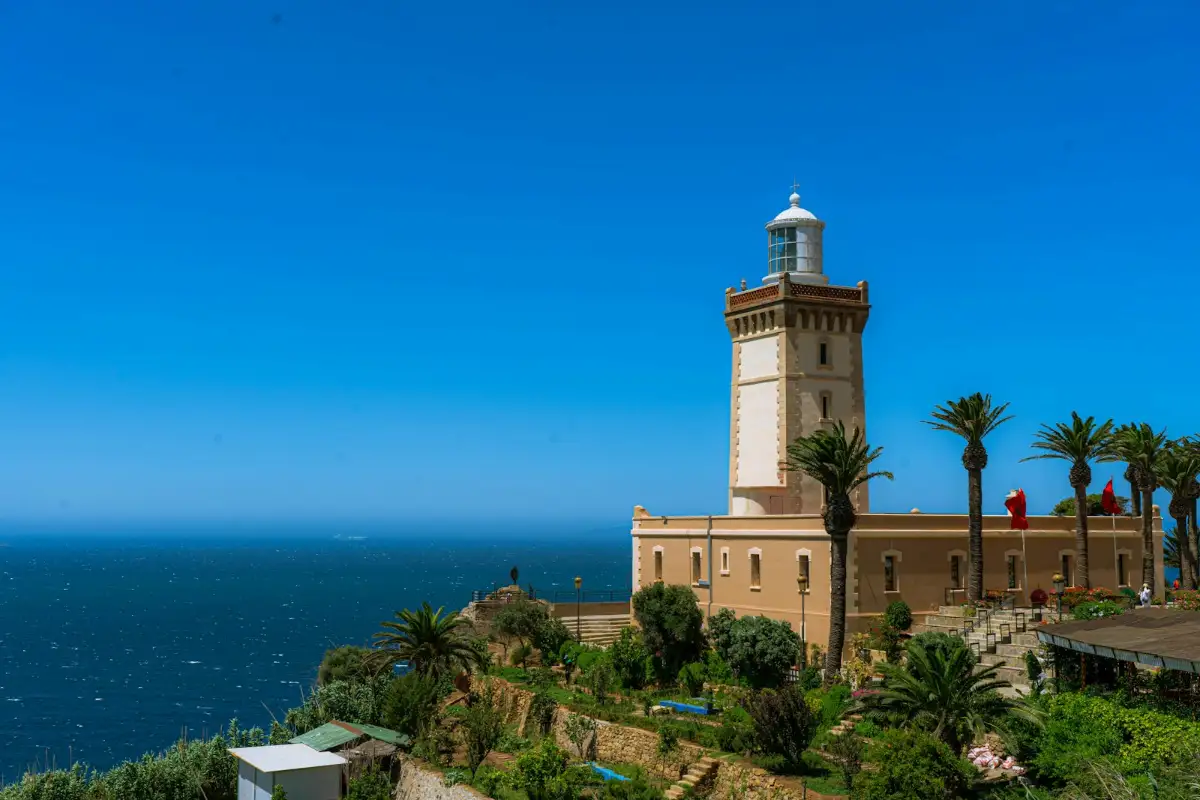
Cap Spartel marks the point where the Mediterranean meets the Atlantic. The white lighthouse, palm trees and cliffs make an easy photo stop on the way to the Cave of Hercules.
Photo tip: Combine both stops in one afternoon and stay for sunset over the ocean.
43. The Monkey Fingers, Dades Valley
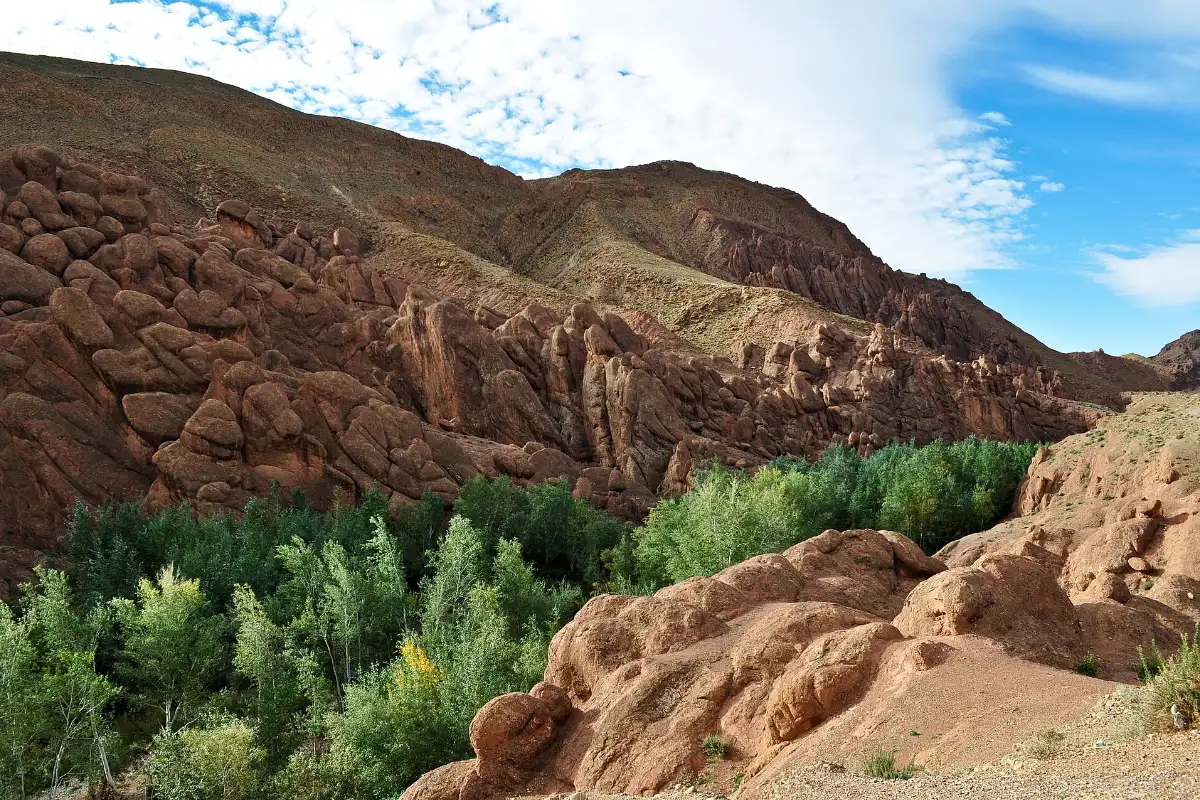
The Monkey Fingers are rounded red rock formations near Boumalne Dades that look like knuckles or fingers. You can hike through the narrow canyons between them.
Photo tip: Hike with a local guide, as the trail through the canyon is not marked. Late afternoon light brings out the red.
Where to stay: Check hotels and riads in Boumalne Dades on Booking.com.
44. Kasbah Telouet
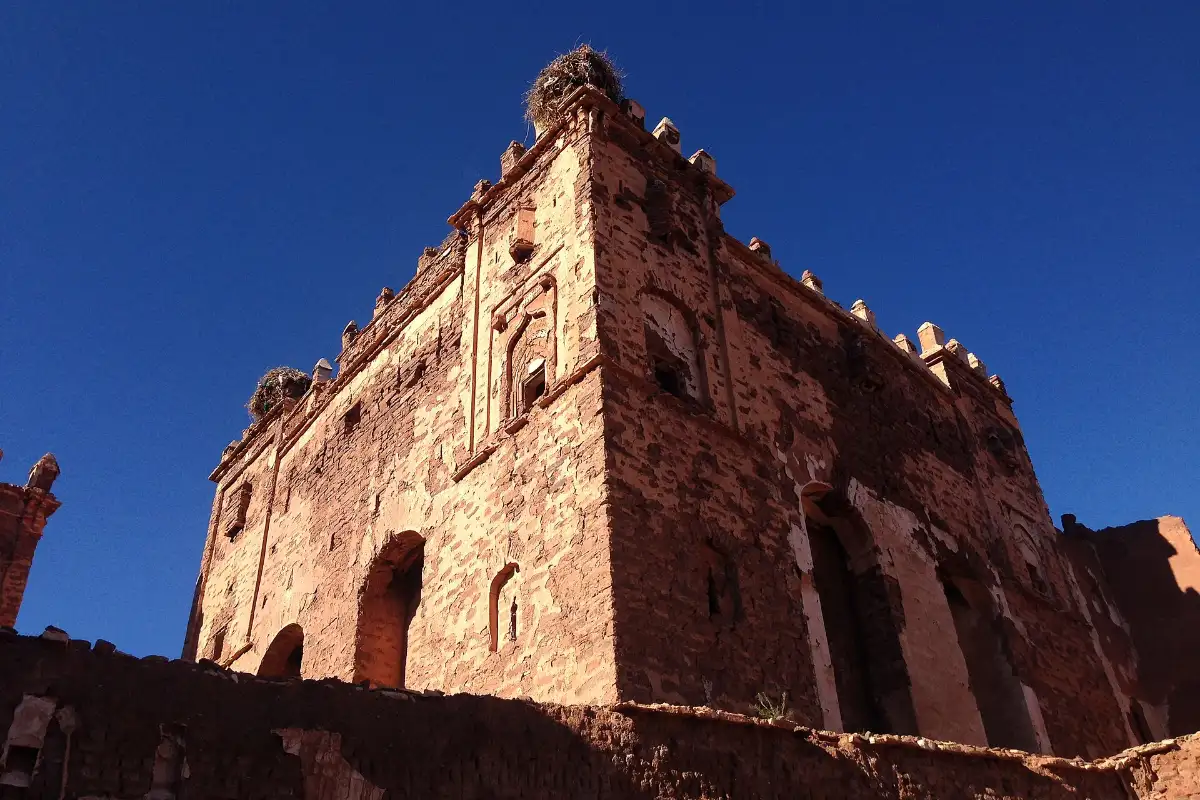
The former palace of the Glaoui family is crumbling on the outside, but the inside has some of the most ornate painted ceilings and tiles in the south.
Photo tip: The kasbah was closed after the 2023 earthquake and has only partly reopened, so check access locally before you plan a stop.
45. Almond Blossom in the Ameln Valley
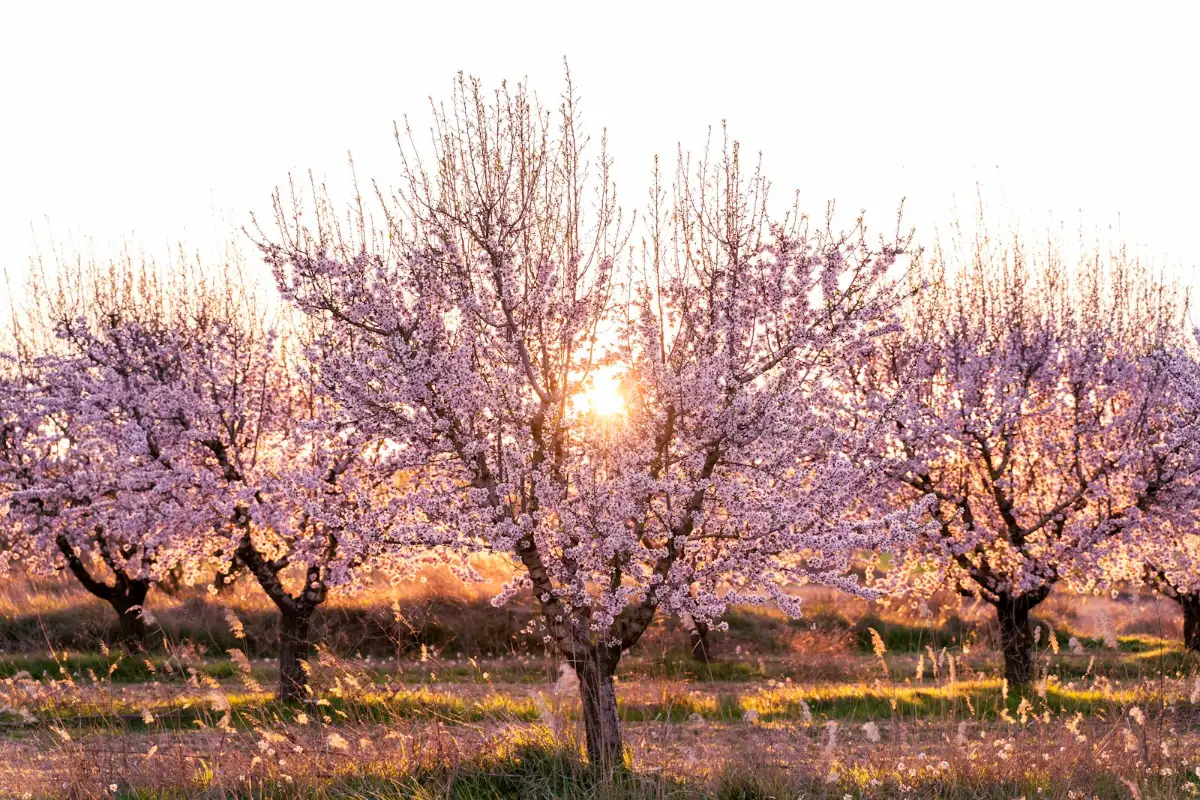
In February, the almond trees of the Ameln Valley around Tafraoute bloom white and pink against the pink granite mountains, and the town holds an almond blossom festival.
Photo tip: Plan for mid February, though the exact timing depends on the weather each year.
Where to stay: Check hotels and riads in Tafraoute on Booking.com.
Photography Rules and Etiquette in Morocco
- Drones: do not bring your own. Importing a drone needs prior authorization and flying one needs a permit, and undeclared drones are confiscated at customs. If you want aerial shots, hire a local photographer who holds a drone license, and we can help arrange one.
- People: always ask before photographing someone, especially children. Taking or sharing a photo of someone without consent can be an offense in Morocco.
- Paid photos: performers in Jemaa el-Fnaa and the goat herders along the argan road expect a tip. Agree the amount before you take the picture.
- Sensitive sites: do not photograph police, military sites or palace guards up close.
- Mosques: most mosques are closed to non-Muslims. The Hassan II Mosque in Casablanca is the main exception, by guided tour.
Best Time of Year for Photos
Spring (March to May) and autumn (September to November) give the best light and mild weather for the cities, the north and the Atlas. Winter is the best season for the Sahara, with clear skies and cool days, and the Atlas peaks are covered in snow. The coast is pleasant all year. For special moments, plan mid February for the almond blossom around Tafraoute and early May for the Rose Festival in the M’Goun Valley. The next Ramadan starts around February 2027, when some cafés and sites keep shorter hours.
Frequently Asked Questions
Chefchaouen is the most photographed place in Morocco, followed by Jemaa el-Fnaa and Jardin Majorelle in Marrakech, the Chouara Tannery in Fes and the dunes of Erg Chebbi near Merzouga.
Not as a regular tourist. Drones need prior authorization to import and a permit to fly, and undeclared drones are confiscated at the airport. The easiest option is to hire a licensed local drone operator.
Only with permission. Ask first, accept a no, and expect performers and herders to ask for a small tip.
To cover the north, the imperial cities, Marrakech and the Sahara, plan at least 10 to 12 days. A private tour lets you time each stop for the best light.
Plan Your Photo Trip Through Morocco
Looking for where to stay along the way? See our guides to the best desert camps in Merzouga, the best riads and hotels in Essaouira, the best hotels and riads in Rabat and the best hotels in Casablanca.
Want to see these places with a private driver and guide who knows when the light is best? Tell us your dates and the spots on your list, and we will design a private tour around them.
Photos in this article are from Unsplash and credited to their photographers. Opening times, prices and access can change, so check locally before you visit.