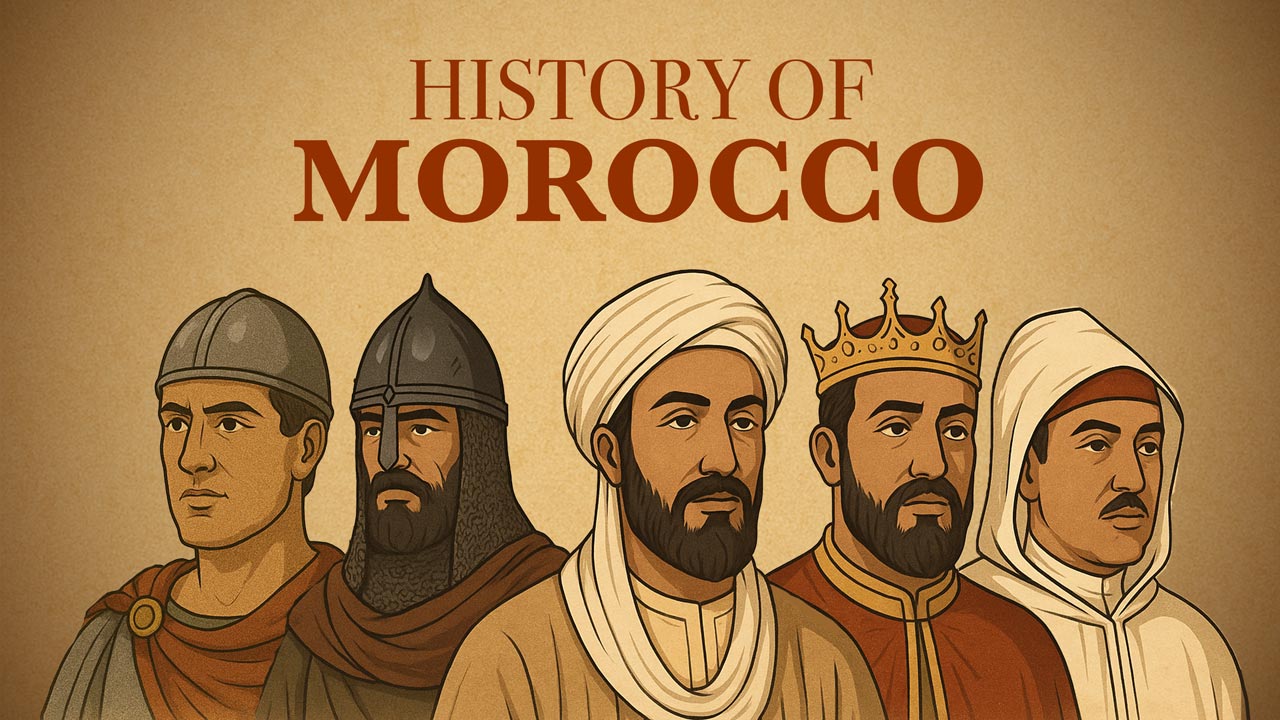
Morocco has one of the richest and longest continuous histories in the world. From ancient Amazigh tribes to powerful Islamic dynasties and the modern kingdom we know today, Morocco’s story is filled with culture, resilience, and incredible transformation. This guide walks you through the major eras that shaped the Morocco travelers explore today.
1. Ancient Morocco: The Amazigh Roots
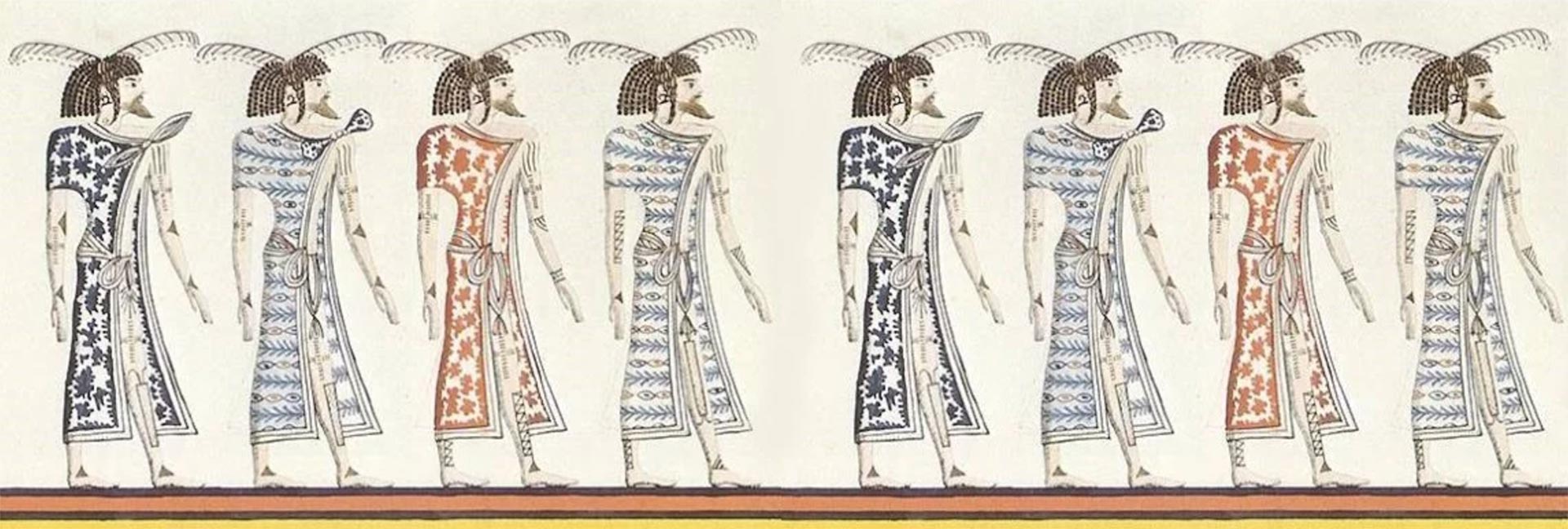
Long before any empire or foreign power arrived, Morocco was home to the Amazigh people.
They lived as farmers, traders, and warriors across the Atlas Mountains, Rif region, the Sahara, and the Atlantic plains.
Key points:
• Amazigh tribes date back at least 10,000 years.
• They developed early trade with Phoenician and Carthaginian merchants.
• Their culture, language, designs, and traditions remain central to Moroccan identity today.
2. Phoenicians, Carthaginians, and Romans
Starting around 1100 BCE, Phoenician traders created coastal settlements like Lixus and Mogador.
Carthage later expanded its influence until the Romans took control.
Roman Morocco: Mauritania Tingitana
Rome built major cities across northern Morocco.
Highlights include Volubilis, which still has some of the best preserved mosaics in North Africa.
Roman rule brought:
• Roads and infrastructure
• Agricultural development
• City planning
• Cultural exchange with the Amazigh
Rome withdrew in the 5th century and Amazigh kingdoms re-emerged.

3. Arrival of Islam
In the 7th and 8th centuries, Islam spread into North Africa.
Morocco’s tribes adopted the new religion but maintained their independence.
Everything changed with the arrival of Idris I, who fled the Abbasids and united Moroccan tribes.
4. The Idrisid Dynasty: The Birth of a Nation
In 788 CE, Idris I founded the first Moroccan state.
His son Idris II later built Fez, which became one of the most important cities in the Islamic world.
The Idrisid legacy:
• Formation of Morocco as a unified kingdom
• Spread of Islam across the region
• Creation of a strong Amazigh Arab identity
• Founding of Fez and one of the world’s oldest universities, Al Qarawiyyin

5. Almoravids and Almohads: The Imperial Expansion
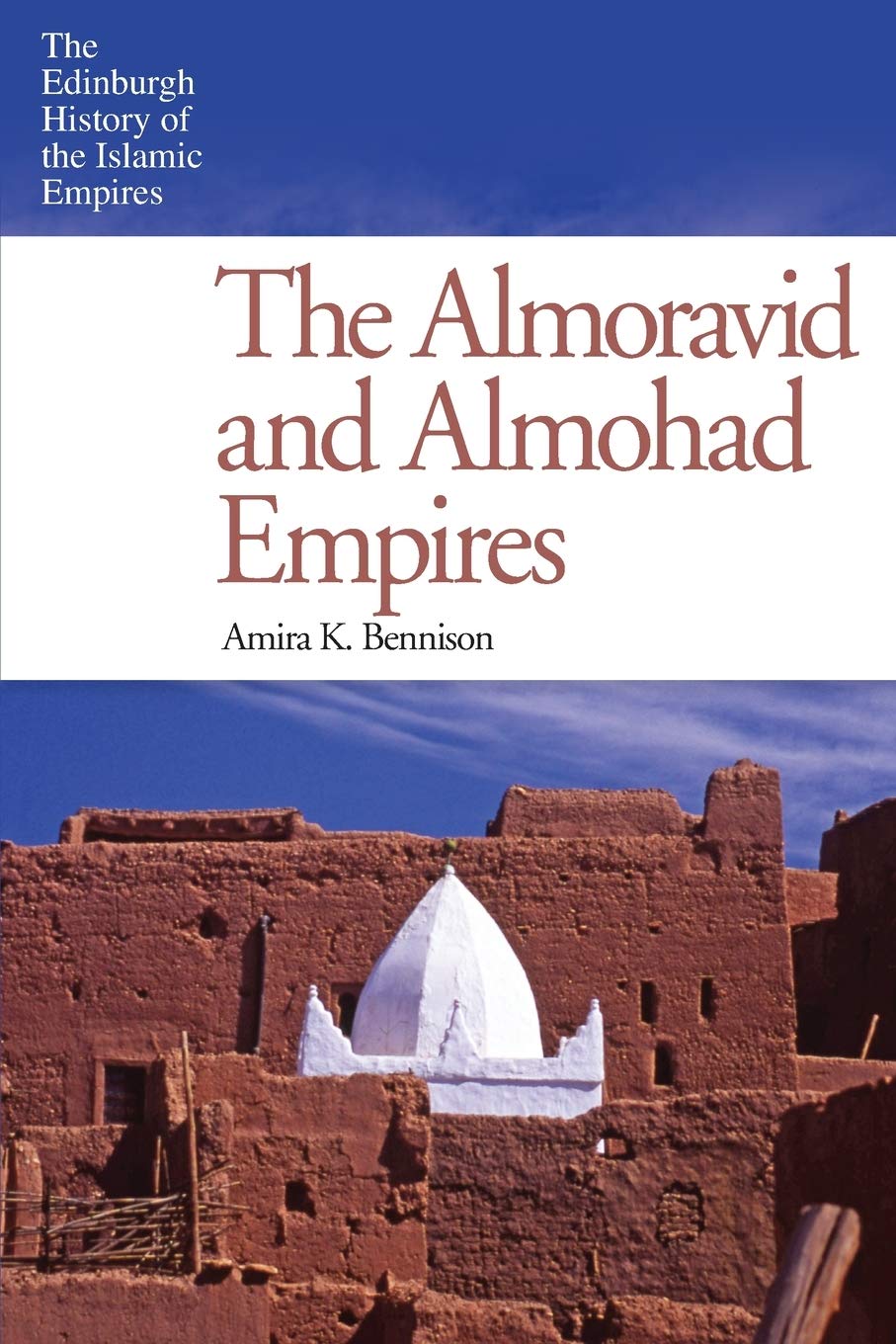
Two Amazigh empires shaped both Morocco and Spain.
The Almoravids (1040 to 1147)
• Founded Marrakesh
• Controlled Morocco, Algeria, and southern Spain
• Brought religious scholarship and architectural development
The Almohads (1147 to 1269)
• Reunited Morocco
• Expanded further into Iberia
• Built landmarks like the Koutoubia Mosque and the original Hassan Tower in Rabat
These dynasties made Morocco a major Mediterranean power.
6. Marinids, Wattasids, and Saadians
After the Almohads, Morocco saw new ruling families rise.
The Marinids (1269 to 1465)
• Strengthened Fez
• Built famous madrasas
• Encouraged arts and sciences
The Wattasids (1472 to 1554)
• Faced pressure from Spain and Portugal
• Weak central rule
The Saadians (1510 to 1659)
• Defeated Portugal at the Battle of the Three Kings
• Made Marrakesh the capital
• Built the stunning Saadian Tombs and El Badi Palace
The Saadians restored Morocco’s power after years of instability.
7. Alaouite Dynasty: The Modern Moroccan State
The Alaouite dynasty has ruled since the 17th century.
They restored national unity, defended Moroccan sovereignty, and still govern today.
Key rulers:
• Moulay Ismail who built Meknes and strengthened the state
• King Mohammed V who led Morocco to independence in 1956
• King Hassan II who modernized infrastructure and diplomacy
• King Mohammed VI who transformed Morocco into one of Africa’s most stable and dynamic countries
8. French and Spanish Protectorates
From 1912 to 1956, Morocco was divided into two protectorate zones.
Despite foreign rule, Moroccan culture, traditions, and resistance remained strong.
Historic moments include:
• The Rif resistance led by Abdelkrim
• The Exile of King Mohammed V
• The 1956 independence movement
9. Morocco After Independence
Since 1956, Morocco has focused on:
• Economic growth
• Tourism development
• Infrastructure projects
• Cultural preservation
• Reforms and modernization
Today Morocco stands as a bridge between Africa, Europe, and the Arab world.
10. Why Morocco’s History Matters to Travelers
Understanding Morocco’s past helps travelers appreciate:
• The diversity of its culture
• The mix of Amazigh, Arab, African, and Andalusian influences
• The architecture in imperial cities
• The deep traditions still alive today
• The hospitality and pride of Moroccan people
From ancient Amazigh tribes to modern progress, Morocco’s story is long, proud, and incredibly unique.
Every city, every mountain, and every desert oasis carries a piece of this history.
Learning about the past makes traveling through Morocco even more meaningful and unforgettable.
If you want a professionally planned itinerary with private guides and safe transportation, Simply Morocco is ready to help you create your perfect journey.
