You have always felt the pull of Africa. Maybe it started with a photo of a desert sunset, a documentary about ancient civilizations, or a friend who came back from a trip completely transformed. Africa calls to you, but when you actually sit down to start planning, the options feel paralyzing.
Kenya or Tanzania for a safari? Egypt for the history? South Africa for the wine and the coast? If you are visiting Africa for the first time, how do you even begin to navigate safety, logistics, and culture?
Here is the answer most travel experts are not telling you clearly enough: Morocco is the best country to visit in Africa for the first time. Not a compromise. Not a consolation prize. The best starting point on the entire continent.
Not because Morocco is an easy substitute for Africa. Not because it is somehow more “beginner-friendly” and therefore less meaningful. But because Morocco is, in many ways, the crown jewel of the African continent. It is where ancient civilization, Saharan landscape, Atlantic coastline, mountain wilderness, and some of the world’s most generous hospitality all meet in one country. It is Africa at its most layered and its most accessible.
First, Let Us Clear Up One Misconception
Morocco is Africa. Fully, proudly, completely.
It sits at the northwestern tip of the continent, bordered by the Sahara to the south and the Atlas Mountains cutting through its center. Its history is one of Berber dynasties, Arab scholars, Saharan trade routes, and centuries of cultural exchange that shaped the entire continent’s story. Morocco was one of the first countries in the world to recognize American independence. It has been a crossroads of civilizations for over a thousand years.
When travelers say “I want to go to Africa,” they often picture wide-open savannas, ancient pyramids, or remote wilderness. What they may not realize is that Morocco delivers all of those visual and emotional experiences, and then adds medinas so intricate they have been listed as UNESCO World Heritage Sites, food that rivals anything in the Mediterranean, and an infrastructure that makes traveling here genuinely comfortable without sacrificing authenticity.
Morocco is not Africa-lite. It is Africa, amplified.
How Morocco Beats Every Other African Destination for First-Time Visitors
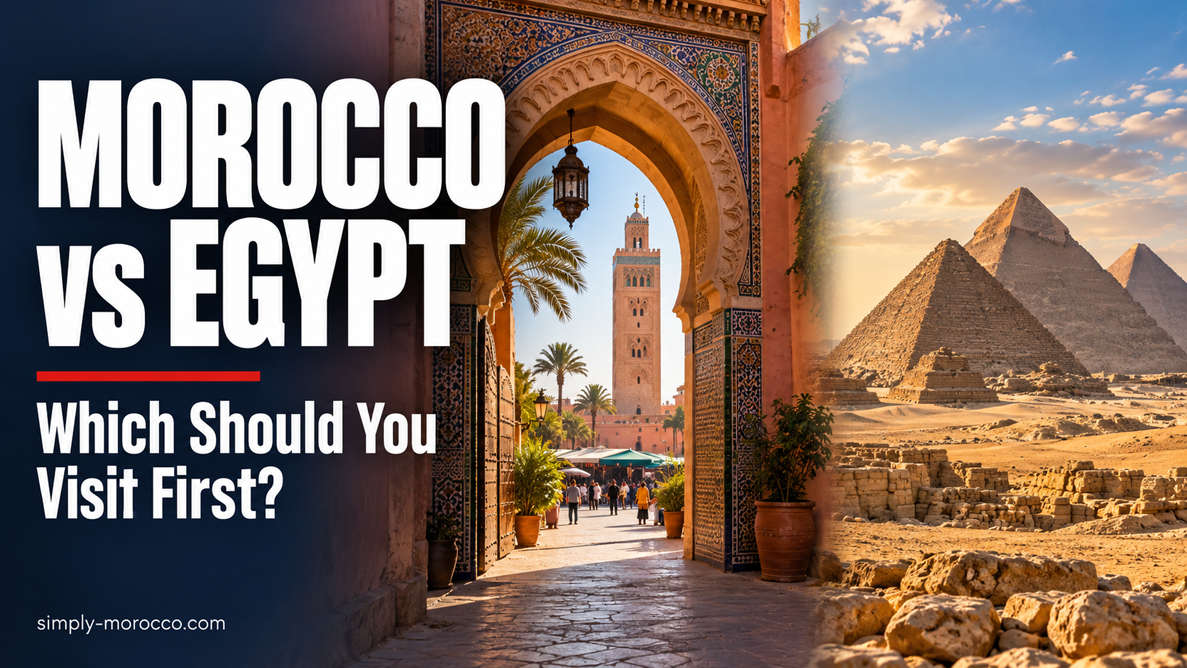
Morocco vs. Egypt
Egypt is the obvious comparison for anyone drawn to ancient history. The pyramids are extraordinary, full stop. But outside of Cairo and a few major sites, many travelers find Egypt difficult to navigate independently. The infrastructure gap between tourist areas and everyday life can feel jarring.
Morocco offers its own extraordinary ancient history: the Roman ruins of Volubilis, the medieval medinas of Fes and Meknes, and a Berber civilization that predates many of the world’s major empires. Moroccan cities are deeply layered with centuries of architecture, scholarship, and spiritual tradition. And unlike Egypt, Morocco is a country where exploring beyond the main attractions is encouraged and relatively straightforward. You can wander a souk, stumble into a neighborhood hammam, or join a family for tea without it feeling like an organized event.
The result: Morocco gives you the depth of African history while being significantly more navigable.
Morocco vs. Kenya and the Safari Circuit
The safari experience is genuinely unlike anything else on earth. If your primary dream is to watch a lion in the wild or witness the Great Migration, Kenya and Tanzania should absolutely be on your bucket list. No argument there.
But safaris come at a price, and it is not just the cost (though that is real). A traditional safari experience is also relatively structured. You are in a vehicle, watching wildlife from a distance, moving between lodges. It is extraordinary, but it is not an immersive cultural experience in the same way that spending a week navigating the souks of Marrakech, sleeping in a desert camp under the Saharan stars, and sharing a slow lunch in a mountain village is.
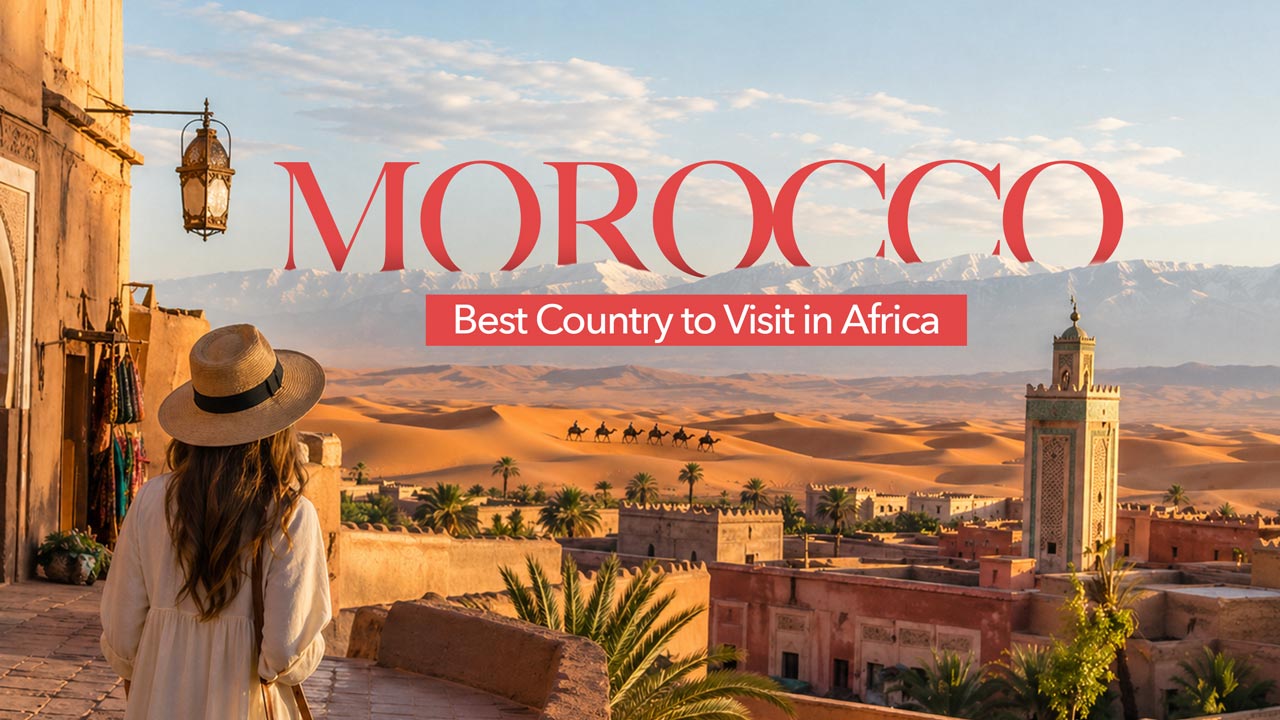
Morocco gives you the landscape drama of the safari without the glass-and-steel separation from the land. You can ride camels into the Erg Chebbi dunes at Merzouga, sleep in a luxury tented camp, and wake up to a silence so complete it rewires you. All of this without spending four figures per night.
The result: Morocco delivers sensory immersion and landscape awe at a fraction of the cost, with culture woven into every single day.
Morocco vs. South Africa
South Africa is a world-class destination. Cape Town is one of the most beautiful cities on the planet. The wine country is exceptional. The wildlife parks are accessible and well-run.
But South Africa is also a country navigating significant inequality, and safety concerns, particularly in major urban areas, require real attention. Most travelers do well with good planning, but it adds a layer of stress that affects how freely you can explore.
Morocco, by contrast, has one of the strongest safety records on the continent for international visitors. Travelers on a private guided tour experience a level of comfort and ease that is hard to match elsewhere in Africa. The country has invested heavily in tourism infrastructure over the past two decades, and it shows in everything from airport efficiency to road quality to the professionalism of licensed guides.
The result: for anyone visiting Africa for the first time, Morocco offers comparable visual beauty and far less logistical anxiety.
What Morocco Delivers That No Other African Country Can Match in One Trip
The Sahara Desert
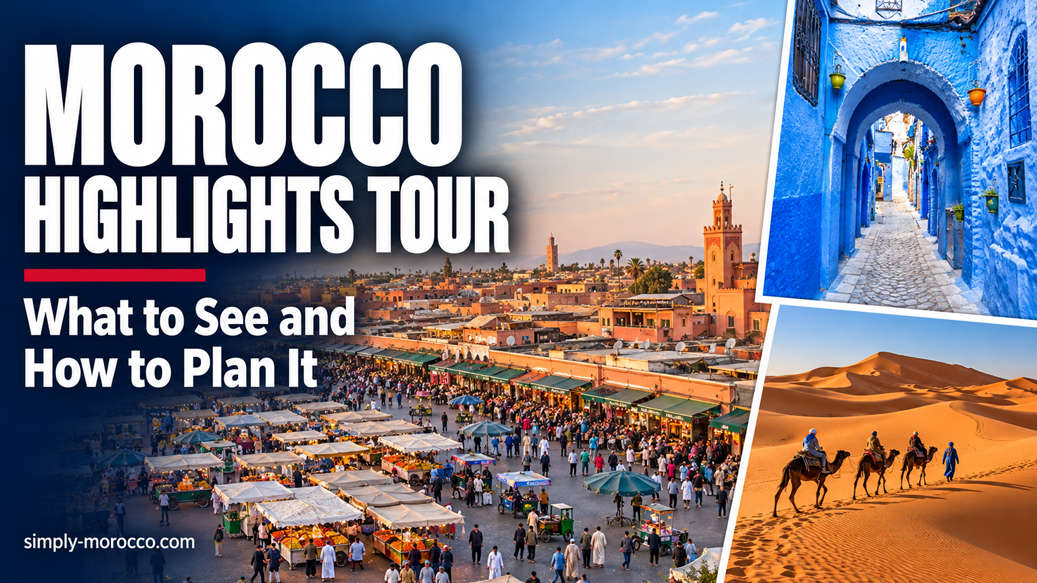
The Sahara spans eleven African countries, but Morocco gives you one of the most dramatic entry points to it: the Erg Chebbi dunes near Merzouga in the southeast. These dunes rise over 150 meters and shift color throughout the day, from pale gold at noon to deep ochre at sunset to almost burgundy in the last light. Arriving by camel as the sky turns pink behind you is not a travel cliche. It is genuinely one of the most moving experiences a person can have.
Ancient Imperial Cities
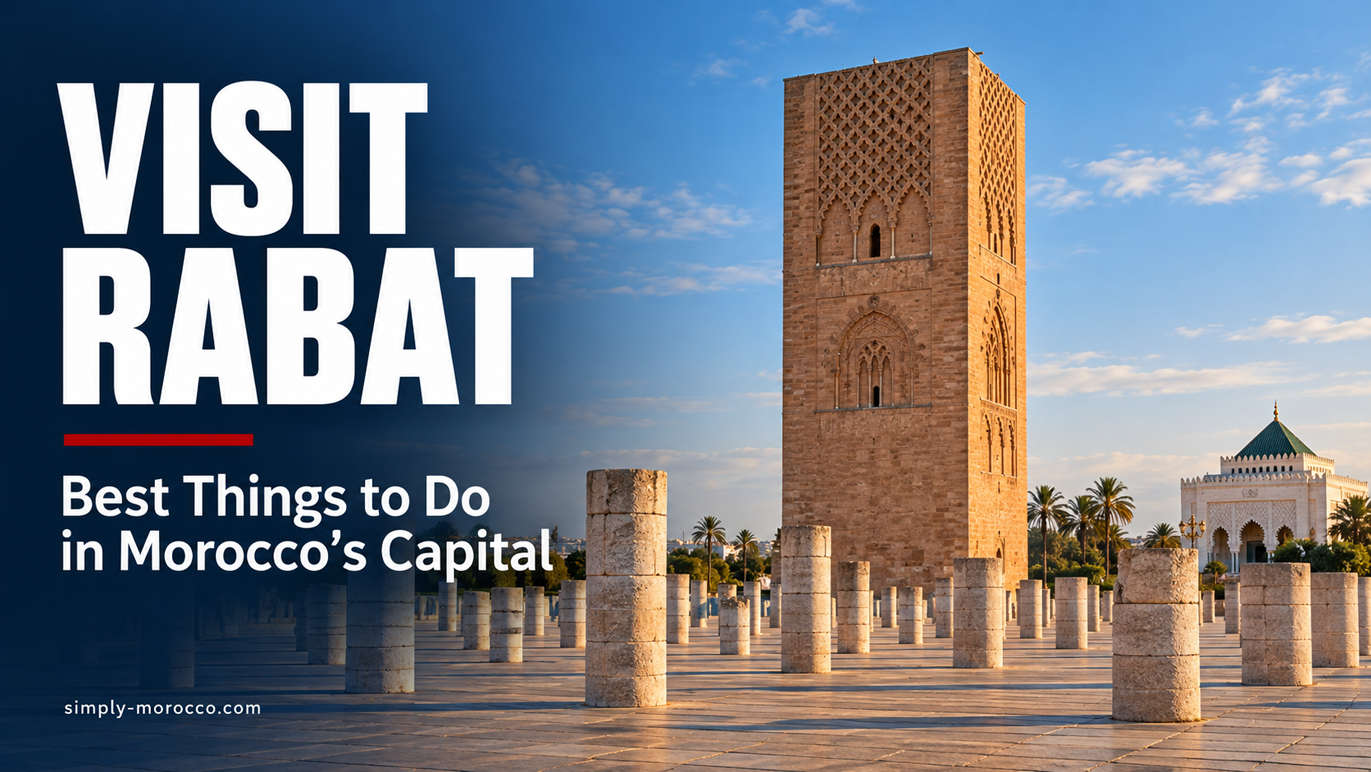
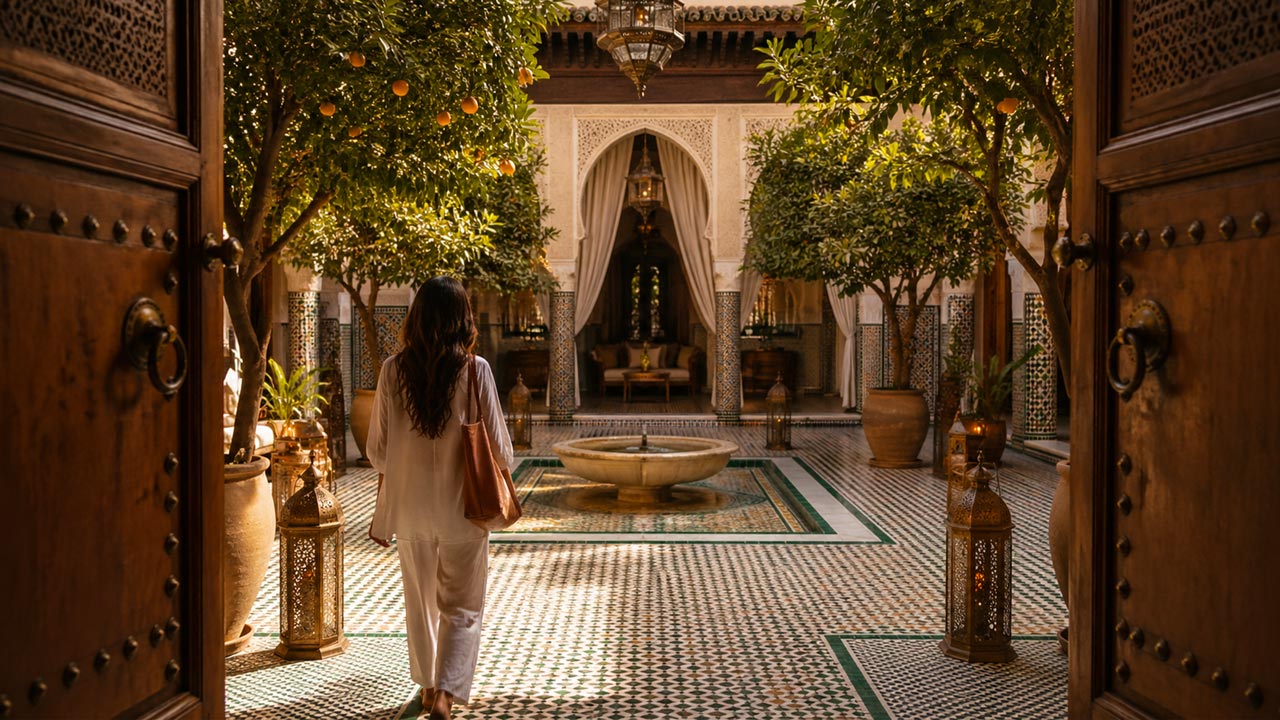
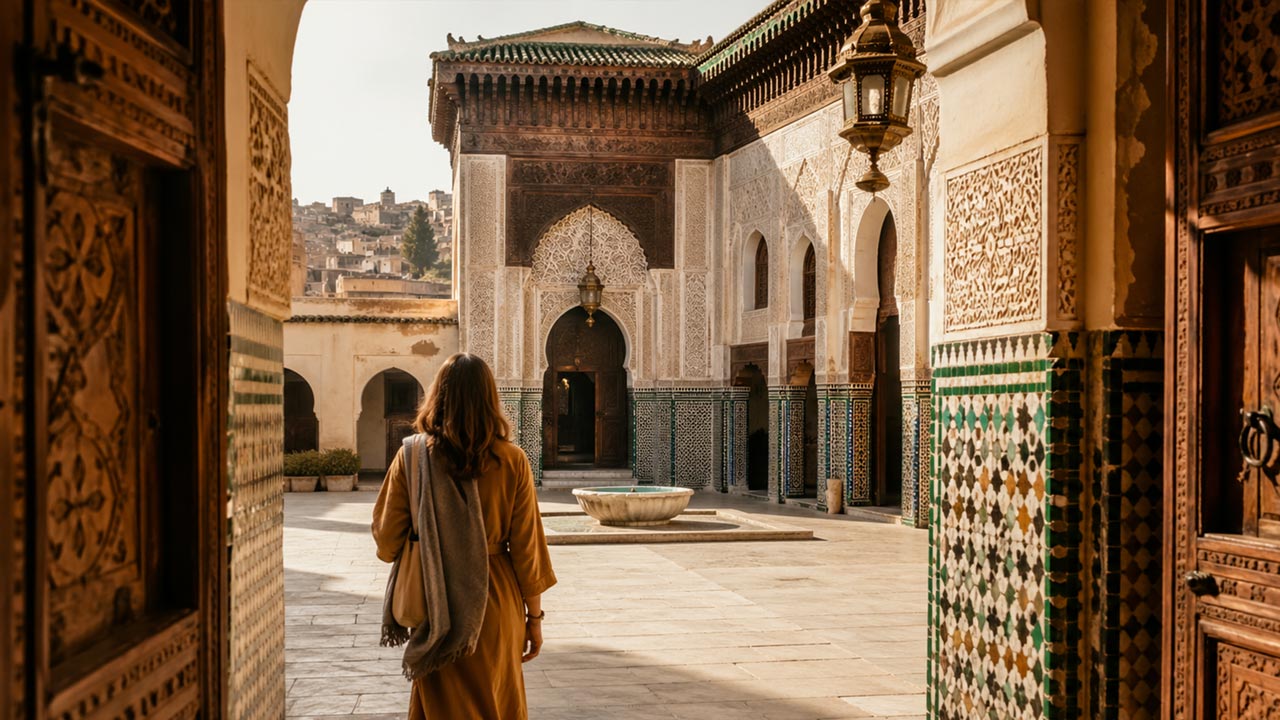
Morocco has four imperial cities: Marrakech, Fes, Meknes, and Rabat. Each one was a capital of Morocco at some point in its history. Each one still contains living medinas where the architecture, the street patterns, and the daily rhythms have remained largely unchanged for centuries. Walking through Fes el-Bali, the oldest part of the medina of Fes, means navigating a labyrinth of covered lanes, where leather tanners still work in open-air vats, and where a 9th-century university, the University of Al Quaraouiyine, claims to be the oldest continuously operating educational institution in the world.
The Atlas Mountains
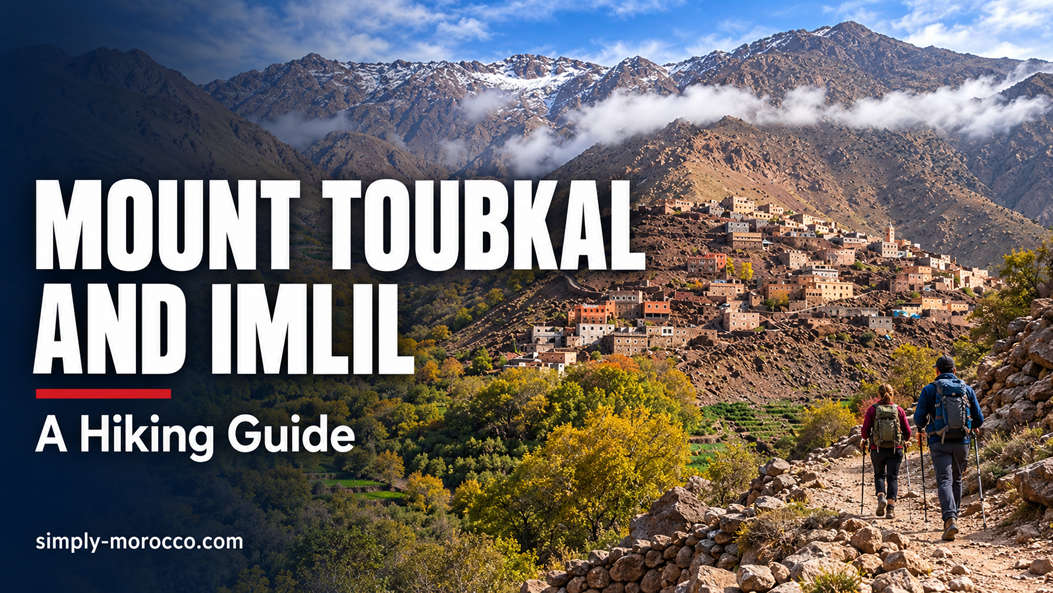
Between the Atlantic coast and the Sahara sits the High Atlas range, with peaks that exceed 4,000 meters. The Toubkal National Park is a trekker’s paradise. Berber villages in the valleys of the Ourika and the Ait Bouguemez are places where traditional agriculture, weaving, and architecture have been preserved not as museum pieces but as living culture.
The Food
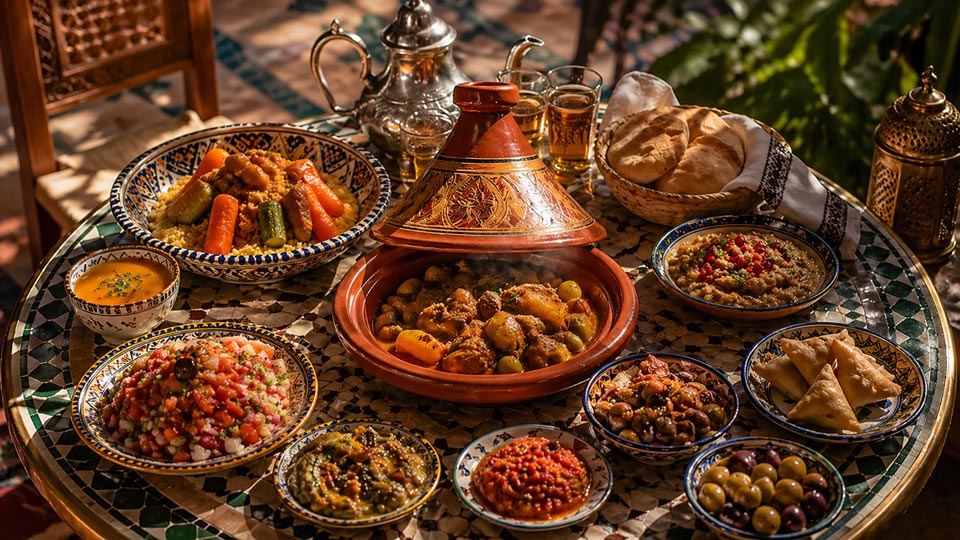
Moroccan cuisine is one of the great underappreciated culinary traditions in the world. Slow-cooked tagines, hand-rolled couscous, bastilla (a savory-sweet pastry with pigeon or chicken), fresh-baked bread, almond pastries, and mint tea that is practically a ceremony in itself. Every region has its own variations. Every family has its own version of a classic. This is not hotel buffet food. It is the kind of cooking that makes you want to move here.
The Coastline
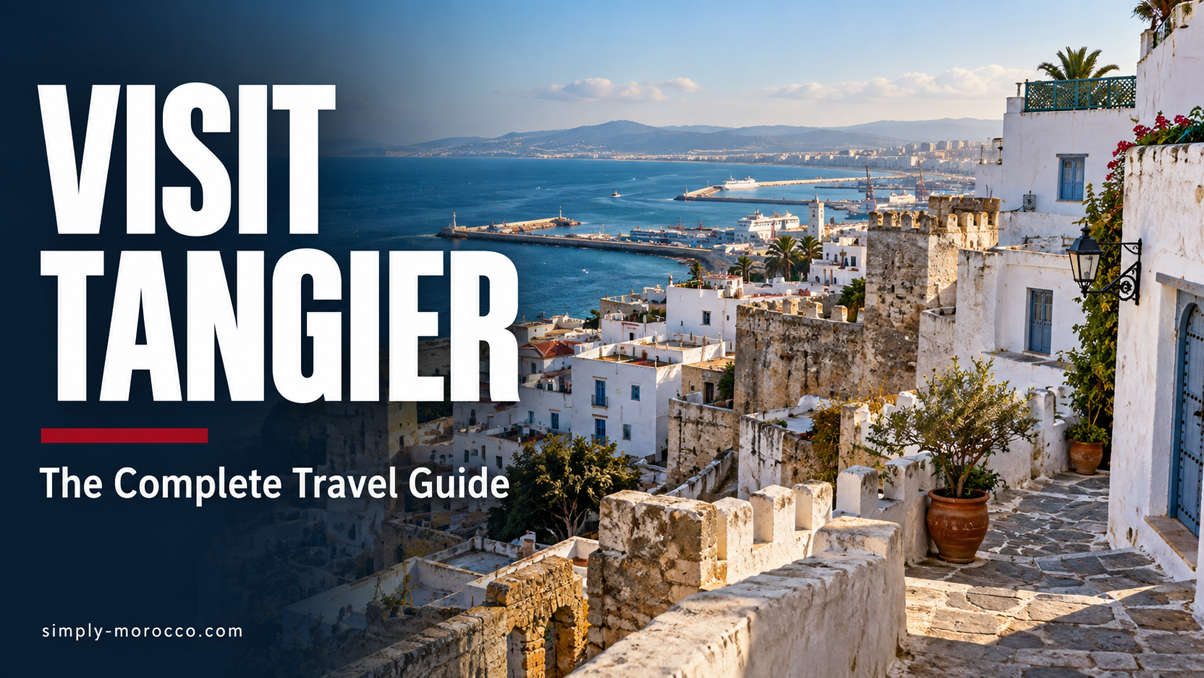
From Tangier in the north to Dakhla in the deep south, Morocco has over 1,800 kilometers of Atlantic and Mediterranean coastline. Essaouira is a whitewashed coastal town where wind-lashed ramparts frame the ocean and blue-painted boats bob in the harbor. Agadir offers long sandy beaches popular with European sun-seekers. Asilah, just south of Tangier, is a small fortified town where the medina walls are painted with murals every summer during an international arts festival.
Practical Reasons Morocco Is the Right First Trip to Africa
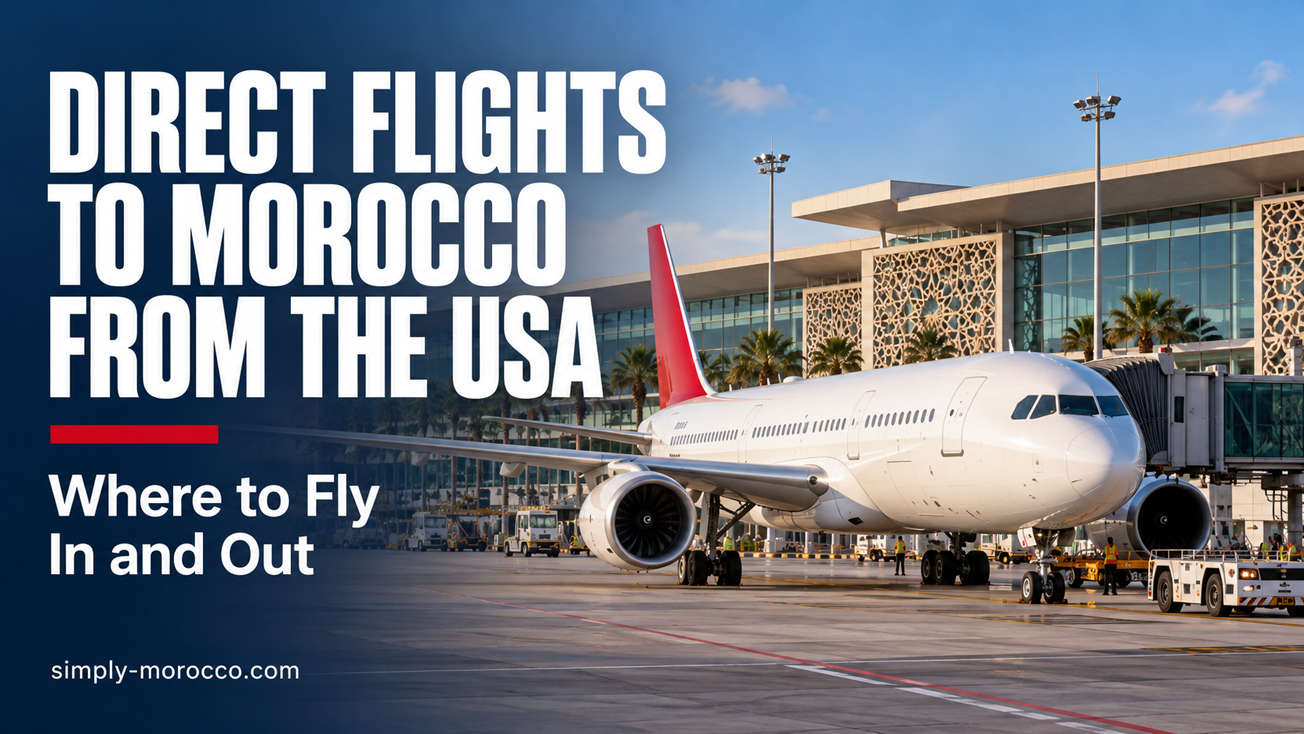
Flights are well-connected from major international hubs. Royal Air Maroc and other carriers operate direct and one-stop routes from North America, Europe, the Middle East, and beyond. Casablanca’s Mohammed V International Airport is one of Africa’s busiest and most modern, making it a natural gateway from almost anywhere in the world.
Visa requirements are favorable for most international travelers. Citizens of the EU, UK, the United States, Canada, and many other countries can enter Morocco visa-free for up to 90 days. It is worth checking the current requirements for your specific passport, but Morocco maintains one of the most open visa policies on the continent.
English is widely spoken in the tourism sector. While Darija (Moroccan Arabic), Tamazight (Berber), and French are the dominant languages, anyone working in tourism, hospitality, or guiding will communicate with you comfortably in English.
The time zone is manageable. Morocco follows Western European Time (UTC+1 in summer), which means minimal jet lag for travelers arriving from Europe and a reasonable adjustment for those coming from the Americas or the Gulf. This matters more than people realize when you are trying to actually enjoy the first two days of a trip.
The infrastructure is strong. Morocco has a modern highway network, a high-speed train connecting Casablanca and Tangier, well-maintained airports in all major cities, and a hospitality sector that ranges from budget guesthouses to some of the finest riads and luxury hotels on the continent.
Why a Private Tour Makes All the Difference
Morocco rewards those who arrive prepared. The country is not difficult to travel, but it is layered. The medinas require a guide who understands the geography and the culture. The desert requires logistics. The mountain villages require someone who knows which roads to take in which season.
More importantly, the Morocco you experience through a thoughtfully curated private tour is fundamentally different from the one you cobble together from a guidebook. It is the difference between eating pastilla in a historic riad and eating it at a tourist restaurant designed to look like one. It is the difference between visiting a tannery on your own versus understanding, through the lens of someone who grew up here, what you are actually looking at.
At Simply Morocco, we have been building private tours since 2013. We are Moroccan. This is our country, our culture, and our pride. Every itinerary we design is built around the traveler in front of us: their pace, their interests, their budget, and the kind of experience they have been quietly dreaming about. Whether that means three nights in the Sahara, a cooking class in a Fes home kitchen, or a slow morning in a coastal fishing village most visitors never find, we know how to make it real.
If Africa has been calling to you, let Morocco be where you answer. It is, simply put, the best country to visit in Africa for the first time. And if you are ready to start planning, we would love to be the team that takes you there.
Ready to explore Morocco on a private tour built just for you?
Learn more about our private tours across Morocco, or tell us your travel dates in the form below and we will send you a day by day itinerary and a quote.